FibroScan: What It Is, How It Works, and Why It Matters for Liver Health
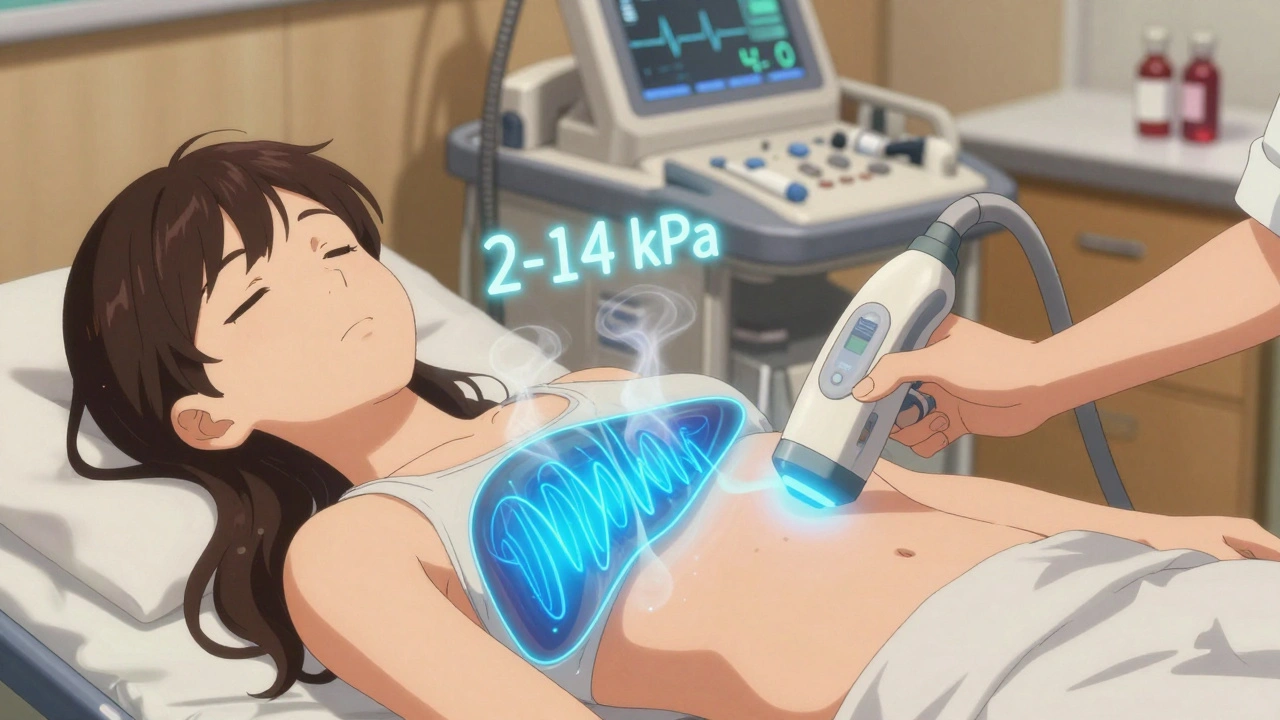
When your liver is under stress from alcohol, fatty disease, or hepatitis, it doesn’t always scream for help. That’s where FibroScan, a non-invasive medical device that measures liver stiffness using sound waves. Also known as transient elastography, it gives doctors a clear picture of liver damage without a needle. Unlike blood tests that only show hints of trouble, FibroScan directly measures how stiff your liver has become—because scar tissue is firmer than healthy tissue.
This test isn’t just for heavy drinkers. People with type 2 diabetes, obesity, or chronic hepatitis B or C often get FibroScan to track how their liver is holding up over time. It’s also used for those on long-term medications that can affect the liver, like certain antibiotics or cholesterol drugs. The procedure takes under 10 minutes, requires no prep, and you can walk out the same day. No fasting, no sedation, no recovery time. It’s simple, safe, and surprisingly accurate—especially when compared to the old gold standard: a liver biopsy.
What makes FibroScan powerful is how it connects to other health issues. If your FibroScan shows high stiffness, it could mean you’re at risk for cirrhosis, liver failure, or even liver cancer down the line. That’s why it’s often paired with other tools like ultrasound or blood markers like ALT and AST. It’s not a standalone answer, but it’s the best first step to avoid guessing. And because it’s repeatable, your doctor can watch your liver’s condition change over months or years—something a biopsy simply can’t do safely every six months.
Doctors use FibroScan results to decide if you need lifestyle changes, new meds, or more frequent monitoring. If your score is normal, you can relax a little. If it’s high, you’ll get a plan—cutting back on alcohol, losing weight, or starting antiviral treatment. It turns vague concerns into clear action. You don’t need to wait until you’re jaundiced or bloated to find out something’s wrong. FibroScan catches problems early, when they’re still reversible.
The posts below cover real-world situations where liver health intersects with medication use, chronic disease, and everyday choices. You’ll find guides on how certain drugs can harm the liver, what to do if your liver enzymes are high, and how conditions like fatty liver or hepatitis are managed with modern tools like FibroScan. Whether you’ve been told your liver is stressed or you’re just curious how to protect it, these articles give you the facts—not the fluff.
Noninvasive Liver Fibrosis Tests: FibroScan and Serum Scores Explained
FibroScan and serum scores like FIB-4 offer accurate, noninvasive ways to detect liver scarring without biopsy. Learn how they work, when to use each, and why combining them saves lives.
Continue Reading