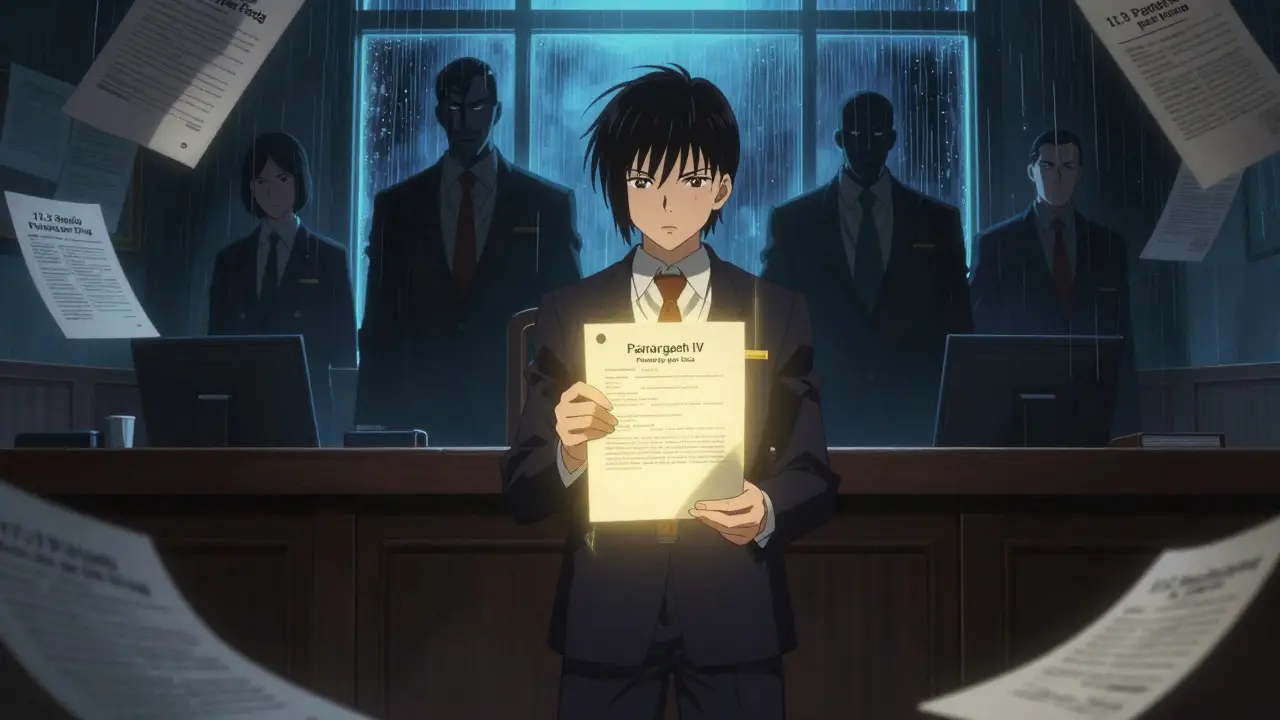
When a brand-name drug hits the market, its patent gives the maker exclusive rights to sell it-often for 20 years. But in the U.S., there’s a legal loophole that lets generic drug companies challenge those patents before the drug even hits shelves. This isn’t sabotage. It’s called a Paragraph IV certification, and it’s one of the most powerful tools in the fight to bring down drug prices.
Here’s how it works: under the Hatch-Waxman Act of 1984, any company wanting to make a generic version of a drug must file an Abbreviated New Drug Application (ANDA) with the FDA. That’s standard. But if the generic company believes the brand’s patent is invalid, unenforceable, or won’t be infringed by their product, they can file a Paragraph IV certification. This isn’t a guess. It’s a formal legal declaration that says, "We’re going to make this drug, and we’re ready to fight for it."
This triggers a chain reaction. Within 20 days, the generic company must notify the brand-name manufacturer. The brand then has 45 days to sue for patent infringement. If they do, the FDA automatically puts a 30-month hold on approving the generic. That sounds like a delay-but it’s actually a win for generics. Why? Because now the fight happens before the generic launches. No risky market entry. No massive lawsuits after the fact. Just a clear legal path.
And here’s the kicker: the first generic company to successfully challenge a patent gets 180 days of exclusive rights to sell their version. No other generics can enter during that time. That’s not just a bonus-it’s a billion-dollar prize. In 2023 alone, first-filers pocketed $4.7 billion from this exclusivity. For a blockbuster drug like Humira, which brought in over $20 billion a year, that 180-day window can mean hundreds of millions in profit.
But it’s not easy. Generic companies spend an average of $12.3 million per Paragraph IV challenge. Cases take nearly two and a half years to resolve. And brand-name companies have gotten smarter. They now list an average of 17.3 patents per drug on the FDA’s Orange Book-up from just 7.2 in 2005. Some drugs have over 30 patents stacked together. This "patent thicket" strategy is designed to overwhelm generics with legal costs and delays.
Still, generics are fighting back. In 2024, 68% of major branded drugs faced three or more Paragraph IV challenges. Companies like Teva, Mylan, and Sandoz file dozens of these every year. Teva alone filed 147 in 2024. They don’t just challenge one patent-they go after multiple at once. Sometimes they combine Paragraph IV filings with "skinny label" strategies, where they only market the generic for uses not covered by the patent. For example, if a drug treats three conditions but only one is patented, the generic can legally sell it for the other two. This approach was used in 37% of Paragraph IV filings in 2023.
There’s another twist: settlements. About 78% of Paragraph IV cases end in deals between brand and generic companies. But many of these deals include "pay-for-delay" clauses-where the brand pays the generic to hold off on launching. The FTC has sued 17 such cases between 2023 and 2024. In one 2024 settlement, a brand paid $187 million to delay a generic launch by 18 months. These deals are legal-for now-but they’re under fire.
And the tide is turning. Since 2020, generic companies have won 58% of Paragraph IV cases, up from 41% in the previous 16 years. Why? Supreme Court rulings have made it harder to patent minor changes-like tweaking a drug’s crystal structure or adding a coating. The FDA is also cracking down. In October 2022, it tightened rules on amending Paragraph IV certifications, closing loopholes that let generics tweak their applications after a lawsuit started.
By 2026, the FDA plans to require brand companies to justify every patent they list in the Orange Book. That could cut patent thickets by 30% to 40%. Meanwhile, the FTC is pushing to ban pay-for-delay deals outright. If they succeed, generic drugs could hit the market 4 to 6 months sooner on average.
The numbers speak for themselves. Since 1984, Paragraph IV challenges have saved U.S. consumers $2.2 trillion. In 2024 alone, they saved $192 billion. Generic drugs now make up 90% of all prescriptions filled in the U.S. And that number is climbing toward 94% by 2030-not because people want generics, but because they’re forced to. Insurance companies, Medicare, and Medicaid won’t pay for expensive brand drugs when a cheaper, equally effective version exists.
Behind every cheap pill on the shelf is a legal battle fought in courtrooms, patent offices, and FDA review rooms. The system isn’t perfect. It’s expensive, slow, and sometimes manipulated. But it works. And for millions of Americans who can’t afford insulin, heart meds, or cancer drugs, that’s what matters.

15 Comments
Nicholas Gama
March 10, 2026This whole system is a joke. Patent thickets? More like corporate greed with a law degree. They’re not innovating-they’re just stacking patents like Jenga blocks until the whole tower collapses on patients who can’t afford insulin.
And don’t get me started on 'pay-for-delay.' That’s not a settlement. That’s bribery with a subpoena.
Dan Mayer
March 11, 2026i think u guys are overcomplicating this. generics are just cheap knockoffs that dont work as good. why should i trust some company in india to make my heart med? its not the same. the brand name is there for a reason. and dont even get me started on teva. theyre just out to make money. i know people who got sick from generics.
Janelle Pearl
March 12, 2026I just want to say thank you for explaining this so clearly. I’ve been on insulin for 12 years, and every time I see the price drop after a generic hits, I cry a little. Not because I’m sad-because I’m relieved.
Someone fought for this. Someone sat in courtrooms for years so I could breathe. I don’t say this enough: thank you to every generic company that took the risk.
APRIL HARRINGTON
March 12, 2026OMG THIS IS SO CRAZY I CANT EVEN RIGHT NOW
180 DAYS OF EXCLUSIVITY??? LIKE A PRIZE???
AND THEY PAID 187 MILLION TO DELAY A DRUG???
WHAT IS THIS A GAME OF MONOPOLY???
WE’RE TALKING ABOUT PEOPLE DYING HERE
Leon Hallal
March 13, 2026The system is rigged. Big Pharma doesn’t care if you live or die. They just want your money. You think your insurance is helping? Nah. They’re in on it too. You’re just a number on a spreadsheet.
Erica Santos
March 13, 2026Let me guess-someone’s going to say 'but patents incentivize innovation.' Oh honey. You think a company that spends $12 million to delay a generic by 18 months is 'innovating'?
They’re just playing chess with people’s lives. And they’re winning. Because we’re too tired to fight back.
George Vou
March 15, 2026so like the whole paragraph iv thing is just a loophole right? like why does the givernment even let this happen? its like letting a thief rob a bank then giving him a medal for being clever
and teva? theyre just rich now. they dont even make new drugs. they just wait for others to do the work then swoop in. thats not capitalism thats parasitism
Scott Easterling
March 16, 2026This is why America is broken. You have a system where the law is a weapon for the rich, and the poor pay the price. Patent thickets? 17 patents per drug? That’s not innovation-that’s legal terrorism.
And don’t even mention the FTC. They’re toothless. All talk. No bite. Just like every other 'regulator' in this country.
Mantooth Lehto
March 16, 2026I just lost my mom to cancer last year. She couldn’t afford her meds. I had to choose between rent and her treatment.
And now you’re telling me some lawyer in a suit got paid $187 million to keep her alive just a little longer?
I’m not crying. I’m furious.
Melba Miller
March 17, 2026America’s healthcare system is a war zone. And the only winners are the ones who write the rules. Generic companies? They’re not heroes. They’re mercenaries. They don’t care about you-they care about that 180-day window. They’ll fight for profit, not people.
But hey-at least the price went down. Right?
Katy Shamitz
March 18, 2026I just want to say-thank you to the generic companies. Seriously. I know it sounds weird coming from me, but I’ve been on meds for 15 years. I’ve watched prices jump 500% in a year. Then-bam-generic hits. Price drops 90%.
You’re not villains. You’re the only thing standing between me and ruin.
Mary Beth Brook
March 19, 2026Paragraph IV is a structural lever in the ANDA framework. It’s a statutory trigger that forces early litigation under 35 U.S.C. § 271(e)(2). The 180-day exclusivity is a market-based incentive aligned with Hatch-Waxman’s statutory bargain: innovation for access.
Patent thickets are a rational response to litigation risk. The FDA’s 2022 rulemaking was a necessary corrective.
Neeti Rustagi
March 19, 2026This is a very informative piece. I come from India, where generic drugs are the backbone of healthcare access. The Paragraph IV system, while complex, mirrors our own struggle against patent monopolies. The fact that 90% of U.S. prescriptions are now filled with generics is a quiet revolution.
Thank you for highlighting the legal battles behind every affordable pill.
Ray Foret Jr.
March 21, 2026i know this sounds crazy but i think we should make all drugs generic. like, why does it take 20 years to make a pill? if the science is out there, just let everyone make it. no patents. no lawsuits. just medicine. we could save trillions. and people would live longer. why are we even having this debate?
Samantha Fierro
March 22, 2026The data here is undeniable. $2.2 trillion saved since 1984. 90% of prescriptions. That’s not luck. That’s systemic change driven by persistence. The people behind these Paragraph IV filings? They’re not greedy. They’re necessary.
Let’s not demonize the challengers. Let’s protect them.