When you see a date on a bottle, you're looking at a scientific deadline. Medication expiration date is the final day a pharmaceutical manufacturer guarantees a drug's full potency, safety, and purity when stored under specific conditions. It isn't a random guess; it's the result of stability testing mandated by the FDA since 1979. Essentially, the manufacturer is promising that until that date, the active ingredient will remain effective and no harmful impurities will develop.
The Science Behind the Date
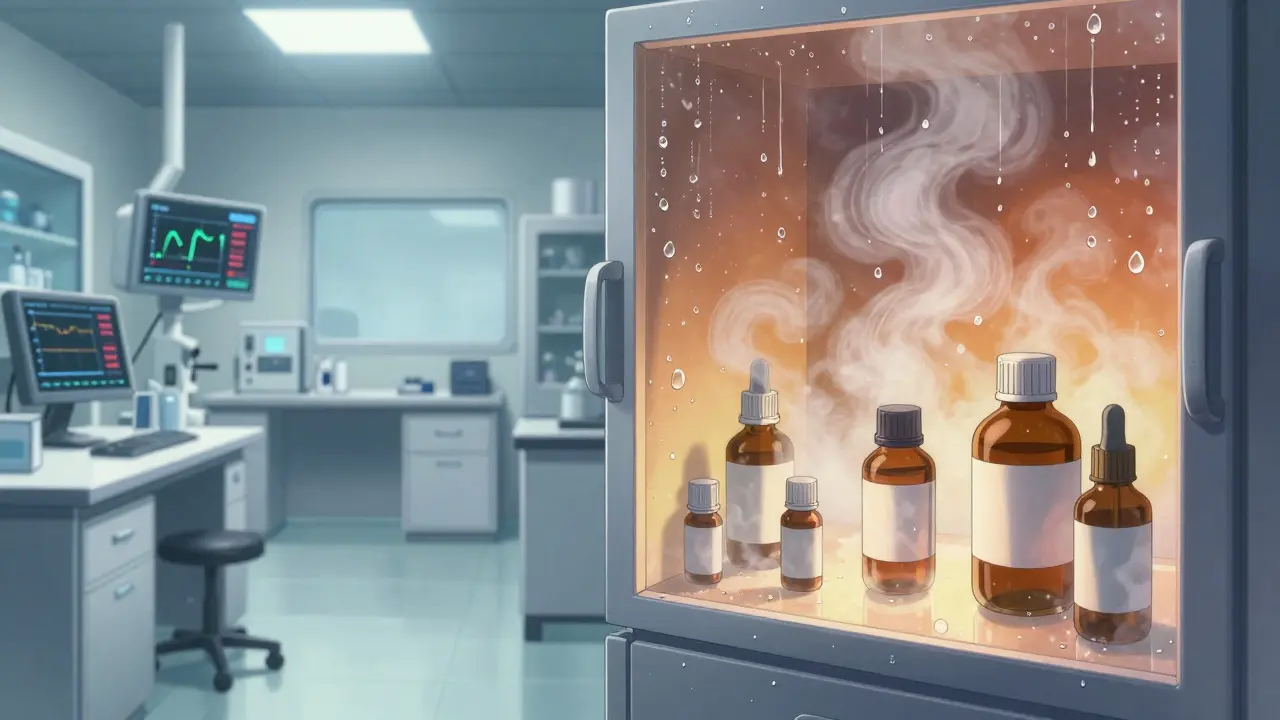
How do companies actually decide when a drug "expires"? They use something called accelerated stability testing. They put the drug through a "stress test"-high heat (around 40°C) and high humidity (75% RH)-for six months to predict how it will behave over years. According to USP General Chapter <1151>, the expiration date is typically the point where the active ingredient is expected to drop below 90% of its labeled potency.
If a pill is labeled as 100mg, the manufacturer guarantees it will have at least 90mg of that active ingredient until the expiration date. This is why most dates are set conservatively, usually between 12 to 60 months from the day they were made. It provides a safety buffer so that even if your house gets a bit warm in the summer, the medicine still works.
Do Expired Meds Actually Become Dangerous?
There is a massive gap between "regulatory safety" and "actual chemistry." The Shelf Life Extension Program (SLEP) is a long-term NIH-funded study that tested the stability of medications for the U.S. military. Their findings were shocking: about 88% of medications remained effective 15 years after their expiration date, provided they were stored in ideal conditions. They found that ciprofloxacin kept 97% of its strength 12 years late, and amoxicillin kept 94% after 8 years.
But here is the catch: you aren't the U.S. military. They store drugs in climate-controlled warehouses. Most of us keep our meds in a bathroom cabinet, which is actually the worst place for them. Humidity from your shower can speed up degradation. While most medication expiration date markers are conservative, the environment you choose can make that date move up significantly.
The Red Zone: Medications You Must Never Use Expired
While a slightly weaker statin might not be a disaster, some drugs are "high-risk." In these cases, a loss of potency isn't just an inconvenience-it's a crisis. The Institute for Safe Medication Practices (ISMP) categorizes these risks, and you should be very careful with Category 1 drugs.
- Insulin is a hormone used to control blood sugar that degrades rapidly at room temperature. It can lose 1.5% to 2.5% of its potency every month if stored above 8°C. Using expired insulin can lead to uncontrolled hyperglycemia.
- Nitroglycerin tablets for chest pain are incredibly volatile. They can lose 50% of their strength within 3 to 6 months of just opening the bottle, even if the printed date is years away.
- Epinephrine (like EpiPens) loses about 15-20% of its potency every year after expiration. In an anaphylactic shock scenario, that 20% loss could be the difference between recovery and a fatality.
- Liquid antibiotics, such as amoxicillin-clavulanate, are only stable for about 14 days once the powder is mixed with water. Ignore the bottle's date; once it's a liquid, the clock is ticking fast.
| Risk Category | Typical Medications | Primary Danger | Example |
|---|---|---|---|
| High (Category 1) | Biologics, Liquid Antibiotics | Immediate treatment failure | Insulin, Nitroglycerin |
| Moderate (Category 2) | Anticoagulants, Strong Antibiotics | Reduced efficacy / Toxicity | Warfarin, Ciprofloxacin |
| Low (Category 3) | Stable solids (pills) | Gradual potency loss | Statins, Antidepressants |
How to Spot a "Dead" Medication
Regardless of the date, your senses can tell you a lot about whether a drug has degraded. If you see these signs, throw the medication away immediately:
- Color shifts: If a white tablet has turned yellow or brown, it's a sign of chemical breakdown.
- Texture changes: Pills that crumble easily or have developed crystals on the surface are likely ineffective.
- Odd smells: Some medications, like aspirin, develop a strong vinegary smell (acetic acid) when they break down.
- Cloudiness: Clear liquids that become cloudy or develop particles are no longer safe to use.
Smart Storage to Extend Shelf Life
If you want your medications to last until their expiration date (and maybe a little beyond for low-risk drugs), you need to change where you store them. Stop using the "medicine cabinet" in the bathroom. The heat and steam from showers create a high-humidity environment (often 75-85% RH) that eats away at the chemical bonds of your medicine.
Instead, find a cool, dry place-like a high shelf in a bedroom closet. Aim for temperatures below 25°C (77°F) and keep the pills in their original containers. The child-resistant caps aren't just for kids; they provide a critical seal that keeps moisture and oxygen out. When you move meds into a daily pill organizer, you expose them to air and light, which can accelerate the degradation process.
The Right Way to Get Rid of Old Meds
Tossing pills in the trash or flushing them down the toilet can lead to environmental contamination or accidental poisoning. The DEA organizes National Prescription Drug Take-Back Days twice a year (typically April and October) to help clear out home medicine cabinets safely.
If you can't wait for a take-back event, most pharmacies have secure drop-boxes. However, for a very small group of high-risk drugs-like fentanyl patches or certain oxycodone tablets-the FDA actually recommends flushing them to prevent accidental ingestion by children or pets. Check the official FDA "Flush List" to see if your medication is on it before you reach for the toilet.
Can I take an expired antibiotic for a minor infection?
While some antibiotics are stable for years, using an expired one is risky. If the potency has dropped, you might not kill all the bacteria, which can lead to antibiotic resistance or a recurring infection. Always consult a doctor for a fresh prescription to ensure the dose is strong enough to actually clear the infection.
Does a "Beyond-Use Date" (BUD) differ from an expiration date?
Yes. An expiration date is set by the manufacturer. A Beyond-Use Date (BUD) is set by the pharmacist when they dispense a drug or compound it. For example, a pharmacist might set a BUD of one year for a pill bottle, even if the manufacturer's date is longer, because the drug was transferred from a bulk bottle to a smaller vial, changing its stability.
Will expired vitamins or supplements still work?
Most vitamins are stable, but they lose potency over time. For example, Vitamin C is particularly prone to degradation. While they aren't usually dangerous, you simply won't get the dosage listed on the label after the expiration date passes.
What happens if I use an expired medication by accident?
In most cases, the drug will simply be less effective. However, if it was a critical medication (like insulin or a heart drug), the danger is that your condition isn't being treated. If you notice any unusual symptoms or if the drug doesn't seem to be working, contact your healthcare provider immediately.
Can I freeze medications to make them last longer?
Unless specifically directed by the label or your doctor, do not freeze your medications. Freezing can change the chemical structure of the drug or cause liquid medications to crystallize, which can ruin the formula and make it ineffective or dangerous to inject.