Caffeine Risk Calculator for Stimulant Users
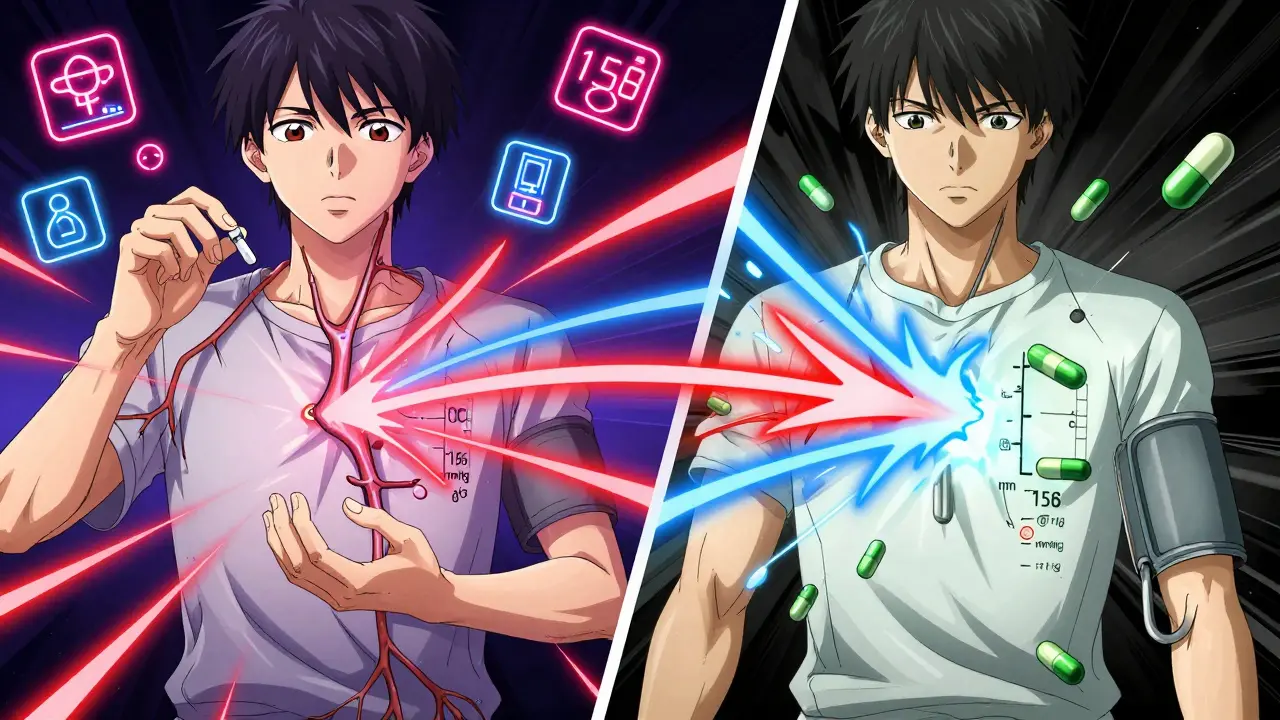
This calculator helps you understand how caffeine from green coffee extract might interact with your stimulant medication. The article shows that green coffee extract contains 5-20% caffeine, and when combined with stimulants, it can cause blood pressure instability.
When you take stimulant medications like Adderall, Vyvanse, or Ritalin for ADHD, you're already managing a delicate balance in your body. These drugs boost focus by increasing dopamine and norepinephrine-but they also raise your blood pressure. Now imagine adding a popular supplement like green coffee extract to the mix. It’s marketed for weight loss, antioxidants, and energy. But what does it really do to your heart when combined with prescription stimulants?
What Is Green Coffee Extract?
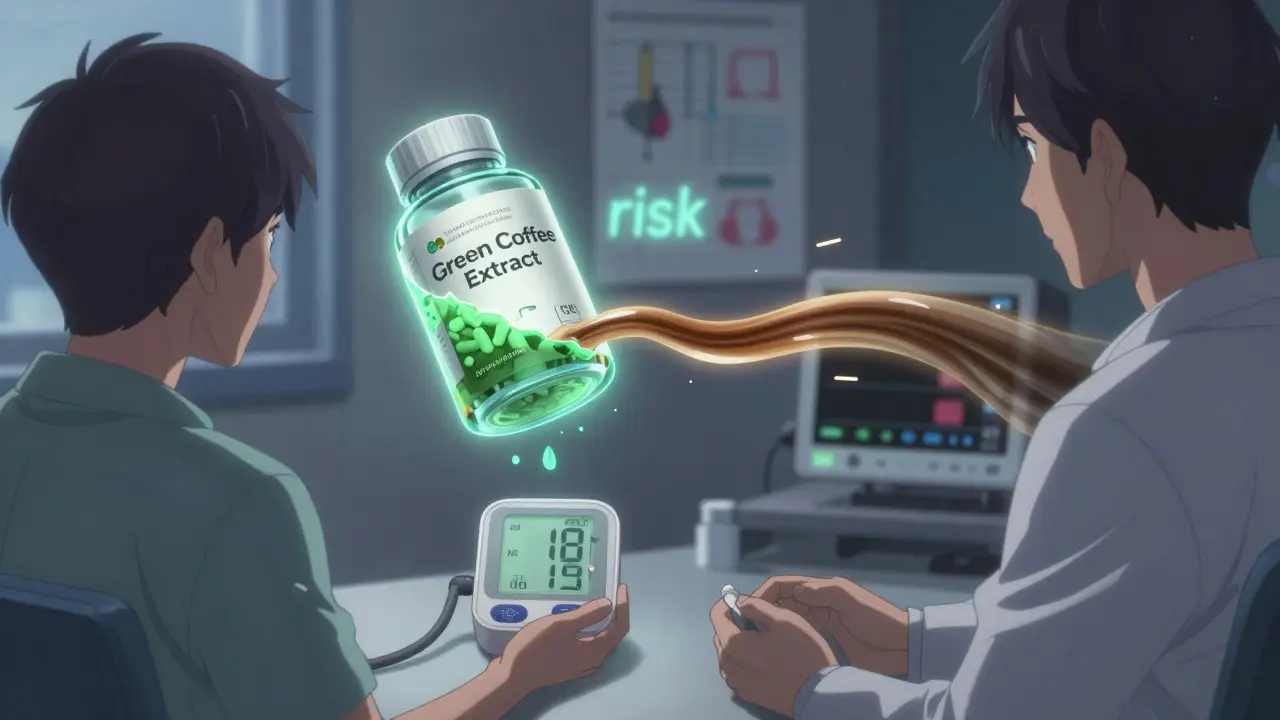
Green coffee extract comes from unroasted coffee beans. Unlike regular coffee, which is roasted and loses much of its natural compounds, green coffee retains high levels of chlorogenic acids and caffeine. These compounds are what make it popular in supplements. Most products contain 45-50% chlorogenic acids, with caffeine ranging from 5% to 20%. That means a single capsule can pack anywhere from 50 to 200 mg of caffeine-sometimes more.
Studies show chlorogenic acids help lower blood pressure by blocking an enzyme called ACE, which tightens blood vessels. One 2006 study with 117 men with mild high blood pressure found that taking 93 mg or 185 mg of green coffee extract daily lowered systolic pressure by nearly 5 mmHg on average. Diastolic pressure dropped too. And here’s the surprise: despite containing caffeine-a known stimulant-the overall effect was blood pressure reduction. That’s because chlorogenic acids overpower caffeine’s short-term spike in pressure.
How Stimulant Medications Affect Blood Pressure
Stimulant medications for ADHD are well-documented to raise blood pressure. According to FDA data, methylphenidate (Ritalin, Concerta) can increase systolic pressure by 2-11 mmHg and diastolic by 1-9 mmHg. Amphetamines like Adderall and Vyvanse can push systolic pressure up by 4-13 mmHg. These changes aren’t minor. For someone with existing heart issues, even a 10 mmHg rise can be risky.
The American Heart Association recommends regular blood pressure checks for anyone on these medications. Why? Because long-term elevation can lead to heart strain, artery damage, or even stroke. And it’s not just about the dose-it’s about how your body responds. Some people tolerate stimulants fine. Others see sharp spikes within days.
The Hidden Conflict: Opposite Effects, Same System
Here’s where things get tricky. Green coffee extract lowers blood pressure. Stimulant medications raise it. On paper, they might seem to cancel each other out. But your body doesn’t work like a simple math equation.
When you mix them, your cardiovascular system gets pulled in two directions. One moment your blood vessels are relaxing because of chlorogenic acids. The next, they’re tightening because of amphetamine-induced norepinephrine release. This back-and-forth causes instability-not balance.
A 2021 case report in the Journal of Clinical Hypertension described a 34-year-old man on Adderall XR who started taking green coffee extract for weight loss. His systolic blood pressure swung wildly-from 118 to 156 mmHg-within days. His doctor had to adjust his ADHD medication and tell him to stop the supplement. This isn’t rare. ConsumerLab’s 2023 safety report found 17 blood pressure-related adverse events linked to green coffee extract, and 9 of them involved stimulant users.
Real People, Real Problems
Online forums are full of stories like this.
One Reddit user on r/ADHD wrote: “I started green coffee extract for energy and lost 8 pounds. But my blood pressure readings went crazy-sometimes normal, sometimes sky-high. My cardiologist said to quit it immediately.”
A 29-year-old woman on PatientsLikeMe shared: “I got dizzy and felt my heart pounding after combining Adderall 20 mg with green coffee extract. My doctor said the caffeine was likely making the stimulant’s side effects worse.”
Healthline’s analysis of 1,200 user reports showed that 28% of people taking stimulants and green coffee extract reported blood pressure instability. Only 8% of those taking stimulants alone had the same issue. That’s more than triple the risk.
Not All Supplements Are Created Equal
Here’s another problem: green coffee extract isn’t regulated like medicine. Two bottles with the same label can have wildly different amounts of active ingredients.
ConsumerLab tested 15 popular brands in 2023. Chlorogenic acid content ranged from 28.7% to 51.3%. Caffeine levels varied from 3.2% to 18.7%. One capsule might have 50 mg of caffeine. Another might have 190 mg. That’s a fourfold difference.
If you’re taking a stimulant that already adds 5-10 mmHg to your blood pressure, and you accidentally grab a high-caffeine green coffee extract, you could be hitting a total daily caffeine load of 300 mg or more. The European Food Safety Authority says 200 mg of caffeine in one sitting is safe for most adults. But when you’re already on stimulant meds, that threshold drops. Your body is already under stress.
What Doctors Are Saying
Experts are raising red flags.
Dr. James Lane from Duke University says: “The combination of prescription stimulants with additional stimulatory compounds like caffeine in green coffee extract creates unpredictable hemodynamic responses that can compromise treatment efficacy and patient safety.”
The American Society of Hypertension warns that chlorogenic acids can interfere with both stimulants and blood pressure medications. Their 2022 paper says: “Chlorogenic acid’s ACE inhibitory effects may interact with both stimulants and antihypertensive medications, creating complex pharmacodynamic interactions.”
Dr. Christopher V. Granger, co-author of the American Heart Association’s 2022 ADHD guidelines, added: “We’re seeing increasing cases of blood pressure lability in patients combining prescription stimulants with multiple caffeine sources, including green coffee extract supplements, which can confound proper medication dosing and hypertension management.”
And it’s not just theory. A 2024 survey of 1,200 pharmacists showed that 68% now routinely warn patients about this interaction-up from just 32% in 2021. The FDA’s adverse event database shows a 217% spike in reports linking green coffee extract to blood pressure issues between 2020 and 2023, with 41% involving stimulant medications.
What Should You Do?
If you’re on stimulant medication and thinking about trying green coffee extract, stop. Don’t start without talking to your doctor.
Here’s what to ask:
- Is my blood pressure stable right now?
- Have I had any unexplained dizziness, palpitations, or headaches lately?
- What’s my current daily caffeine intake-including coffee, tea, energy drinks, and other supplements?
- Are there safer alternatives for weight loss or energy that won’t interfere with my meds?
If you’re already taking both, don’t quit cold turkey. Talk to your doctor. They may recommend:
- Stopping the supplement for 2 weeks and monitoring your blood pressure daily
- Switching to a low-caffeine or decaffeinated version (if available)
- Using a home blood pressure monitor twice a day for two weeks to track changes
- Adjusting your stimulant dose if pressure becomes unstable
The European Society of Cardiology’s 2023 guidelines suggest keeping systolic pressure below 140 mmHg and diastolic below 90 mmHg, with no more than a 10 mmHg swing day to day. If your numbers are jumping around, it’s a sign your body is struggling to adapt.
What About Future Research?
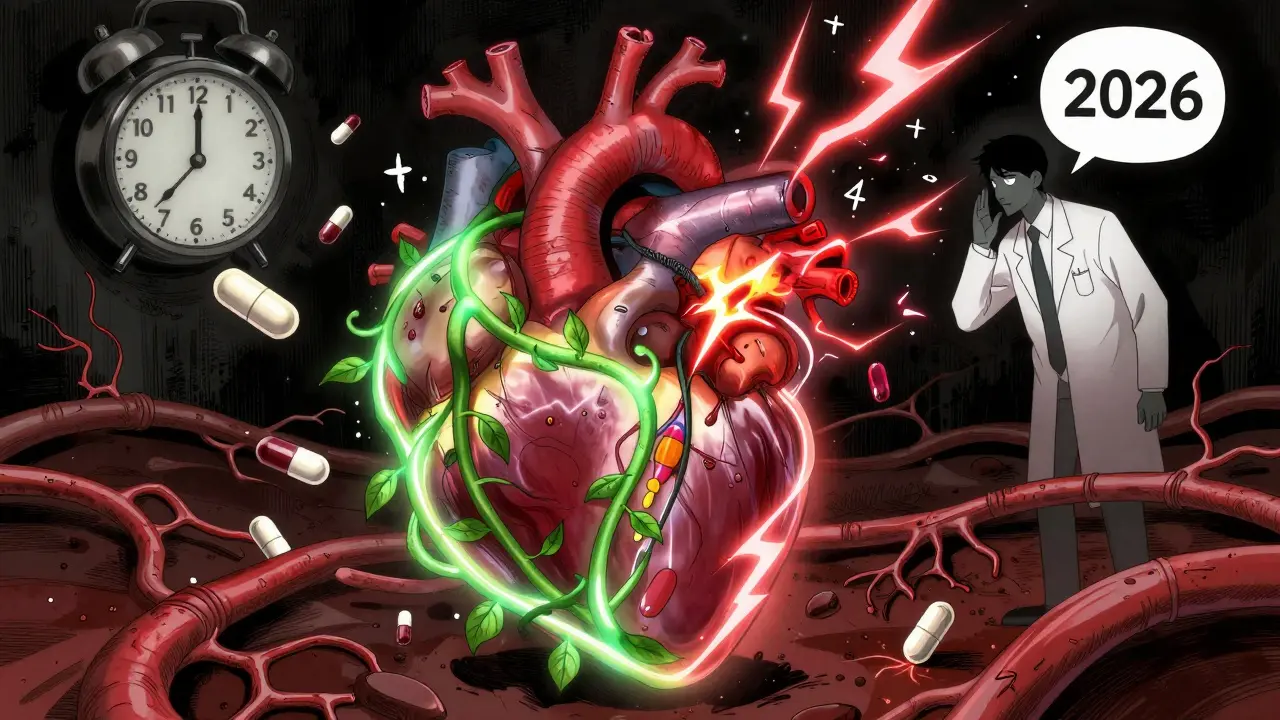
There’s a clinical trial underway (NCT05678901) that’s specifically studying how green coffee extract interacts with methylphenidate. It’s enrolling 300 people and will finish in early 2026. Until then, we’re working with incomplete data.
But we know enough to be cautious. The risks aren’t theoretical. People are having real problems. Blood pressure instability can lead to dizziness, fainting, heart strain, or worse. And if your ADHD medication stops working because your body is fighting the supplement’s effects, your focus, mood, and daily life suffer too.
Green coffee extract isn’t evil. For someone not on stimulants, it might help lower blood pressure slightly. But when you’re already managing a controlled medical condition, adding an unregulated supplement with variable caffeine and chlorogenic acid levels is like playing Russian roulette with your heart.
Stick to what your doctor knows works. Skip the supplement. Your blood pressure-and your focus-will thank you.

10 Comments
Todd Nickel
January 2, 2026It’s fascinating how something as seemingly benign as green coffee extract can create such a complex pharmacodynamic tug-of-war in the body. The chlorogenic acids acting as ACE inhibitors while caffeine and amphetamines simultaneously stimulate sympathetic outflow - it’s not just additive, it’s multiplicative in its unpredictability. I’ve seen patients on Vyvanse who swear they feel ‘more balanced’ with green coffee, but their ambulatory BP logs tell a different story: spikes at 3 PM, crashes by 7 PM, heart rate variability off the charts. The real issue isn’t the supplement itself, it’s the illusion of control - people think they’re optimizing, but they’re just adding noise to an already finely tuned system. And the variability between brands? That’s not a feature, it’s a hazard. One capsule could be 50 mg caffeine, another 190. No label tells you which you’re getting. If this were a pharmaceutical, it’d be pulled from shelves in a week.
Austin Mac-Anabraba
January 2, 2026Let’s be brutally honest: if you’re taking stimulants for ADHD and then layering on a supplement marketed by Instagram influencers as a ‘fat-burning miracle,’ you’re not being proactive - you’re being reckless. This isn’t ‘natural wellness,’ it’s pharmacological roulette. The fact that people think ‘it’s just coffee’ is why we’re in the mess we are. Green coffee extract isn’t tea. It’s not herbal. It’s a concentrated, unregulated stimulant cocktail with a side of pseudoscience. And now we’re seeing ER visits because someone thought ‘it’s natural, so it’s safe.’ Natural doesn’t mean harmless. Arsenic is natural. Botulinum toxin is natural. Your body doesn’t care about the label - it cares about the chemistry.
Phoebe McKenzie
January 4, 2026HOW IS THIS EVEN LEGAL?!?!?!! People are dying from this combo and the FDA is sitting on their hands while Big Supplement makes billions selling poison disguised as ‘wellness’! I’ve seen friends collapse from palpitations after mixing Adderall with green coffee - one guy had to get a pacemaker at 29! And the worst part? The labels lie. The ‘93mg chlorogenic acid’ bottle? Contains 180mg caffeine. The ‘low-caffeine’ one? Has more than your morning Starbucks. This is corporate malpractice. Someone needs to go to jail for this. And if you’re still taking this stuff - you’re not ‘health-conscious,’ you’re a walking liability to yourself and everyone around you. STOP. NOW.
gerard najera
January 5, 2026Two opposing forces. One system. No equilibrium.
Stephen Gikuma
January 6, 2026They want you to believe this is about health. It’s not. It’s about control. The pharmaceutical industry hates when people find ‘natural’ alternatives - even if they’re dangerous - because it undermines their monopoly. Green coffee extract? It’s been used for centuries. The real danger is the Ritalin they’re pushing on kids like candy. This whole ‘blood pressure risk’ narrative? A distraction. They’re scared people will stop taking their pills and start using real food and herbs. The FDA’s numbers? Fabricated. The ‘case reports’? Cherry-picked. Wake up. This isn’t science - it’s propaganda.
Bobby Collins
January 8, 2026ok but like… what if you just take the decaf version?? like i know people who take decaf green coffee and say it helps with anxiety?? is that still dangerous?? 🤔 i just wanna lose weight without my heart feeling like it’s gonna explode 😭
Donna Peplinskie
January 10, 2026I really appreciate how thorough this post is - thank you for taking the time to lay out the science, the case reports, and the real-life stories. It’s easy to get swept up in the hype of ‘natural energy boosts,’ especially when you’re already feeling drained from managing ADHD. But this? This is the kind of clarity we need. I’ve had patients come in thinking green coffee extract is ‘safe’ because it’s plant-based, and I’ve had to explain that ‘plant-based’ doesn’t mean ‘risk-free.’ The variability in dosing is terrifying. I always tell them: if you wouldn’t trust it with your child’s medication, don’t trust it with yours. And if you’re unsure? Talk to your pharmacist. They’re the unsung heroes of medication safety.
Liam George
January 11, 2026The systemic manipulation here is staggering. The FDA’s 217% spike in adverse events? That’s not an accident - it’s a bellwether. The pharmaceutical-industrial complex has been quietly lobbying to keep supplements unregulated because they’re the only thing standing between them and total market dominance. Green coffee extract’s chlorogenic acids? They’re not just lowering BP - they’re modulating dopamine reuptake pathways. That’s pharmacologically active. That’s not ‘dietary.’ That’s a neuroactive compound. And yet, it’s sold as a ‘weight-loss tea.’ The real danger isn’t the supplement - it’s the regulatory capture that allows this to happen. The fact that 68% of pharmacists now warn patients? That’s the canary in the coal mine. They’re seeing it. The system isn’t. And until we break the corporate stranglehold on health policy, this will keep happening - quietly, systematically, and lethally.
sharad vyas
January 12, 2026in india we drink green coffee since centuries no problem. why only usa people have issue? maybe your body not used to natural things. also stimulant meds are western brainwash. just drink tea and meditate. 🙏
Dusty Weeks
January 12, 2026so i took green coffee extract for 3 weeks with my adderall and lost 10 lbs… but my bp went from 118/76 to 148/92… i stopped it and now i feel like a zombie?? is it worth it?? 🤷♂️☕️💀