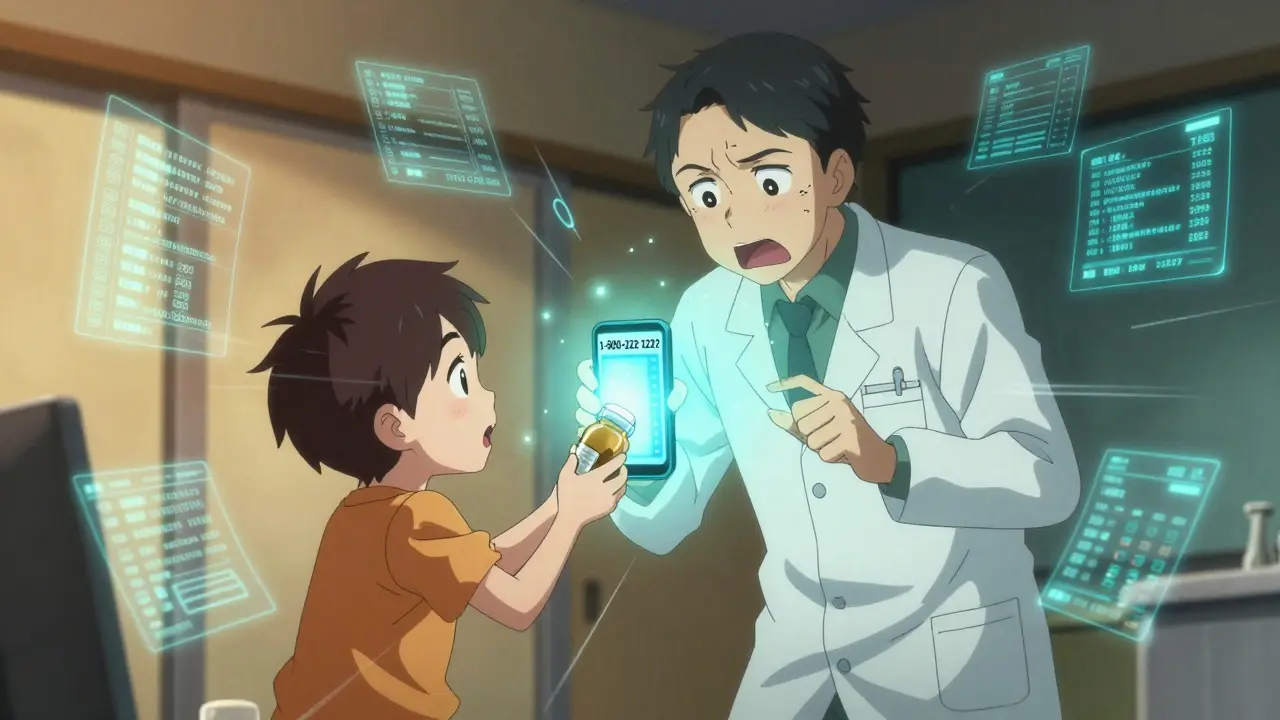
When a child grabs a bottle of pills off the nightstand, or an adult accidentally takes double their usual dose of blood pressure medicine, panic sets in. You don’t have time to Google symptoms or wait for a doctor’s appointment. That’s when the Poison Control Hotline becomes your most important call of the day. Dialing 1-800-222-1222 connects you to a trained specialist who can guide you through the next steps - often preventing a trip to the ER. This service isn’t just a phone line. It’s a lifesaving system built on decades of toxicology research, real-time data, and expert protocols designed to handle medication emergencies fast.
How the Poison Control Hotline Actually Works
The Poison Control Hotline doesn’t operate like a typical customer service line. It’s run by 53 accredited poison control centers across the U.S., each staffed by Specialists in Poison Information (SPIs). These aren’t just nurses or pharmacists - they’re experts trained specifically in toxicology. Most hold advanced degrees, and many have spent years working in emergency rooms or poison labs. They handle over 2.1 million cases every year, and nearly half of those involve medications. When you call, your area code automatically routes you to the nearest center. If you’re in Sydney, Australia, you won’t reach this system - but if you’re in the U.S., you’re connected within seconds. There’s also a text option: just send “poison” to 797979. Or, if you prefer typing, you can use the webPOISONCONTROL tool at poisonhelp.org. This online tool walks you through six key questions and gives you a risk assessment in under three minutes. Behind the scenes, every call is processed using over 1,500 evidence-based algorithms. These aren’t guesswork - they’re built from decades of clinical data on how drugs behave in the body. For example, if someone takes too much acetaminophen, the algorithm doesn’t just say “go to the hospital.” It calculates the exact amount ingested, the person’s weight, and how long ago it happened. Then it determines whether they’re at risk for liver damage and whether they need N-acetylcysteine - a life-saving antidote that works best if given within eight hours.What Exactly to Report About Medications
The difference between a helpful call and a useless one? Details. Specialists don’t want vague answers. They need precise information. Here’s what you should have ready:- Exact medication name - not just “Tylenol.” Say “Tylenol Extra Strength, 500mg per tablet.” Brand names matter, but so do generics. If it’s a store brand, say that too.
- Strength and dosage form - Is it a tablet? Liquid? Patch? How many milligrams per unit?
- Amount ingested - “Three pills” isn’t enough. Say “three 500mg tablets.” If it’s liquid, give the volume: “15 milliliters.”
- Time of ingestion - “About an hour ago” won’t cut it. Say “at 2:45 PM.” Timing affects how the body processes the drug.
- Patient details - Age, weight in kilograms (not pounds), and any existing health conditions. A 2-year-old and a 70-year-old with heart disease react very differently to the same dose.
- Any symptoms - Nausea? Drowsiness? Vomiting? Sweating? Write down exactly what happened and when.
Why This Service Saves Lives - and Money
A 2019 study found that poison control centers saved the U.S. healthcare system $1.8 billion in a single year by keeping people out of emergency rooms. How? By giving clear, science-backed advice that works. For example, if a child swallows one aspirin tablet, the specialist might say: “Watch for vomiting or drowsiness. Call back if symptoms appear. No need to go to the hospital.” That’s a $1,200 ER visit avoided. In 83% of pediatric medication cases, home management is safe and effective. The system also tracks emerging threats. In 2021, poison centers identified a spike in coagulopathy (blood clotting issues) linked to synthetic cannabinoids. In 2019, they flagged a dangerous trend with gabapentinoid overdoses. These aren’t random spikes - they’re early warnings that help hospitals and pharmacies prepare. And it’s not just for accidents. Many calls come from caregivers managing complex medication regimens. A 68-year-old on five different drugs might accidentally double up on a blood thinner. The specialist can check for dangerous interactions - something even some doctors miss.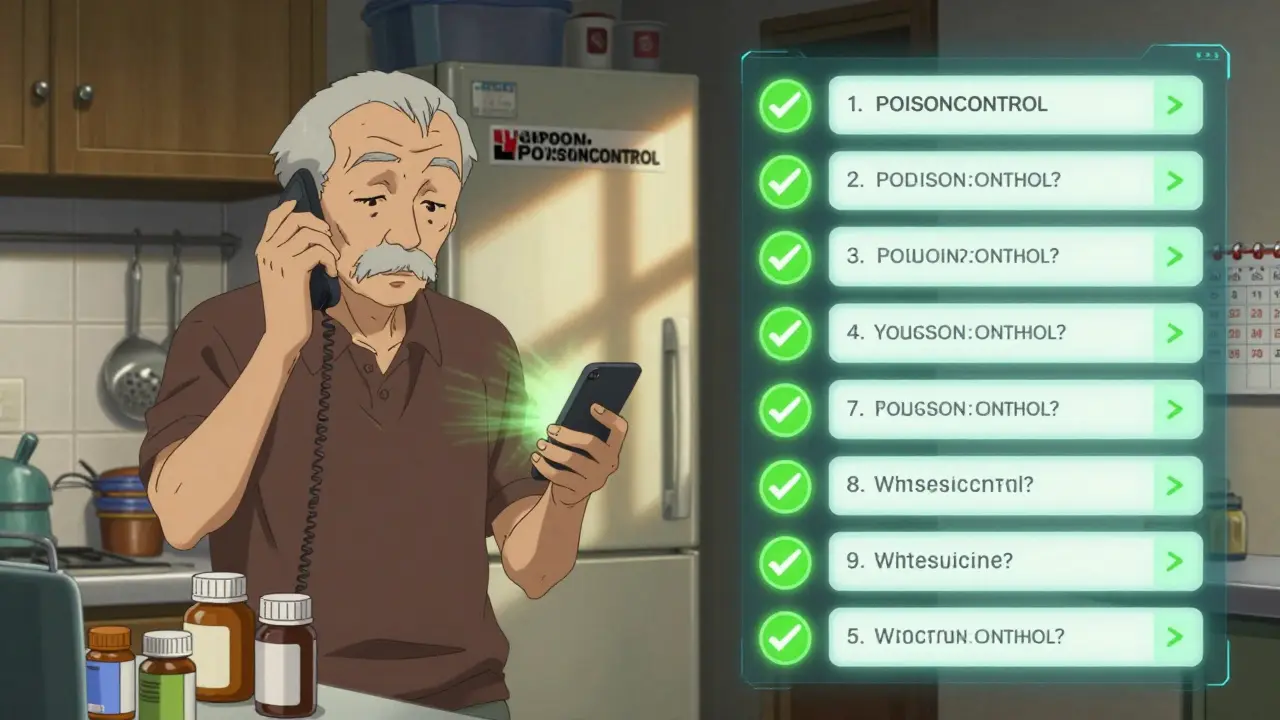
What You Shouldn’t Report (and What to Do Instead)
The hotline isn’t designed for every situation. It won’t handle:- Intentional overdoses (suicide attempts)
- Exposures to more than two substances at once
- Non-medication poisonings like cleaning products or plants (those are still handled, but require different protocols)
What Happens After the Call
Most calls don’t end with a simple “you’re fine.” The specialist will often schedule a follow-up. For acetaminophen, they’ll call back at 4, 8, and 24 hours to check liver enzyme levels. For opioids, they’ll track breathing patterns. These follow-ups are successful in 92% of cases. You’ll also get an email summary with:- The exact medication and dose
- The risk level assessed
- What to watch for
- When to call back
- Whether to go to the hospital
Real Stories Behind the Numbers
On Reddit, a pharmacist shared how a call to poison control saved a 4-year-old. The child had swallowed a handful of children’s liquid acetaminophen. The parent followed the specialist’s instructions: gave the antidote at home, monitored symptoms, and avoided the ER. Two days later, liver tests came back normal. Without that call, the child could have needed a liver transplant. Another case involved a man who took his wife’s heart medication by mistake. He didn’t feel sick, so he waited. The poison center called him back at 6 hours - he was just starting to show low blood pressure. They told him to go to the ER. He did. He was treated and released the same day. These aren’t rare exceptions. They’re routine outcomes.
What’s Changing in 2026
The system is evolving. In 2023, the CDC funded $4.7 million to update algorithms for new medications - especially weight-loss drugs and synthetic opioids. Some centers now offer video consultations for complex cases. Hospitals are integrating poison center data directly into electronic records, so if you go to the ER after calling, the doctors already have your case history. But funding is a concern. The system is mostly paid for by government money (62%), hospital support (28%), and state grants (10%). A 2022 government report warned that inflation could reduce service capacity by 12-15% without more funding. That means longer wait times or fewer specialists on duty.When to Call - and When Not to Wait
If you suspect a medication overdose - even if the person seems fine - call now. Don’t wait for symptoms. Many drugs, like antidepressants or blood thinners, can cause delayed reactions. The poison center doesn’t judge. They don’t ask for insurance. They don’t care if it was “your fault.” They just want to help. Keep the number saved in your phone. Share it with family. Post it near the medicine cabinet. It’s free, confidential, and available 24/7. And in a crisis, seconds matter more than you think.Is the Poison Control Hotline free to use?
Yes. The Poison Control Hotline is completely free, with no charges for calls or follow-ups. It’s funded by government and hospital support, so users never pay out of pocket.
Do I need to give my name or personal info?
No. You are not required to give your name, address, or insurance information. The service is confidential. However, providing accurate details about the patient (age, weight, medication) helps them give better advice.
Can I use the hotline for pet poisonings?
The U.S. Poison Control Hotline primarily handles human exposures. For pets, contact your veterinarian or the ASPCA Animal Poison Control Center at (888) 426-4435. They have a separate system designed for animals.
What if I’m not sure if it was an overdose?
Call anyway. Poison control specialists handle uncertainty every day. Even if you’re not sure, they can help you assess the risk. It’s better to call and be wrong than to wait and regret it.
How fast do they respond?
Most calls are answered within 30 seconds. Text and webPOISONCONTROL responses take under 3 minutes. Follow-up calls are scheduled based on the medication’s timeline - some within an hour, others within 24 hours.
Can I call for advice on medication interactions?
Yes. Over 30% of serious medication cases involve interactions between two or more drugs. Specialists use databases to check for dangerous combinations, even if the person hasn’t overdosed - just taken them together.
Is the hotline available in languages other than English?
Yes. The hotline offers translation services in over 150 languages. Just say the language you need, and a translator will join the call within seconds.
What if I call and they tell me to go to the ER - is that overreacting?
No. If they recommend the ER, it’s because the risk is real. Many medications cause delayed damage - like liver failure from acetaminophen or heart rhythm problems from antidepressants. Going to the ER isn’t overreacting - it’s following expert advice.
Can I use the hotline for non-medication poisonings?
Yes. The hotline handles all types of poisonings - cleaning products, chemicals, plants, insect bites, and more. Medications make up about 45% of cases, but the rest are covered too.
Is the webPOISONCONTROL tool reliable?
Yes. Studies show the webPOISONCONTROL tool matches human specialist recommendations 97.3% of the time. It’s especially useful for mild cases or when you need quick guidance before calling.

10 Comments
phyllis bourassa
March 7, 2026So let me get this straight - you’re telling me I should call a hotline instead of Googling ‘what happens if my kid eats my Adderall’? Wow. Groundbreaking. I’ve been doing it wrong my whole life. Thanks for the life lesson, Dr. Phil.
Also, ‘don’t wait for symptoms’? Yeah, because I’m sure my 3-year-old is gonna sit there and say ‘Mommy, I think I just swallowed a whole bottle of blood pressure meds.’ Like, what’s next? A pamphlet on ‘how to spot a child who’s secretly a pharmacologist’?
Joe Prism
March 8, 2026People don’t realize how much this service reduces ER overload. It’s not just triage - it’s predictive medicine. The algorithms are basically AI trained on decades of human mistakes.
And yet we still treat it like a last resort. We should teach this in middle school. Like, ‘how not to die before lunch.’
Bridget Verwey
March 10, 2026Oh honey. You mean we don’t need to panic, call 911, and then Google ‘is this a death sentence’? What a concept.
I used to think poison control was for ‘accidental toddlers’ - turns out it’s for adults who still think ‘a little extra’ means ‘a whole extra bottle.’
Also - why is this not on every damn medicine bottle? Like a QR code that says ‘scan and survive.’
Andrew Poulin
March 11, 2026Why is this even a thing we need to explain? You take too much medicine you call the experts. That’s not rocket science. It’s basic human behavior. Stop acting like you’re discovering fire.
And yes - save the number. Put it on your fridge next to the pizza guy. Your future self will thank you.
Weston Potgieter
March 11, 2026So you’re saying if I accidentally take my wife’s thyroid med I shouldn’t just ‘wait and see’? Like what? Should I start doing yoga? Meditate? Pray?
And why do I have to give my kid’s weight in KG? I don’t even know what that is. I’m American. I weigh in pounds. My dog weighs 45 lbs. That’s all you need.
Also - who’s funding this? Because I’m pretty sure my taxes paid for this and I didn’t get a vote.
Vikas Verma
March 13, 2026From an international perspective, this system represents a model of public health infrastructure that is both scalable and evidence-based. The integration of algorithmic triage with real-time toxicological databases is a paradigm shift in emergency response.
India lacks such centralized systems. We rely on fragmented hospital networks. The U.S. model deserves global replication. Especially with the rise of polypharmacy in aging populations.
Sean Callahan
March 15, 2026so i called them once bc my cat ate a lily and they were like ‘call vet’ and i was like ok but then i was like wait did they just hang up on me bc i said ‘cat’ and not ‘human’
also i think i called them bc i was lonely and needed someone to talk to and they were nice but i felt weird after
Ferdinand Aton
March 16, 2026Wait - so you’re telling me the system doesn’t handle ‘intentional overdoses’? What? So if someone’s trying to kill themselves they just get ignored? That’s not a hotline - that’s a rejection hotline.
Also - why is there a web tool? Why not just a robot? Or better yet - why not just let people die if they’re dumb enough to overdose?
William Minks
March 17, 20261-800-222-1222 saved my sister’s life after she took 3 different meds by accident 😭
She didn’t even know she was at risk. The specialist called her back 3 times. She’s fine now. 🙏
PLEASE save this number. I’m serious. My grandma has it on her fridge. You should too ❤️
Susan Purney Mark
March 17, 2026I’m a nurse. I’ve seen what happens when people don’t call. I’ve seen liver failure from acetaminophen. I’ve seen people die because they thought ‘it’s probably fine.’
Call. Always. Even if you’re embarrassed. Even if you’re not sure. Even if it’s 3 AM.
And yes - the web tool is 97% accurate. I’ve tested it. It’s not a gimmick. It’s science.
Also - if you’re caring for someone on 5+ meds? Make a list. Write it down. Update it. Don’t rely on memory. You’ll thank yourself later.