APRI: What It Is, How It's Used, and Why It Matters for Liver Health
When your doctor orders a blood test to check your APRI, a non-invasive score used to estimate liver fibrosis based on blood markers. Also known as AST to Platelet Ratio Index, it helps spot liver damage before it becomes severe—without needing a needle in your liver. You won’t find APRI on a standard lab form, but if you have hepatitis, fatty liver, or long-term alcohol use, it’s likely being used behind the scenes to guide your care.
APRI isn’t a magic number—it’s a calculation. It uses two common blood values: AST, aspartate aminotransferase, an enzyme that leaks into the blood when liver cells are injured, and your platelet count, a measure of blood cells that drop as liver scarring worsens. The formula is simple: (AST level divided by the upper limit of normal) divided by platelet count, multiplied by 100. That’s it. No fancy machines. No biopsies. Just numbers your body already gives you. A score above 1.0 often suggests moderate to severe fibrosis. Above 2.0? That’s a red flag for cirrhosis. But here’s the catch: APRI isn’t perfect. It can miss early damage, or give false alarms if you have an infection or recent injury. That’s why doctors don’t use it alone—they combine it with other tests, your history, and sometimes an ultrasound.
What makes APRI useful isn’t its precision—it’s its accessibility. In places without advanced imaging or liver biopsies, APRI is one of the few tools that can tell if someone’s liver is slowly turning to scar tissue. It’s used for hepatitis B and C, for NAFLD (non-alcoholic fatty liver disease), and even for monitoring alcohol-related damage. If you’ve been told you have a "fatty liver," APRI might be the next step to see if it’s becoming something worse. And because it’s cheap and fast, it’s often repeated over time to track progress—or decline. You might not see the term on your report, but if your doctor says, "We’re watching your liver numbers," they’re probably watching APRI too.
What you’ll find below are real-world stories and explanations about how APRI fits into bigger health pictures—from how it’s used in clinics to what happens when it doesn’t match up with other tests. You’ll see how it connects to liver enzymes like ALT, why platelets drop in advanced disease, and how it compares to newer tools like FibroScan. No fluff. Just what you need to understand your results, ask better questions, and know when to push for more answers.
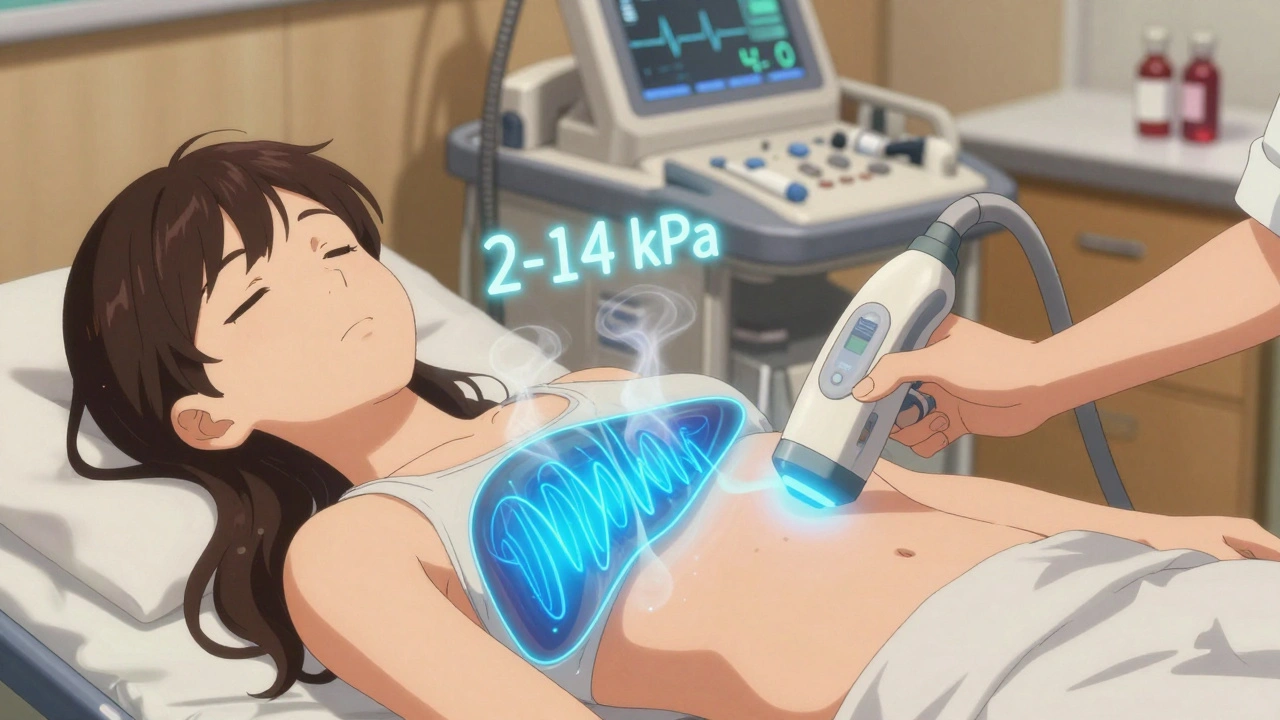
Noninvasive Liver Fibrosis Tests: FibroScan and Serum Scores Explained
FibroScan and serum scores like FIB-4 offer accurate, noninvasive ways to detect liver scarring without biopsy. Learn how they work, when to use each, and why combining them saves lives.
Continue Reading