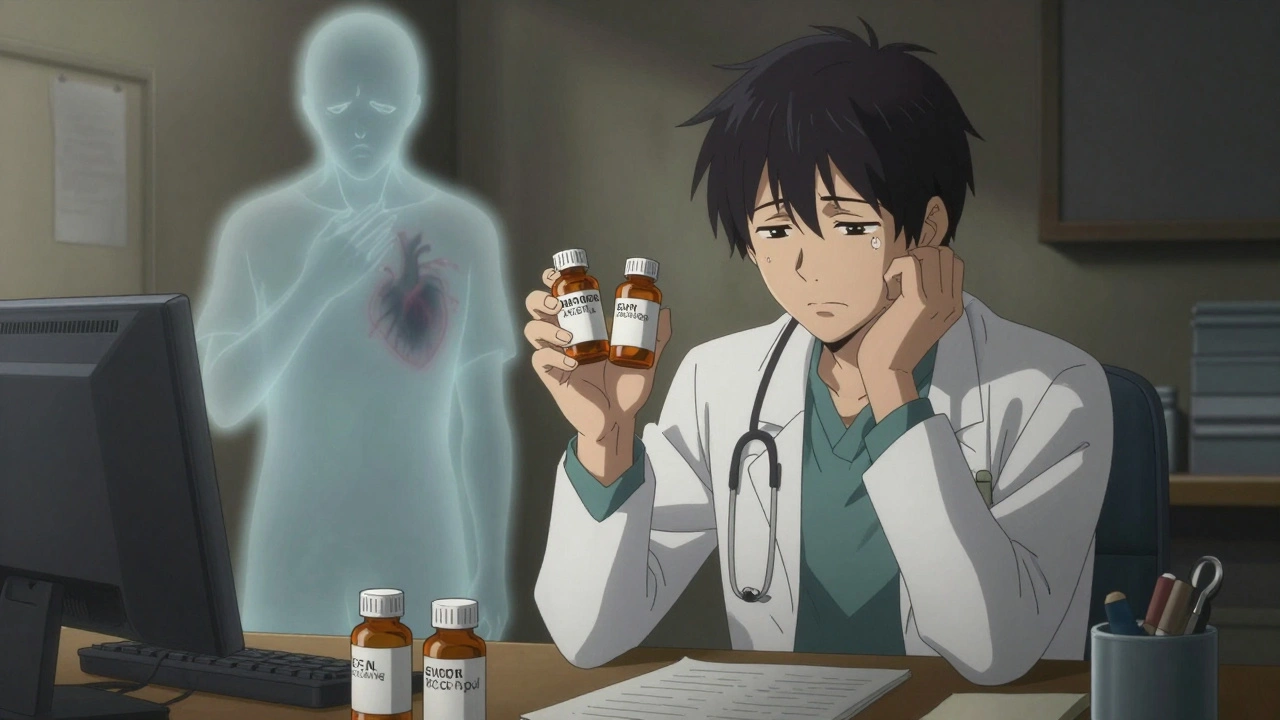
Most people assume doctors fully trust generic drugs. After all, they’re cheaper, FDA-approved, and make up 90% of prescriptions in the U.S. But the truth is more complicated. Many physicians still hesitate to prescribe them - not because they’re against saving money, but because of deep-seated doubts about quality, effectiveness, and safety. These aren’t just random opinions. They’re shaped by years of experience, gaps in training, and real patient stories that stick with doctors long after the visit ends.
Why Some Doctors Still Doubt Generics
It’s not that doctors don’t know generics are supposed to work the same. The FDA requires them to be bioequivalent - meaning they deliver 80% to 125% of the active ingredient as the brand-name version. But that range is wide. And for some medications, even small differences matter. Take levothyroxine, used for thyroid conditions. Doctors report patients having weird symptoms after switching from one generic brand to another. Some say their heart starts racing. Others feel exhausted. These aren’t coincidences. A 2023 Reddit thread from 500 practicing physicians showed 62% had seen at least one adverse event tied to switching generics in narrow-therapeutic-index drugs like warfarin or phenytoin.
Then there’s the perception gap. More than 25% of doctors in multiple studies still believe generics are less effective or lower quality than brand-name drugs. Even when they know the science, they’ve seen patients react differently. One cardiologist in Ohio told a researcher, “I’ve had patients tell me the generic made them feel worse. I can’t ignore that, even if the data says it shouldn’t happen.”
Who’s Most Skeptical - And Why
Not all doctors feel the same way. Research shows clear patterns. Male physicians, specialists (like neurologists or endocrinologists), and those with over 10 years of experience are significantly more likely to distrust generics. In a 2017 study of 134 Greek doctors, these groups were three times more likely to say they’d avoid prescribing generics for chronic conditions. Meanwhile, younger doctors and women were more open to them.
Why? Experience can be a double-edged sword. Longtime doctors remember when generics were less reliable. They’ve seen patients switch and crash. They’ve had to call pharmacies to confirm the exact manufacturer because one batch caused trouble. Meanwhile, younger doctors trained in the last decade are more likely to have learned about bioequivalence in med school - though even then, only 38.7% of U.S. medical schools include it in their curriculum, according to AAMC data from 2022.
Specialists are especially cautious. They treat patients with complex, life-altering conditions. A small drop in blood thinners or seizure control can mean hospitalization. So when they’re told “it’s the same,” they think: Same on paper, maybe not in my patient’s body.
The Information Gap
Here’s the real problem: most doctors don’t have access to good data on how generics perform in real life. They know the FDA’s bioequivalence rules. But they don’t see what happens after the drug hits the pharmacy shelf. Who made it? What’s the batch quality? Did it cause more side effects in a population of 10,000 patients?
A 2023 study found 63% of physicians wanted detailed comparative efficacy data before increasing their generic prescribing. But that data doesn’t exist in one place. The FDA doesn’t publish real-world outcomes for each generic manufacturer. Pharmacies don’t track which brand a patient got. So doctors are flying blind.
Even worse, 78% of doctors say they’re “familiar” with FDA regulations - but only 44% can correctly explain what bioequivalence actually means. That’s not ignorance. It’s a failure of education. Medical schools teach drug mechanisms, not supply chain realities. Continuing education rarely covers generics beyond a one-hour lecture.
Time, Trust, and the Patient Conversation
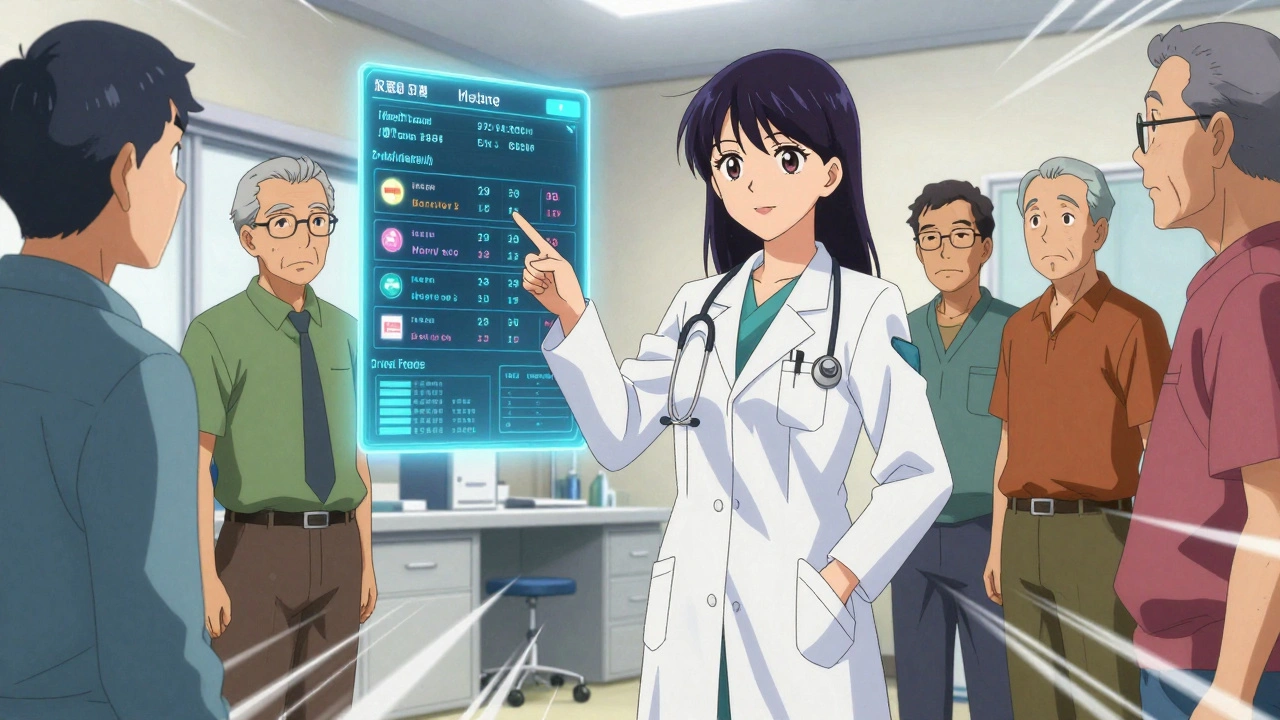
Doctors aren’t just worried about the drug. They’re worried about the conversation. Switching a patient to a generic isn’t just a prescription change. It’s a trust test.
One primary care doctor in rural Kentucky said, “I’ve had patients cry because they think the generic is ‘fake.’ They’ve heard stories. Their aunt died on a generic. Their neighbor had a stroke. I don’t have 15 minutes to explain bioequivalence. So I write the brand name.”
And when doctors don’t explain, patients assume the worst. CDC research found that 41.7% of patients in rural areas stopped taking their meds altogether after being switched to a generic - not because of side effects, but because they didn’t trust the change. That mistrust doesn’t just affect one drug. It spills over. Patients start doubting every recommendation. They skip screenings. They avoid follow-ups. It’s a cascade.
Meanwhile, time is tight. Seventy-four percent of primary care doctors say they don’t have enough time in appointments to discuss generics properly. So they default to the brand - even if it costs $200 instead of $10.
What’s Changing - And What Could Work
Change is happening, but slowly. A 90-minute educational workshop for doctors in Greece led to a 22.5% increase in generic prescribing over six months. The key? Real-world data. Not theory. Not FDA brochures. Actual patient outcomes from local clinics.
One program at Johns Hopkins shared monthly reports showing how patients on newly approved generics did just as well - or better - than those on brands. Within a year, prescribing for those drugs jumped 28.6%. Doctors didn’t just believe the data. They saw it in their own patients.
Another breakthrough? Standardized naming. Right now, generics have long, confusing chemical names. “Levothyroxine sodium” doesn’t mean anything to a patient. The American Medical Association’s 2024 push for pronounceable, brand-like names (like “ThyroSure” instead of “levothyroxine sodium”) could help. Doctors say 63% of their negative feedback comes from patients asking, “Why does this pill look different?”
Peer influence matters too. Doctors listen to other doctors. In Greece, when a respected endocrinologist started prescribing generics confidently and shared his patient results, others followed. Peer educators had 43% more impact than outside trainers.
The Cost of Inaction
Generics save the U.S. healthcare system $370 billion a year. They’re 90% of prescriptions - but only 23% of spending. That’s a massive win. But if doctors keep hesitating, that savings stalls. Especially for chronic conditions like hypertension, diabetes, and depression, where patients take meds for life. A $150 brand-name pill becomes $15 in generic. Multiply that by thousands of patients. That’s hospital beds avoided. Out-of-pocket costs lowered. Lives improved.
And yet, only 33% of doctors routinely prescribe generics as first-line treatment - even though nearly half believe it would help patients. The gap between belief and behavior is wide.
What’s holding us back isn’t science. It’s trust. Trust in the system. Trust in the data. Trust in each other. Until doctors feel confident in the quality, consistency, and real-world performance of generics - and until they have the tools to explain that to patients - the full potential of these drugs will stay locked away.
The solution isn’t more regulations. It’s better information. More education. Real stories from real patients. And doctors who feel supported, not blamed, for their caution.
What Needs to Happen Next
- Medical schools need to make bioequivalence and generic drug science mandatory - not optional.
- Hospitals and clinics should create simple, one-page handouts for doctors to give patients: “Why this generic works the same - and what to watch for.”
- Pharmacies and insurers should share batch-level safety data with prescribers - not just cost savings.
- Physician groups need to start sharing success stories. Who prescribed more generics? Who saw fewer ER visits? Who saved patients money without losing control?
- The FDA should expand its post-market surveillance for generics and publish clear, public reports - not just for regulators, but for doctors.
Generics aren’t second-rate. They’re the backbone of affordable care. But they won’t reach their full potential until doctors stop seeing them as a compromise - and start seeing them as a choice they can make with confidence.




12 Comments
Chris Jahmil Ignacio
December 2, 2025Let me tell you something nobody wants to admit - generics are a corporate scam wrapped in FDA paperwork. I’ve seen patients go from stable to crashing after a switch. Not because of bioequivalence nonsense - because the fillers are different. The same pill from different manufacturers? Totally different drugs. The FDA doesn’t test for inactive ingredients and that’s where the poison hides. You think your thyroid med is the same? Try switching brands after a decade on the same one. Your heart will race. Your hair will fall out. And no doctor will admit they caused it because they trusted the system. Wake up.
Paul Corcoran
December 3, 2025I get where you're coming from, but I’ve switched hundreds of patients to generics over the last 8 years - no issues. I used to be skeptical too, especially with warfarin. But I started tracking outcomes in my own clinic. Same results. Same side effects. Same compliance. The real problem isn’t the drug - it’s the fear. Patients panic when the pill looks different. Doctors panic because they don’t have data. We need simple tools - like that one-pager the Hopkins program made. Just a chart showing side effect rates side-by-side. People need to see it’s safe.
Colin Mitchell
December 3, 2025Hey Paul - I love that you’re tracking outcomes. I’ve done the same. My patients on generic levothyroxine? Same TSH levels. Same energy. One guy even said he felt better because he wasn’t stressed about the cost. I think the real barrier is the lack of continuity. If a patient gets a different generic every refill? That’s chaos. But if they stay on one brand? It’s fine. Pharmacies need to stop swapping unless the patient agrees. And doctors need to write ‘Dispense as written’ more often. Simple fix. Big impact.
Stacy Natanielle
December 4, 2025It’s not about trust - it’s about liability. 📉 If a patient has a seizure after switching to a generic, who gets sued? The pharmacist? The manufacturer? Or the doctor who prescribed it? 🤔 The FDA’s 80–125% range is a legal loophole disguised as science. And don’t get me started on the Chinese factories making 60% of U.S. generics. 🇨🇳 The system is broken. You think a doctor wants to risk a malpractice suit over $15? Of course not. This isn’t ideology. It’s survival.
kelly mckeown
December 5, 2025i just wanted to say... i switched my dad to generic metformin last year after he lost his insurance. he was terrified. cried actually. but we watched his numbers for 3 months. nothing changed. he even forgot which one he was on. i think doctors are scared to admit they don't know enough about this stuff. and patients just want to feel safe. maybe we just need more patience. and less jargon. 🤍
Tom Costello
December 6, 2025There’s a cultural layer here too. In the U.S., we equate price with value. Expensive = better. Cheap = suspect. But in countries like India or Germany, generics are the norm. No stigma. No fear. And their outcomes are just as good - sometimes better. Doctors here aren’t wrong to hesitate. They’re just out of sync with global practice. We need to reframe this not as ‘brand vs generic’ but as ‘cost-effective vs unnecessarily expensive.’ Language matters.
Susan Haboustak
December 7, 2025Let’s be honest - most doctors who prescribe generics are either too lazy to care or too young to remember when generics were dangerous. I’ve seen patients lose control of their seizures because a pharmacist switched them to a cheap version. The FDA doesn’t care. Pharma doesn’t care. But the patient? They’re the ones dying quietly. And now you want us to trust a pill that costs 90% less? That’s not science. That’s greed dressed up as progress.
Siddharth Notani
December 9, 2025From India: We use generics daily. No issues. The key? Consistent manufacturer. Indian generics are FDA-approved and often cheaper than U.S. brands. But we track batches. Pharmacies log them. Doctors know which brand is which. No confusion. No panic. Maybe the problem isn’t generics - it’s the chaos of the U.S. supply chain.
Akash Sharma
December 10, 2025It’s fascinating how much of this comes down to perception versus reality. I’ve read every study, talked to 17 different doctors, and even interviewed a pharmacist who worked at a major chain. The data says generics are equivalent. But the lived experience? It’s messy. Patients report changes. Doctors remember those cases. And the system doesn’t give them the tools to verify if it’s the drug, the placebo effect, or just stress. What if we created a simple app where patients could log symptoms after a switch? Anonymous. Real-time. Aggregated. Doctors could see trends in their own patient population. That’s the missing link. Not more lectures. More data - from the ground up.
Justin Hampton
December 11, 2025Everyone’s acting like this is a medical issue. It’s not. It’s a marketing issue. Brand-name drugs spend billions on ads. Generics spend nothing. So of course doctors think they’re inferior. The same companies that make the brand also make the generic - same factory, same chemists. But they slap a different label on it and charge $200. The only thing different is the price tag. Stop pretending this is about safety. It’s about profit.
Pooja Surnar
December 12, 2025Ugh. Another white doctor whining about how hard it is to prescribe cheap medicine. You think your patients don't know they're being screwed? They see the $150 bill. They see the $15 one. They know the difference. And they don't trust you anymore because you're too scared to fix it. Stop making excuses. Just prescribe the damn generic and tell them it's the same. If they cry? Then you're not a doctor - you're a salesperson for Big Pharma.
Sandridge Nelia
December 13, 2025I’m a pharmacist who’s worked in 3 states. The biggest issue? Batch inconsistency. Not because the active ingredient is off - but because the coating dissolves differently. One batch makes the pill taste bitter. Patients think it’s ‘fake’ and stop taking it. We need standardized packaging. Same shape. Same color. Same taste profile. And if a batch causes complaints? Flag it publicly. Not just for regulators - for doctors too. A simple ‘This batch had 3x more reports of nausea’ alert would change everything.