Antibiotic Side Effects: What You Need to Know Before Taking Them
When you take an antibiotic, a medication designed to kill or slow the growth of bacteria. Also known as antibacterial agents, they’re one of the most prescribed drugs in the world—but they’re not harmless. Even when used correctly, antibiotic side effects can range from mild stomach upset to life-threatening reactions.
Not all side effects are the same. Some people get nausea or diarrhea because antibiotics wipe out good bacteria along with bad ones. Others develop rashes or yeast infections. But the real danger comes from interactions. For example, mixing certain antibiotics with antifungals or even grapefruit juice can spike drug levels in your blood. And if you’re on other meds—like blood thinners or birth control—antibiotics can make them work too well or not at all. These aren’t rare cases. Studies show over 20% of antibiotic-related ER visits are due to unexpected drug combos.
Then there’s the long-term risk: bacterial resistance, when bacteria evolve to survive antibiotic exposure. This isn’t science fiction—it’s happening right now. Every time you take an antibiotic unnecessarily, you’re helping create superbugs that won’t respond to treatment later. That’s why doctors now avoid prescribing them for colds or viral infections. And if you do need them, finishing the full course isn’t just advice—it’s your responsibility to stop resistance from spreading.
Some side effects are easy to miss. A sudden change in mood, unexplained fatigue, or tingling in your hands could be linked to an antibiotic you started weeks ago. Others, like tendon rupture or nerve damage, are rare but real. The key isn’t fear—it’s awareness. Know your meds. Ask about alternatives. Track how you feel after starting treatment. And never assume a side effect is "just normal."
What You’ll Find in This Collection
This page brings together real-world stories and research-backed insights on how antibiotics affect people differently. You’ll see how one person’s mild stomach upset is another’s emergency. You’ll learn which antibiotics are more likely to cause trouble, how to spot early warning signs, and what to do if you think you’re reacting badly. There’s no fluff—just clear, practical info from posts that dug into the details: from cefpodoxime’s new research to how drug interactions can turn a simple prescription into a health crisis.
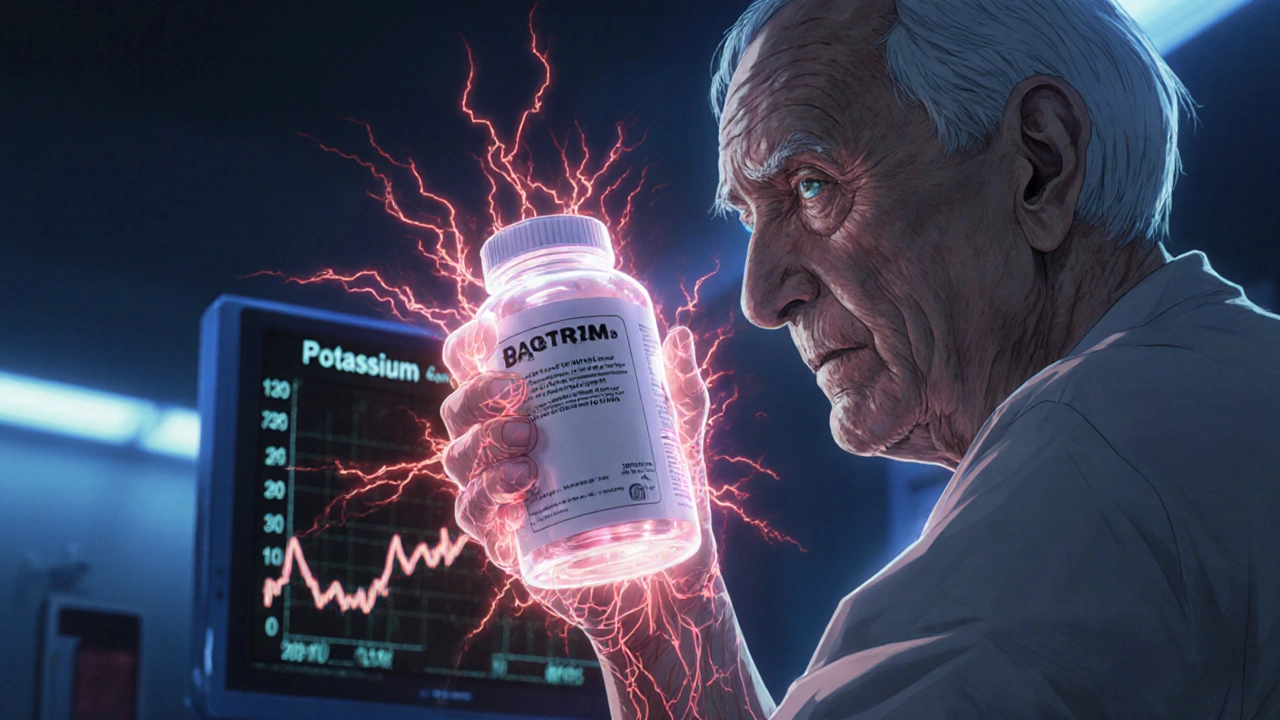
Trimethoprim and Hyperkalemia: What You Need to Know About Potassium Risks
Trimethoprim, found in Bactrim and Septra, can cause dangerous spikes in potassium levels, especially in older adults and those on blood pressure meds. Learn who's at risk, how to prevent it, and what to do if your potassium rises.
Continue Reading