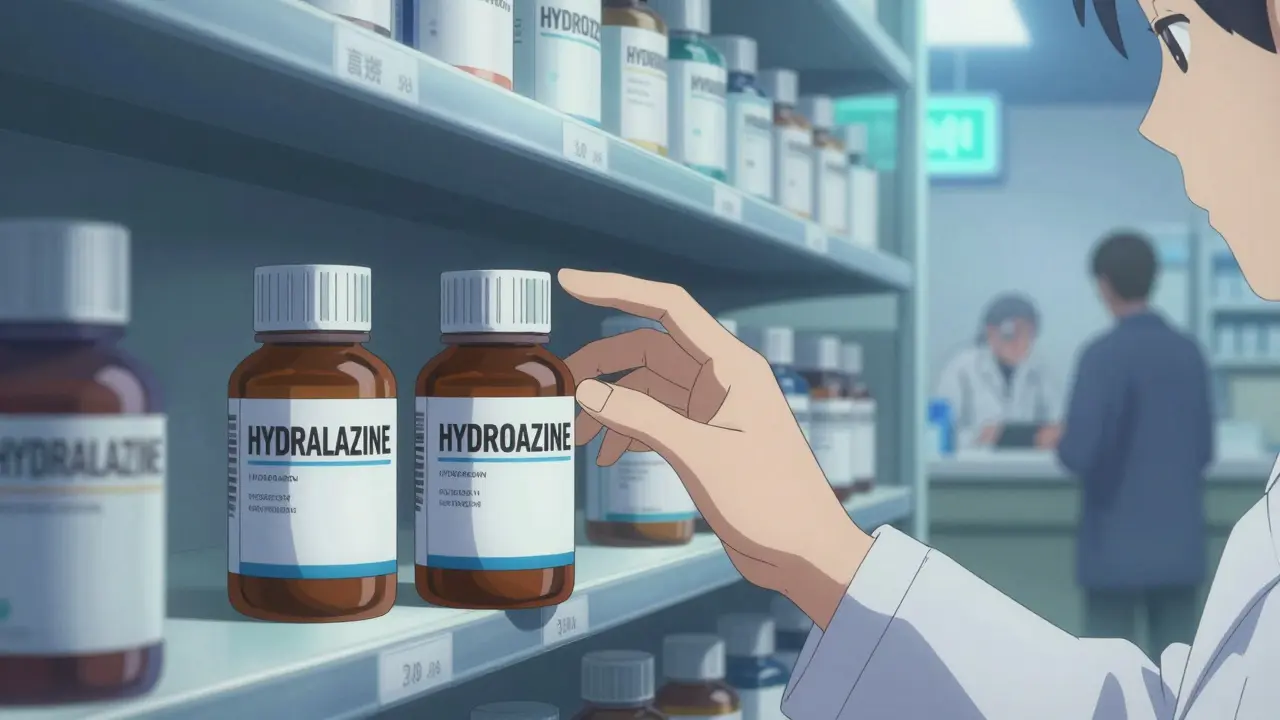
Every year, thousands of patients in hospitals and pharmacies across the world get the wrong medicine-not because of a mistake in dosage, but because two drugs look or sound too much alike. This isn’t rare. It’s common. And it’s especially dangerous with generic medications.
What Are Look-Alike, Sound-Alike (LASA) Drugs?
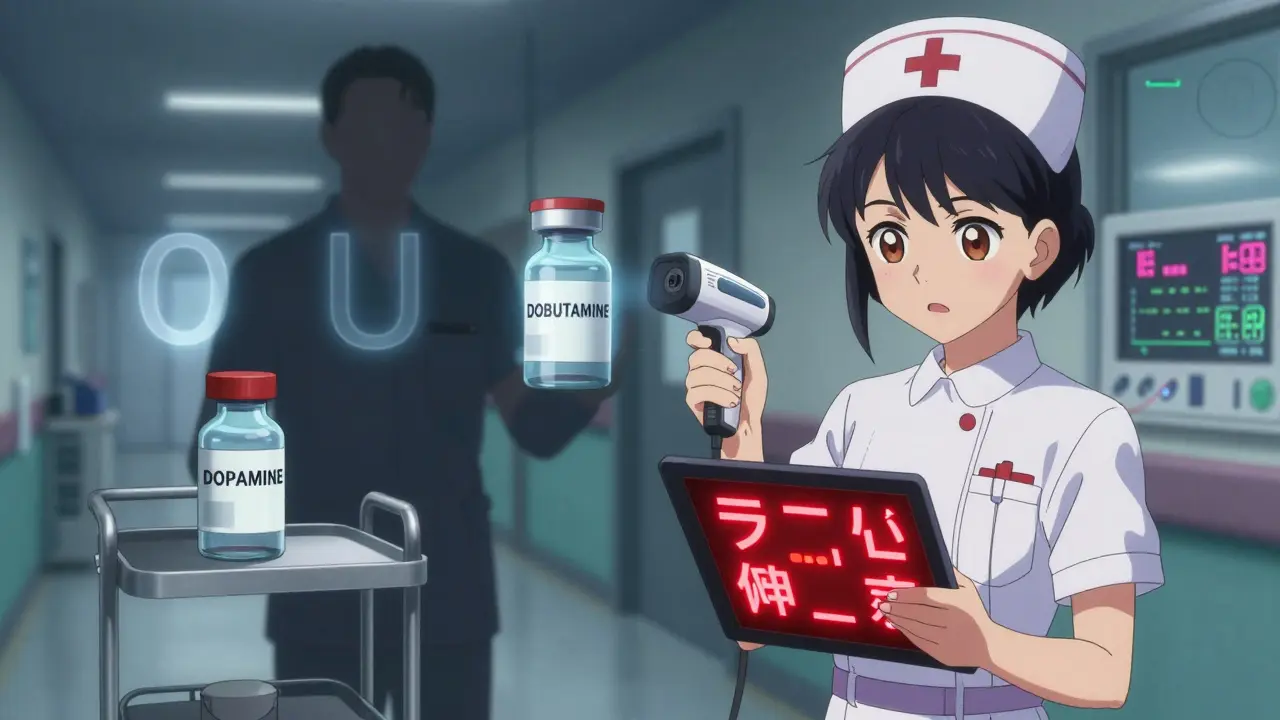
Look-alike, sound-alike (LASA) drugs are medications with names or packaging that are confusingly similar. One might be spelled almost the same as another-like hydralazine and hydroxyzine. Or they might sound identical when spoken aloud-like dopamine and dobutamine. These aren’t typos. They’re real names approved by regulators, and they’re often both available as generics.
When a doctor says "give me hydralazine" and the pharmacist hears "hydroxyzine," the result can be deadly. Hydralazine lowers blood pressure. Hydroxyzine treats anxiety and allergies. Giving the wrong one to a hypertensive patient could cause their blood pressure to crash. In emergency rooms, intensive care units, and even community pharmacies, these mix-ups happen more often than you think.
The World Health Organization says LASA errors account for about 25% of all medication mistakes globally. That’s one in four. And while many are caught before harm occurs, others lead to permanent injury or death. The Institute for Safe Medication Practices (ISMP) has identified nearly 1,000 high-risk pairs. Some of the most dangerous involve generics.
Why Generics Make LASA Errors Worse
Brand-name drugs usually have unique names chosen to stand out. But generics? They’re made by dozens of manufacturers, each with their own packaging, color, shape, and labeling. Two different companies might make generic versions of the same drug-but if they also make another generic with a similar name, the risk multiplies.
Take Valtrex (valacyclovir) and Valcyte (valganciclovir). Both start with "val," both are used in transplant and HIV patients, and both come in similar-looking tablets. Even though Valtrex is brand-name and Valcyte is brand-name too, their generic versions look almost identical. Pharmacists have reported handing out the wrong one because the bottles were side-by-side on the shelf. One treats herpes viruses. The other prevents a deadly CMV infection. Mix them up, and a patient could get a fatal infection.
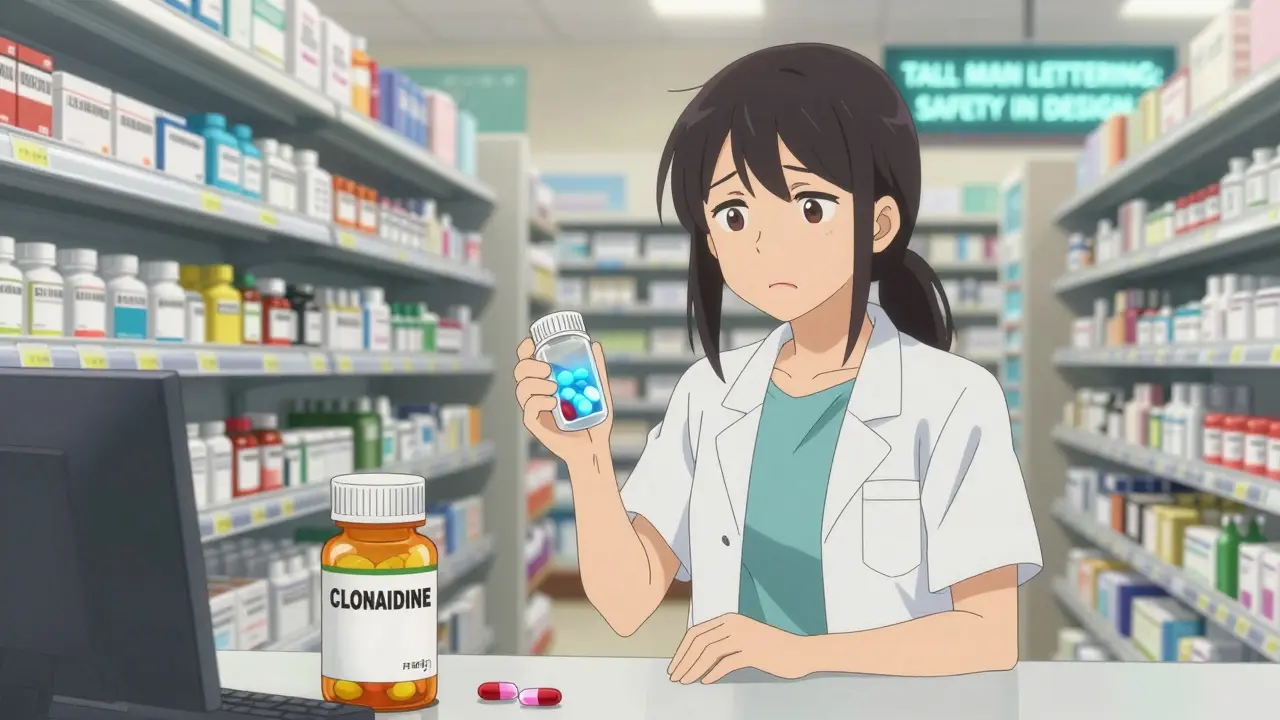
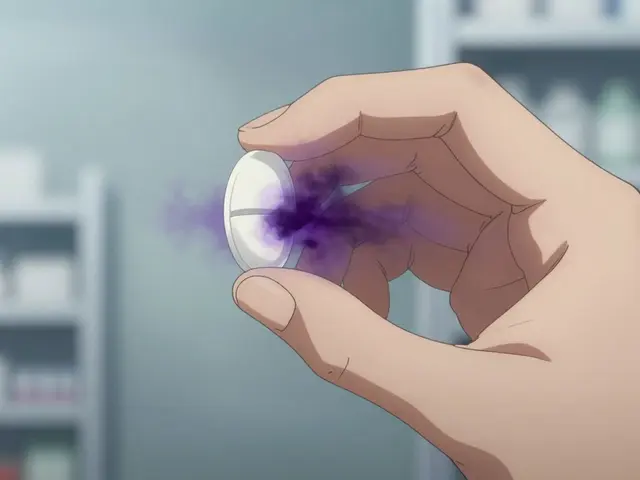
Another example: clonazepam and clonidine. One is an anti-seizure and anxiety drug. The other is a blood pressure medication. They’re spelled almost the same. They’re both small, white pills. In a busy pharmacy, one can easily be swapped for the other. A 2021 survey found that 78% of pharmacists had encountered a LASA error at least once a month. Over a third said it happened weekly.
Where Do These Errors Happen?
LASA errors don’t just happen at the pharmacy counter. They occur at every step:
- Prescribing: A doctor writes "hydroxyzine" but the handwriting looks like "hydralazine."
- Dispensing: A pharmacist picks the wrong bottle because the labels look alike.
- Administration: A nurse grabs the wrong vial from the cart because both say "10 mg" and have the same color cap.
- Verbal orders: A doctor says "dopamine" over the phone, and the nurse hears "dobutamine."
Studies show that 68% of medication errors happen during administration-often because the wrong drug was already in the patient’s room. In one case reported by the American Journal of Nursing, a nurse gave dobutamine instead of dopamine to a heart failure patient. The patient’s heart rate spiked dangerously. They survived, but only because the error was caught in time.
And it’s not just hospitals. Community pharmacies are just as vulnerable. In Sydney, Melbourne, and Brisbane, pharmacists have reported LASA mix-ups with antibiotics, painkillers, and mental health meds. Many of these drugs are now available as low-cost generics, making them more likely to be stacked together on shelves.
How Packaging Makes It Worse
It’s not just the name. It’s the bottle. The color. The size. The font.
A 2021 study found that 10.7% of medication errors were linked to similar packaging. Two generic versions of the same drug might come in identical blue bottles. But if one is for high blood pressure and the other for anxiety, that’s a recipe for disaster. Unlike brand-name drugs, generics aren’t required to have standardized packaging. One manufacturer might use a red cap. Another might use a green one. But if they’re stored next to each other, the difference gets lost.
Even the label design matters. Some generics use small fonts. Others put the drug name in a hard-to-read font. If a pharmacist is tired, rushed, or working in low light, they might grab the wrong one. And patients? They often don’t know the difference. They just see the same pill shape and assume it’s the same medicine.
What’s Being Done to Stop It?
There are proven ways to reduce these errors-but they’re not used everywhere.
Tall man lettering is one of the most effective tools. It means capitalizing the different parts of similar names. For example:
- PredniSONE vs. PredniSOLONE
- HydralaZINE vs. HydroxYZINE
A 2020 study across 12 hospitals showed tall man lettering reduced LASA errors by 67%. It’s simple. It’s cheap. And it works.
Another solution is physical separation. Hospitals and pharmacies should never store similar-looking drugs next to each other. Hydralazine and hydroxyzine? Put them on opposite ends of the shelf. Dopamine and dobutamine? Different drawers. This isn’t optional-it’s basic safety.
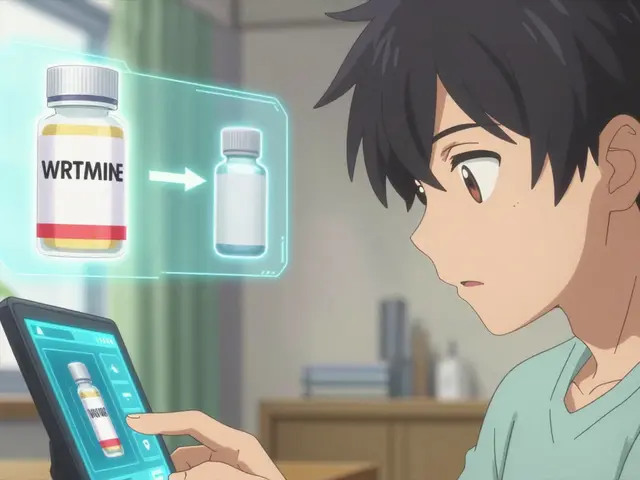
Electronic systems help too. Many hospitals now use barcode scanning and clinical decision support. When a nurse scans a drug, the system checks: "Is this the right patient? The right drug? The right dose?" If it’s a known LASA pair, it flashes a warning. One hospital system cut LASA errors by 45% just by adding these alerts.
Even better? AI-powered systems. A 2023 study showed AI embedded in electronic health records reduced LASA errors by 82%. The system flagged 98.7% of risky matches-and only gave false alarms 1.3% of the time. It learns from past mistakes and adapts. But not every hospital has this tech. And most community pharmacies don’t.
Why Don’t We Fix This Already?
Because it’s not just about technology. It’s about culture.
Dr. David Bates from Harvard says LASA errors aren’t caused by careless staff. They’re caused by broken systems. If a pharmacy has 500 drugs on the shelf, and 20 of them look or sound like others, it’s not fair to blame the pharmacist for grabbing the wrong one. The system should protect them.
Regulators have tried. The U.S. FDA rejected 34 drug names in 2021 because they were too similar to existing ones. The European Medicines Agency now requires all new drugs to pass a name-similarity test. But generics? They’re often approved years after the brand-name version. By then, the damage is done. The names are already in use. The bottles are already printed.
And here’s the hard truth: Generic manufacturers don’t have to follow the same packaging rules as brand-name companies. No one forces them to make their labels stand out. So they don’t. Why spend extra money if the law doesn’t require it?
What Can You Do?
If you take generic medications, here’s how to protect yourself:
- Check the label every time. Don’t assume it’s the same as last month. Look at the name, dose, and manufacturer.
- Ask your pharmacist. "Is this the same as my last prescription?" If the pill looks different, ask why.
- Know your meds. Write down what each drug is for. If you’re on hydralazine for blood pressure, know that it’s not for anxiety.
- Use one pharmacy. If you get all your meds from the same place, they’ll notice if you suddenly get a drug that doesn’t match your history.
- Speak up. If something feels wrong, say so. You’re not being difficult. You’re saving your life.
For healthcare workers: Use tall man lettering. Separate high-risk drugs. Use barcodes. Push for AI alerts. Report every near-miss. These errors aren’t accidents-they’re warning signs.
The Bigger Picture
Medication errors cost the global health system $42 billion a year. LASA errors are a huge part of that. And while technology can help, real change needs leadership. Hospitals need to make safety a priority-not just a checklist. Regulators need to enforce packaging standards. Pharmacies need to stop treating generics as commodities.
The goal isn’t to stop generics. They save lives by making medicine affordable. But they shouldn’t come with hidden risks. Every patient deserves to know the pill in their hand is the right one.
By 2025, the WHO aims to cut severe medication harm by 50%. That’s possible. But only if we stop treating LASA errors as inevitable-and start treating them as preventable.
What are some common look-alike, sound-alike drug pairs?
Common high-risk pairs include hydralazine/hydroxyzine, dopamine/dobutamine, clonazepam/clonidine, and valacyclovir/valganciclovir. Other examples are atenolol/albuterol, and insulin glargine/insulin lispro. These drugs are used for very different conditions, so mixing them can lead to serious harm.
Why are generic drugs more likely to cause LASA errors?
Generic drugs are made by multiple manufacturers, each with different packaging, colors, and label designs. Unlike brand-name drugs, generics aren’t required to follow standardized visual rules. This means two different generics with similar names can look almost identical on the shelf, increasing the chance of confusion during dispensing.
How can tall man lettering prevent medication errors?
Tall man lettering highlights the differences in similar drug names by capitalizing the distinct parts-for example, predniSONE vs. predniSOLONE. This visual cue helps prescribers, pharmacists, and nurses spot the difference quickly. Studies show it reduces LASA errors by up to 67% when used consistently in electronic systems and printed labels.
Can barcode scanning stop LASA errors?
Yes. Barcode scanning at the point of administration checks the drug against the patient’s electronic prescription. If there’s a mismatch-like a LASA pair-it triggers an alert. Hospitals that use this system report 30-45% fewer LASA errors. It’s not foolproof, but it’s one of the most effective tools available.
What should I do if I notice a medication looks different?
Always ask your pharmacist. Even if the name is the same, a change in color, shape, or size could mean a different manufacturer or even a different drug. Never assume it’s a harmless change. A small difference in appearance could signal a dangerous mix-up.
Are there any global efforts to reduce LASA errors?
Yes. The WHO’s "Medication Without Harm" initiative aims to reduce severe medication errors by 50% by 2025. The U.S. FDA and European Medicines Agency now review new drug names for similarity risks. The ISMP maintains a public list of high-risk LASA pairs, and many hospitals use AI tools to flag them in real time.
Next Steps for Patients and Providers
If you’re a patient: Keep a written list of all your medications, including why you take them. Bring it to every appointment. Ask questions. Don’t be shy.
If you’re a healthcare worker: Advocate for tall man lettering in your EHR. Push for physical separation of high-risk drugs. Report every near-miss. Training alone won’t fix this. Systems will.
The problem isn’t going away. But it’s not hopeless. With better design, better tech, and better awareness, we can stop these errors before they hurt someone.

9 Comments
Dan Padgett
December 15, 2025It’s wild how something so simple-like a capitalized letter-can mean life or death. I used to think meds were just pills, but now I see they’re tiny time bombs with names that sound like typos. We treat medicine like it’s a grocery list, but it’s more like a bomb squad checklist. And yet nobody talks about this until someone’s gone.
Arun ana
December 16, 2025Same here in India 🇮🇳. Pharmacies stack generics like candy. Saw a guy get clonidine instead of clonazepam last year. He slept for 36 hours straight. No one knew why until his sister checked the bottle. 🤦♂️
Kayleigh Campbell
December 18, 2025Oh sweet baby Jesus, this is why I refuse to let anyone but my pharmacist touch my meds. I once got a blue pill labeled "Hydroxyzine" when I was on Hydralazine. The label looked like it was printed by a drunk toddler. I called the pharmacy. They said, "Oh, that’s just a different brand." No, Karen. That’s a different DRUG. And I’m not your lab rat.
Billy Poling
December 19, 2025It is imperative to recognize that the systemic failures inherent in the current pharmaceutical regulatory framework are not merely logistical inconveniences, but rather existential threats to public health. The absence of standardized nomenclature protocols across generic manufacturers, coupled with the commodification of pharmaceuticals, has created a dangerous environment wherein cognitive overload among healthcare professionals is not an anomaly, but an inevitability. Furthermore, the lack of mandatory packaging differentiation constitutes a gross dereliction of duty by regulatory bodies that purport to safeguard the populace. One must ask: if a pill’s appearance is indistinguishable from another’s, and the name is phonetically near-identical, how can we reasonably expect human beings-fatigued, overworked, and under-resourced-to maintain infallibility? The answer is: we cannot. And yet we do. And people die. This is not a failure of individual competence. It is a failure of institutional responsibility.
Randolph Rickman
December 19, 2025Hey, I work in a hospital pharmacy and I can tell you-this is 100% fixable. We started using tall man lettering and separating high-risk meds last year. We went from 12 near-misses a month to 1. It’s not magic, it’s just common sense. Nurses now say "Hydrala-ZINE" out loud before they grab it. It sounds silly, but it works. If your hospital doesn’t do this, ask why. Seriously. Just ask. It’s not hard.
Andrew Sychev
December 19, 2025So let me get this straight-we’re letting drug companies slap identical labels on life-or-death pills because it’s cheaper? And we call this capitalism? This isn’t free market. This is a death sentence with a barcode. I hope the CEO of that generic manufacturer sleeps well. I don’t.
Ron Williams
December 19, 2025As someone who grew up in a rural clinic where we had to use whatever generics were delivered, I’ve seen this firsthand. In Nigeria, we didn’t even have tall man lettering. We had prayer. And hope. People still died. But now, with mobile health tech spreading, we’re starting to tag meds with QR codes. Patients scan them, get the real name, the purpose, the risks. It’s not perfect. But it’s a start. We’re not just patients-we’re part of the solution.
Aditya Kumar
December 20, 2025Yeah, I read the article. Cool. Now can I go?
sue spark
December 21, 2025I got a new script last week and the pill looked different so I asked the pharmacist and they said oh that’s just the new maker and I was like wait but last time it was blue and now its white and they paused and looked at the screen and said oh shoot you’re right this is the wrong one and I just stood there thinking wow this is literally why we need systems not just people