When your doctor orders a liver function test, it’s not because they think you’re drinking too much. It’s often because something small-fatigue, a weird belly ache, or even just a routine check-up-made them pause. But what do those numbers on the lab report actually mean? ALT, AST, bilirubin… they sound like alphabet soup. And if you’ve ever Googled them, you’ve probably ended up scared, confused, or both.
What Liver Function Tests Really Measure
Here’s the first thing to know: the name "liver function tests" is misleading. These tests don’t measure how well your liver is working like a pump or a filter. Instead, they measure damage-the leakage of chemicals from injured liver cells into your bloodstream.
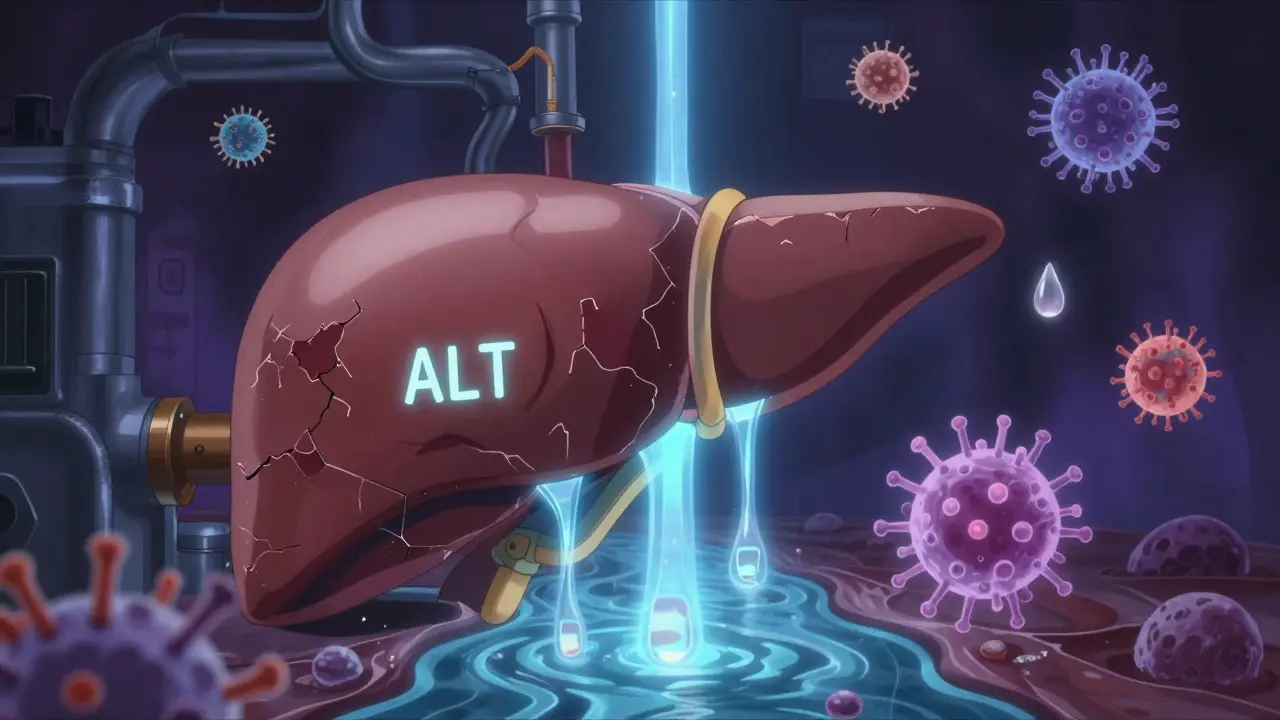
Think of your liver like a factory. When the factory is healthy, everything stays inside. But when something breaks-say, a virus, alcohol, or fatty buildup-the walls crack. Enzymes and proteins spill out. That’s what these blood tests catch.
The core tests include:
- ALT (alanine aminotransferase): Mostly found in liver cells. If it’s high, your liver is likely injured.
- AST (aspartate aminotransferase): Also in the liver, but also in your heart, muscles, and kidneys. Less specific.
- ALP (alkaline phosphatase): Found in bile ducts. High levels often mean bile flow is blocked.
- GGT (gamma-glutamyl transferase): Another bile duct marker. Often rises with alcohol use or bile problems.
- Bilirubin: A yellow pigment made when red blood cells break down. Your liver processes it. If it builds up, your skin or eyes turn yellow.
- Albumin: A protein your liver makes. Low levels mean your liver isn’t keeping up over time.
- Prothrombin time (PT): Measures how fast your blood clots. Your liver makes clotting factors. Slow clotting = liver isn’t producing them.
Reference ranges vary by lab, but typical values in Australia are:
- ALT: 7-55 U/L (higher in men, higher in people with obesity)
- AST: 8-48 U/L
- Bilirubin: 3-17 μmol/L
- Albumin: 35-50 g/L
Important: If your ALT is 58 U/L, that doesn’t mean you have liver disease. About 10-15% of healthy people have slightly elevated levels for no clear reason. But if it’s 200 or 500? That’s a red flag.
ALT vs AST: The Pattern Matters More Than the Number
Most people fixate on one number. But the real story is in the pattern.
ALT is the liver’s best friend. It’s mostly only in the liver. So if ALT is high, it’s a strong signal the liver itself is hurt.
AST? Not so loyal. It’s in your heart, muscles, even your brain. A high AST could mean a heart attack, a bad muscle injury, or a liver problem. That’s why doctors look at the ratio: AST to ALT.
Here’s what the numbers tell you:
- AST/ALT ratio less than 1: Most common in viral hepatitis (like hepatitis B or C), fatty liver disease (MASLD), or medication injury. ALT is higher than AST.
- AST/ALT ratio greater than 1: Classic sign of alcohol-related liver damage. AST is often 2-3 times higher than ALT.
- AST/ALT ratio above 2: Strong indicator of alcoholic hepatitis. In fact, 90% of people with this pattern have alcohol-related liver disease.
- AST above 500 U/L: If you’re a heavy drinker, this probably isn’t just alcohol. Think acetaminophen overdose.
- ALT or AST above 1,000 U/L: Almost always means something serious-acute viral hepatitis, drug toxicity (like paracetamol), or ischemic liver injury (when blood flow drops suddenly).
And here’s a fact most people miss: ALT sticks around longer than AST. ALT has a half-life of about 47 hours. AST? Only 18. So if you had a liver injury last week and your AST is normal now, but ALT is still high? The damage is still there.
Bilirubin and Cholestasis: When Bile Gets Stuck
Bilirubin isn’t a liver enzyme. It’s waste. Your body breaks down old red blood cells every day, and the liver turns bilirubin into something you can pee out.
If your bile ducts get blocked-by a gallstone, tumor, or inflammation-bilirubin backs up. That’s called cholestasis.
Here’s how to spot it:
- Bilirubin is high (especially the "direct" or conjugated part)
- ALP and GGT are also high-often more than 3 times the normal range
- ALT and AST are only mildly elevated (less than 3 times normal)
This pattern tells you: the problem isn’t the liver cells dying. It’s the pipes. Something’s blocking the flow.
But here’s a twist: if ALP is high and GGT is normal? It’s probably not your liver. ALP is also made by your bones. A bone tumor, healing fracture, or even growing kids can raise ALP without any liver issue. That’s why GGT is the tie-breaker. If GGT is up too, it’s liver-related. If not? Look elsewhere.

Albumin and Prothrombin Time: The True "Function" Tests
ALT and AST tell you about damage. But albumin and PT tell you if your liver is still doing its job.
Albumin is a protein your liver makes every day. It keeps fluid in your blood vessels. If your liver is damaged for months or years-like in cirrhosis-it stops making enough. Albumin drops slowly. It takes weeks to change because its half-life is 20 days.
Prothrombin time (PT) is faster. It measures how long your blood takes to clot. Your liver makes the proteins that make clotting possible. If your liver suddenly stops working-like in acute liver failure-PT rises within days.
So:
- Low albumin + normal PT? Chronic liver damage.
- Normal albumin + high PT? Acute liver failure.
- Both low? Severe, long-term damage.
These are the tests that tell doctors if you’re in danger of bleeding, swelling, or needing a transplant.
What Causes Elevated Liver Tests?
Not every high ALT means you’re an alcoholic. Here’s what actually causes the most common patterns:
- MASLD (fatty liver): Most common cause of mild ALT/AST rise. Often ALT > AST. No alcohol. Often linked to obesity, diabetes, or high triglycerides.
- Alcohol-related liver disease: AST > ALT, often 2:1 or higher. GGT is usually very high.
- Viral hepatitis (A, B, C): ALT skyrockets-often 10x normal or more. You might feel sick, yellow, or just tired.
- Medication or supplement injury: Paracetamol (acetaminophen) overdose is the #1 cause of acute liver failure in Australia. Other culprits: statins, antibiotics, herbal teas like kava or green tea extract.
- Autoimmune hepatitis: ALT and AST rise, often with other antibodies in blood. More common in women.
- Gallstones or bile duct blockage: High ALP, high bilirubin, normal or mildly high ALT/AST.
- Heart failure or shock: Can cause "ischemic hepatitis"-ALT/AST spike over 1,000 U/L because the liver didn’t get enough blood.
And yes, even intense exercise or muscle injury can raise AST. If you just ran a marathon and your AST is 120? It’s probably not your liver.

When to Worry-and When to Wait
Most people panic when their ALT is 60. But here’s the truth: 1 in 5 people have mild elevations with no disease.
Guidelines from the American Association for the Study of Liver Diseases (AASLD, 2023) say:
- If ALT or AST is under 2x the upper limit (so under 110 U/L) and you feel fine? Wait. Don’t rush to scans or biopsies.
- Check your weight, alcohol intake, medications, and blood sugar. Lifestyle changes often fix this.
- If levels stay high after 3-6 months? Then dig deeper.
- If ALT or AST is over 500 U/L, or rising fast (more than 100 U/L per week)? Get seen now.
- If you’re yellow, confused, or bleeding easily? Go to the ER.
Studies show doctors order unnecessary ultrasounds and CT scans for 37% of patients with ALT between 41-80 U/L. Most of those people have no liver disease.
The real power? Combining LFTs with simple scores like FIB-4. It uses your age, ALT, AST, and platelet count to guess if you have advanced scarring. When used together, accuracy jumps from 68% to 89%.
What Happens Next?
If your tests are abnormal, your doctor won’t just say "your liver is bad." They’ll ask:
- How much do you drink?
- Are you taking any supplements or herbal remedies?
- Do you have diabetes or high cholesterol?
- Have you lost weight recently?
- Any family history of liver disease?
Then they might order:
- Hepatitis B and C blood tests
- Ultrasound of the liver
- FIB-4 score or FibroScan
- Iron or copper tests (rarely needed)
And the best part? For most people, the fix isn’t medicine. It’s weight loss, cutting alcohol, stopping harmful supplements, and controlling blood sugar. Even a 5-10% weight loss can reverse fatty liver.
And if you’ve been told your liver is "fine" but your ALT is still high? Keep asking. Don’t let mild numbers slide. A 2021 study of 12,450 people found that even slightly elevated ALT over time increases your risk of dying from liver disease.
Bottom Line: Don’t Fear the Numbers, Understand the Story
Liver tests aren’t a yes/no verdict. They’re clues. A pattern. A story.
One high ALT? Maybe nothing. Two high enzymes? Maybe fatty liver. AST twice ALT? Time to talk about alcohol. High bilirubin and ALP? Check for gallstones. Low albumin and long PT? Your liver is struggling to survive.
And if you’re worried? Don’t Google. Talk to your doctor. Bring your results. Ask: "What pattern do I have? What’s the most likely cause? What should I do next?"
Your liver is strong. It can heal. But only if you listen to what it’s telling you.
11 Comments
Annie Choi
January 15, 2026ALT and AST ratios are everything. I saw a 3:1 AST:ALT in a patient last month and turned out to be early alcoholic hepatitis. No drinking history? Yeah right. They were sipping craft beer like water. The liver doesn't lie.
Arjun Seth
January 16, 2026People think liver damage is only from alcohol? No! It's from sugar! High-fructose corn syrup is poisoning the masses! And doctors? They're paid by Big Pharma to ignore it! Your liver isn't broken-it's betrayed!
Mike Berrange
January 18, 2026Actually, the half-life of ALT is 47 hours, not 48. And AST is 17-18 hours, not 18. Minor, but if you're going to cite numbers, get them right. Also, GGT isn't always reliable-some people metabolize it differently based on genetics.
Dan Mack
January 18, 2026Did you know the CDC hides the real causes of elevated liver enzymes? It's not alcohol, not fatty liver-it's 5G radiation and fluoride in the water. They don't want you to know that your liver is being slowly fried by government tech. Check the FDA's leaked memo from 2019.
Amy Vickberg
January 19, 2026I love how this breaks it down without fear-mongering. My mom had a mild ALT spike last year-no symptoms, no alcohol, just stress and weight gain. Lost 8% body weight, retested in 4 months-back to normal. Your liver is resilient if you give it a chance.
Ayush Pareek
January 20, 2026Good breakdown. I tell my patients: don't panic at 60. But don't ignore it either. Start with cutting soda, walking 30 mins a day, and sleeping better. Most of the time, that's all it takes. Small changes, big results.
Nishant Garg
January 21, 2026In India, we see a lot of fatty liver from roti and ghee, not beer. And the real villain? Turmeric supplements. Everyone thinks it's 'anti-inflammatory' so they take 5 grams a day. Turns out, it's hepatotoxic in high doses. Your grandma's wisdom? She knew not to overdo the spices.
Nicholas Urmaza
January 21, 2026If your ALT is elevated and you're over 40 you need a FibroScan not a biopsy. Insurance won't cover it? Too bad. Your liver doesn't care about your deductible. This isn't a suggestion-it's a medical imperative
Sarah Mailloux
January 22, 2026My cousin had bilirubin at 40 and ALP at 300. Turned out it was a gallstone. No surgery. Just a 10-minute ER procedure. I wish I'd known this sooner-she was scared for months thinking it was cancer. Knowledge is power.
Nilesh Khedekar
January 24, 2026Oh wow, another article telling people to "just lose weight" like that's magic. Meanwhile, the guy working two jobs, eating takeout because he's exhausted, and can't afford a gym? Yeah, he's just lazy. Real helpful, thanks.
Jami Reynolds
January 26, 2026Wait. You said FIB-4 improves accuracy to 89%. But the 2023 AASLD guidelines say it's only 78% in obese populations. You're citing outdated data. And why no mention of PNPLA3 gene variants? That's the real reason some thin people have severe fatty liver. This is dangerously incomplete.