
When you see a commercial for a new prescription drug on TV, it’s hard not to notice the smiling people hiking in the mountains, laughing with grandchildren, or dancing at sunset. The voiceover says, "Tired of joint pain? Try Xeljanz." But what you don’t hear is that a cheaper, equally effective version of that same drug has been on the shelf for years - a generic version, approved by the FDA, with the same active ingredients and same clinical outcomes. Yet, thanks to advertising, most patients ask for the branded version. And doctors, more often than not, give it to them.
Advertising Doesn’t Just Sell Drugs - It Rewires Expectations
In the U.S. and New Zealand, pharmaceutical companies are allowed to advertise prescription drugs directly to consumers. No other developed country permits this. Since 1997, when the FDA formalized rules for broadcast ads, spending on these campaigns has exploded. In 1996, companies spent $550 million. By 2020, that number hit $6.58 billion. That’s more than 10 times more. And for every dollar spent, drugmakers get over $4 back in sales. That’s not just marketing - it’s a high-return business model built on perception. The problem isn’t just the money. It’s what the ads do to how people think about their meds. When you see an ad for a branded drug, your brain doesn’t just register a name. It registers trust, safety, and superiority. The visuals - sunny skies, active lifestyles, calm faces - create an emotional association. Generics? They show up as small, plain bottles on pharmacy shelves. No ads. No testimonials. No music. Just a price tag. Research from the Wharton School shows that a 10% increase in advertising exposure leads to a 5% increase in prescriptions. But here’s the twist: 70% of that increase comes from new patients starting treatment, not from people already on the drug sticking with it. And among those new patients? Their adherence - meaning, how consistently they take the medicine - is actually lower than average. Why? Because they’re often not the ones who need it most. Advertising pulls in people who are curious, not clinically urgent.The Spillover Effect: How Branded Ads Boost Generic Use (But Not Preference)
Here’s something counterintuitive: advertising for branded drugs like Lipitor or Xeljanz doesn’t just increase sales of those specific pills. It also increases prescriptions for all drugs in that class - including generics. This is called the "spillover effect." Patients hear about "cholesterol meds" or "arthritis treatments" in ads, go to their doctor, and say, "I want something for this." The doctor then prescribes a generic statin or NSAID - cheaper, just as effective. So yes, advertising does increase overall drug use. And yes, that includes generics. But that doesn’t mean patients prefer them. In fact, when given a choice, most patients ask for the brand they saw on TV. A 2005 JAMA study tested this with "standardized patients" - actors trained to make specific requests. When patients asked for a branded antidepressant shown in ads, doctors prescribed it 85% of the time. When they asked for a generic version of the same drug? Only 30% of the time. Doctors aren’t ignoring evidence. They’re responding to pressure. A University of Montana study found that physicians filled 69% of patient requests for drugs they believed were inappropriate. That includes asking for brand-name drugs when a generic would work just as well - or even better.What the Ads Hide: Risks, Costs, and Alternatives
FDA research from 2018 looked at how many times people needed to see an ad before they remembered the risks. Four exposures. That’s how many it took just to barely retain the warning information. And even then, retention was low. Meanwhile, benefit claims - "relieves pain in days!" - stuck after just one or two viewings. Why does this matter for generics? Because generics don’t get ads. So while you’re bombarded with messages about how great a new branded drug is, you never hear about the generic alternative that costs 80% less and works just as well. The FDA requires ads to include risk information, but the way they’re presented - small text, rushed voiceover, buried in visuals - makes them easy to ignore. A study analyzing 230 pharmaceutical ads found something telling: scenes featuring outdoor activities, happy families, and dramatic before-and-after transformations lasted longer than any mention of side effects. The emotional hook is the product. The facts? Background noise.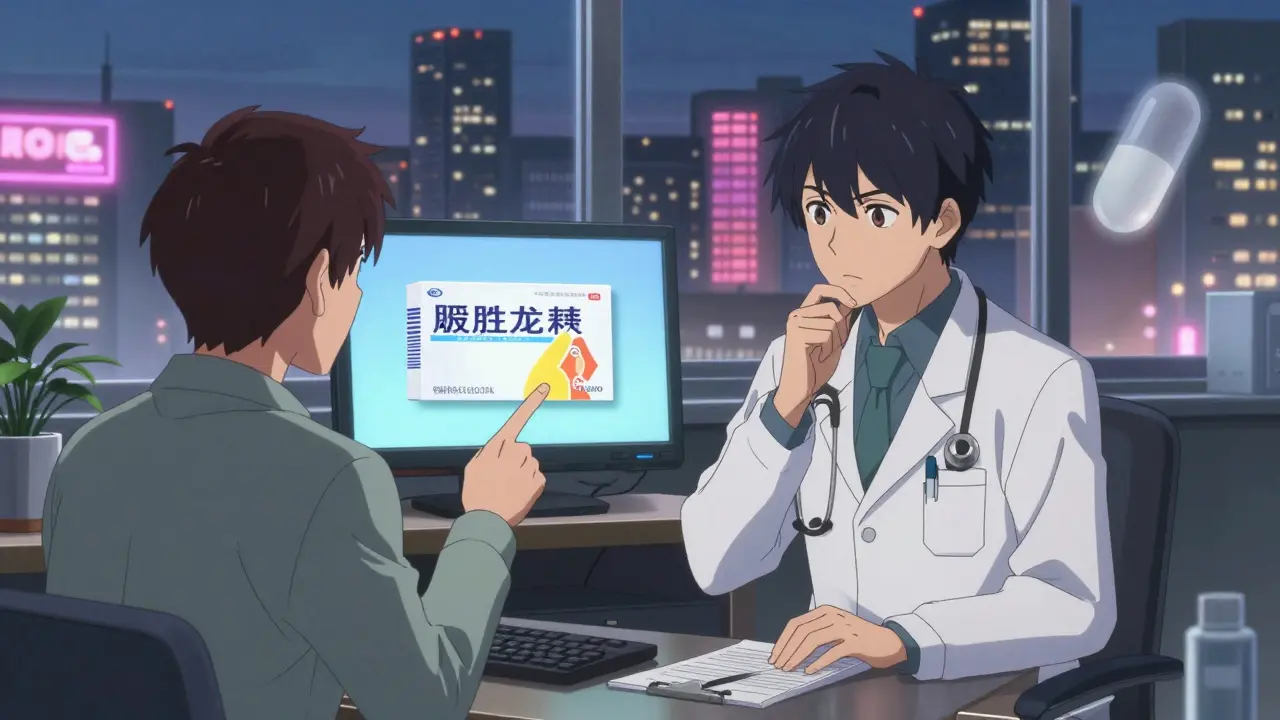
Generics Are Just as Safe - But They Don’t Look Like It
Let’s be clear: generics aren’t second-rate. They’re required by law to have the same active ingredient, strength, dosage form, and route of administration as the brand-name drug. They must meet the same FDA standards for purity, stability, and bioequivalence. In fact, many generics are made in the same factories as the branded versions. But none of that matters if you don’t know it. Advertising doesn’t teach you that. It teaches you that the branded version is "new," "advanced," and "designed for you." The generic? It’s just a pill. No story. No identity. No emotional pull. This perception gap has real consequences. Patients who switch from a branded drug to its generic version often report feeling like they’re getting "inferior" care - even when their symptoms don’t change. Some even stop taking the medication because they believe it’s not working as well. That’s not a pharmacological issue. It’s a psychological one - shaped entirely by advertising.Who Benefits? And Who Pays?
The math is simple. A branded drug might cost $300 a month. The generic? $30. That’s a 90% difference. When advertising pushes people toward the branded version, it doesn’t just raise individual costs - it raises insurance premiums, Medicare spending, and out-of-pocket expenses for everyone. And the companies behind these ads? They’re not losing money. They’re making billions. In 2020, the top 10 DTC advertisers spent over $3 billion combined. Most of those ads promoted drugs with little or no clinical advantage over existing generics. No better efficacy. No fewer side effects. Just better marketing. Meanwhile, generic manufacturers don’t advertise. Why? Because they can’t. The FDA doesn’t allow them to promote their own products directly to consumers. Only the brand-name makers can. So even though generics make up 90% of prescriptions filled in the U.S., they get 0% of the advertising.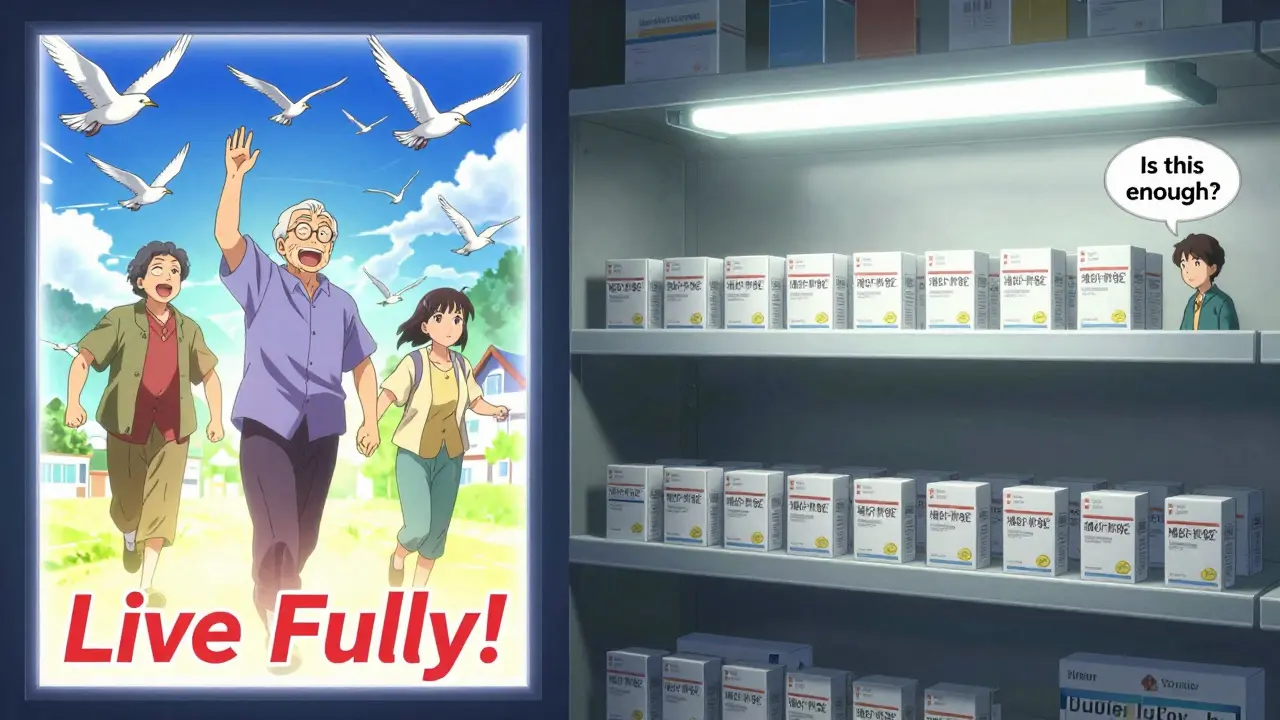
It’s Not About Awareness - It’s About Influence
Proponents of DTC advertising say it empowers patients. It raises awareness. It encourages conversations with doctors. But evidence shows something different. It doesn’t just inform - it manipulates. Patients aren’t coming in with questions like, "What are my options?" They’re coming in saying, "I want this one. I saw it on TV." And doctors? They’re caught between clinical judgment and patient demand. When a patient insists on a branded drug, the doctor has to decide: push back and risk losing the patient’s trust - or go along and contribute to unnecessary spending. This isn’t about education. It’s about influence. And advertising, as it’s currently structured, is designed to favor one thing: the most expensive option.What Can Be Done?
Some countries ban DTC ads entirely - and still have high rates of medication adherence and patient satisfaction. Others require ads to include a balanced summary of risks and benefits - not buried, but front and center. In the U.S., there’s growing pressure to change the rules. Proposals include:- Requiring ads to explicitly mention generic alternatives
- Limiting ad frequency to reduce emotional manipulation
- Forcing equal time for cost and risk information
- Allowing generic manufacturers to advertise - on equal footing
The truth? Generics save lives. They save money. And they work just as well. But without advertising to tell that story, most people will never know.
Are generic drugs as effective as brand-name drugs?
Yes. By law, generic drugs must contain the same active ingredients, strength, dosage form, and route of administration as their brand-name counterparts. They must also meet the same strict FDA standards for purity, stability, and bioequivalence. Studies consistently show that generics perform identically in clinical outcomes. The only differences are in inactive ingredients (like fillers or dyes) and packaging - neither of which affect how the drug works in your body.
Why don’t generic drug companies advertise?
Generic manufacturers rarely advertise directly to consumers because they don’t have the same financial incentives. Once a drug goes generic, multiple companies can produce it, driving prices down. With thin profit margins, there’s little money left for costly TV ads. Meanwhile, brand-name companies spend billions because they’re the only ones who can legally market their specific product - and they profit from patient demand created by those ads.
Does advertising increase adherence to medication?
It has a minimal effect. Research shows that for every 10% increase in advertising exposure, adherence among existing patients rises by only 1% to 2%. Meanwhile, patients who start a drug because of an ad are less likely to stick with it long-term. This suggests advertising attracts people who may not need the medication - or who aren’t motivated to follow through - leading to higher spending without clear health gains.
Do doctors prescribe branded drugs just because patients ask for them?
Yes, often. Studies show that when patients request a specific brand-name drug they saw advertised, doctors prescribe it about 85% of the time - even when a cheaper generic would be equally effective. In one study, physicians filled 69% of patient requests for drugs they considered inappropriate. Patient demand, shaped by advertising, overrides clinical judgment more often than many realize.
Why do DTC ads focus so much on lifestyle imagery?
Because emotion sells better than facts. Ads use smiling people, outdoor activities, and family moments to create a positive emotional association with the drug. This distracts from complex medical information like side effects or cost. The FDA has found that risk information requires multiple exposures to be remembered - and even then, retention is low. Lifestyle imagery, on the other hand, sticks instantly.

11 Comments
Rachidi Toupé GAGNON
February 12, 2026Generics saved my ass after my insurance dropped my brand-name med. Same pill, 1/10th the price. 🙌 I didn’t feel any different-just had way more cash for tacos. Pharma ads are just fancy infomercials for overpriced sugar pills.
Jim Johnson
February 12, 2026yo i just wanna say i never thought about this but u right. my mom was on brand-name blood pressure med for years then switched to generic and she’s been fine. like, she didn’t even notice. but she still says "oh i like the blue pill" lol. ads really mess with your head. thanks for the eye opener!
Vamsi Krishna
February 14, 2026Actually, you’re all missing the real issue. The FDA doesn’t even require generics to be bioequivalent across all populations. Did you know that? The 80-125% range? That’s a massive window. Some people metabolize differently. What if your body just doesn’t respond to the generic? You’re gambling with your health. And don’t even get me started on how many generics are made in China-quality control is a joke. You think your $3 pill is safe? Think again.
Suzette Smith
February 14, 2026I mean, I get it, but… what if I just like the branded version? Maybe I feel better because I believe in it? Isn’t that placebo power? Why does it have to be about money? Maybe I’m just… emotionally attached to my blue pill?
Autumn Frankart
February 15, 2026This whole thing is a psyop. Big Pharma, the FDA, the AMA-they’re all in bed together. You think they let generics advertise because they’re ethical? NO. They’re scared. Because if people knew generics are made in the same factories, they’d realize the whole system is a lie. And don’t forget: the same companies that make the branded drugs also own the generic ones. You’re not fighting the system-you’re playing right into it.
Pat Mun
February 15, 2026I’ve been a nurse for 22 years and I’ve seen this over and over. Patients come in convinced the brand-name is better. I show them the studies, the FDA data, the fact that the same factory makes both. Some still cry. Not because they’re sick-because they feel like they’re being denied something special. It’s heartbreaking. The ads don’t just sell pills-they sell identity. And when you take that away, people panic. I wish we could just… tell the truth more often. But the system won’t let us.
Craig Staszak
February 16, 2026I think we’re overcomplicating this. People want to feel heard. If they ask for a brand because they saw it on TV, maybe the real issue isn’t the ad-it’s that their doctor didn’t take time to explain the options. A little empathy goes further than a spreadsheet. Also, generics are great. I take them. But I get why folks feel weird about it. The packaging looks like a discount store version of life.
Alyssa Williams
February 17, 2026I used to think generics were inferior until my doctor switched me after my deductible reset. I was mad. But guess what? My blood pressure is better than ever. And I saved $2k a year. The real tragedy is that people don’t know this because no one talks about it. Why aren’t there ads for generics? Because they’re not trying to sell you a dream-they’re just trying to sell you a pill. And dreams sell better.
Kristin Jarecki
February 18, 2026The empirical evidence is unequivocal: bioequivalence standards for generic medications are rigorously enforced and validated through pharmacokinetic studies involving hundreds of subjects under controlled conditions. The assertion that generics are clinically inferior is not supported by peer-reviewed literature. Furthermore, the absence of direct-to-consumer advertising for generic manufacturers is not a regulatory failure but a structural consequence of market dynamics and patent expiration. To conflate marketing visibility with therapeutic efficacy is a fundamental misinterpretation of pharmacological science.
Jonathan Noe
February 18, 2026Let’s be real. The reason generics don’t advertise is because they’re not companies. They’re factories. One generic is made by 17 different companies. Who’s gonna spend $100 million on an ad when your profit margin is 3 cents per pill? Meanwhile, Pfizer spends $500 million on a single drug because they’re the ONLY one who can. It’s not about deception. It’s about capitalism. And yeah, I’m mad about it. But I’m not surprised.
Reggie McIntyre
February 20, 2026I used to be one of those people who only took brand-name meds. Then I got a job at a pharmacy. I started seeing the same pills, same batch numbers, same expiration dates-just different packaging. One day, I asked the rep why they didn’t just use the generic box. He laughed and said, "Because the brand box has a little heart on it. And people? They buy hearts." I switched my own meds the next week. Still take them. Still feel fine. Just… cheaper. And yeah, I miss the heart. But I don’t miss the bill.