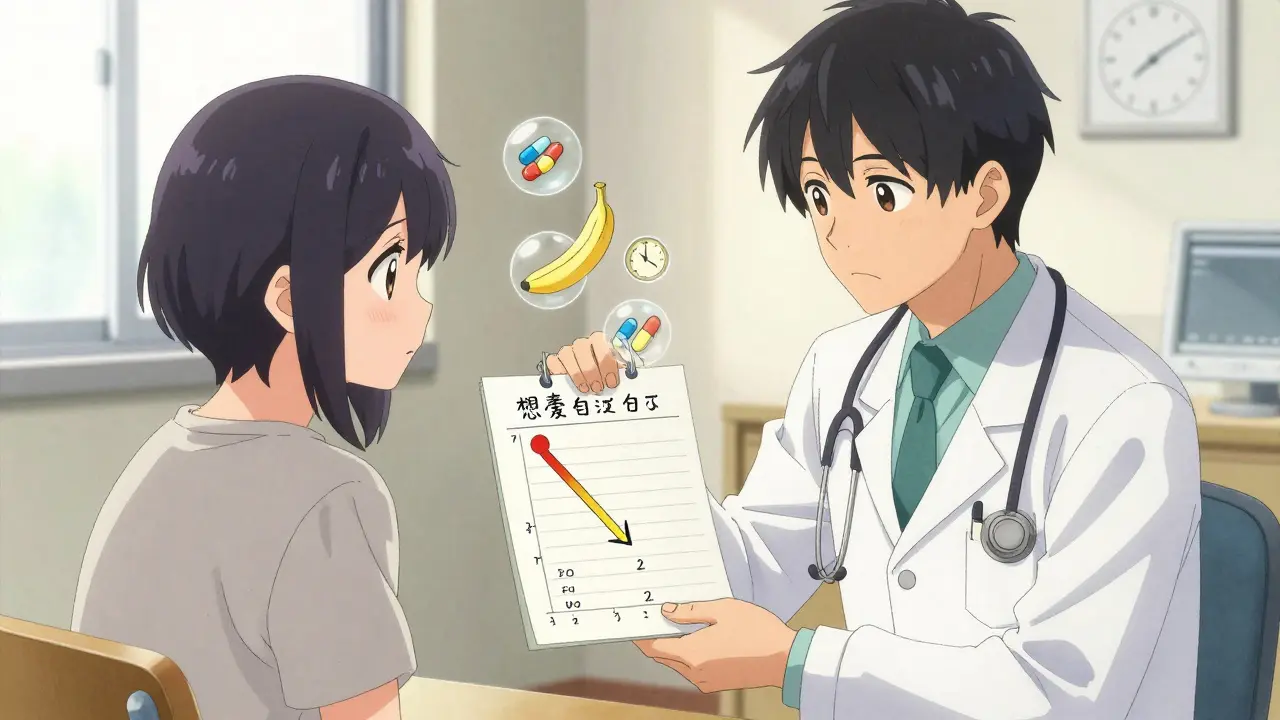
Stopping your medication because of side effects is one of the most common mistakes people make - and it’s often unnecessary. You might feel dizzy after taking your blood pressure pill, or nauseous after your antidepressant. It’s tempting to skip a dose or quit altogether. But here’s the truth: many side effects aren’t reasons to stop - they’re signals to adjust. You don’t have to suffer through them, and you don’t have to quit your treatment. With the right conversation, you can keep taking what you need while feeling better.
Why You Shouldn’t Just Quit
More than half of people stop taking their prescribed medications because of side effects, according to the American Medical Association. But here’s what most don’t realize: many of those side effects fade on their own. The British Heart Foundation found that 68% of common side effects - like nausea, fatigue, or mild headaches - go away within one to two weeks as your body adjusts. Quitting too soon means you lose the benefit of the drug before it even has a chance to work. Take blood pressure meds, for example. Dizziness is a frequent early side effect. But if you stop taking it, your blood pressure spikes again - putting you at risk for stroke or heart attack. Or consider SSRIs for anxiety. Feeling sick to your stomach in the first week? That’s normal for about 40% of users. Most people find it eases after 10-14 days. Stopping now means starting over - and possibly feeling worse than before.How to Talk to Your Doctor Without Sounding Alarmed
You don’t need to panic. You don’t need to say, “I can’t take this anymore.” You need to say, “I’m having this, and I want to keep taking it - how do we fix it?” Start with a simple structure doctors recognize: Describe, Rate, Time, Solve.- Describe exactly what you’re feeling. Not “I feel bad.” Say: “I get nausea about 30 minutes after I take my pill.”
- Rate how bad it is. Use a scale from 1 to 10. “It’s a 7 when I first take it, drops to a 2 after an hour.”
- Time it. Does it happen right after the dose? Only in the morning? After eating? Write it down. A 2021 study in the Journal of the American Medical Informatics Association showed patients who tracked side effects in an app cut their chances of quitting by 23%.
- Solve together. Ask: “Can we adjust the timing? Lower the dose? Add something to help?”
Use the SWIM Framework Before Your Appointment
Before you walk into the clinic, prepare. Use the SWIM method:- Severity - How bad is it?
- When - When does it happen? Right after taking it? 4 hours later?
- Intensity - Does it stop you from working, sleeping, or doing normal things?
- Management - What have you tried already? Did eating food help? Taking it at night?
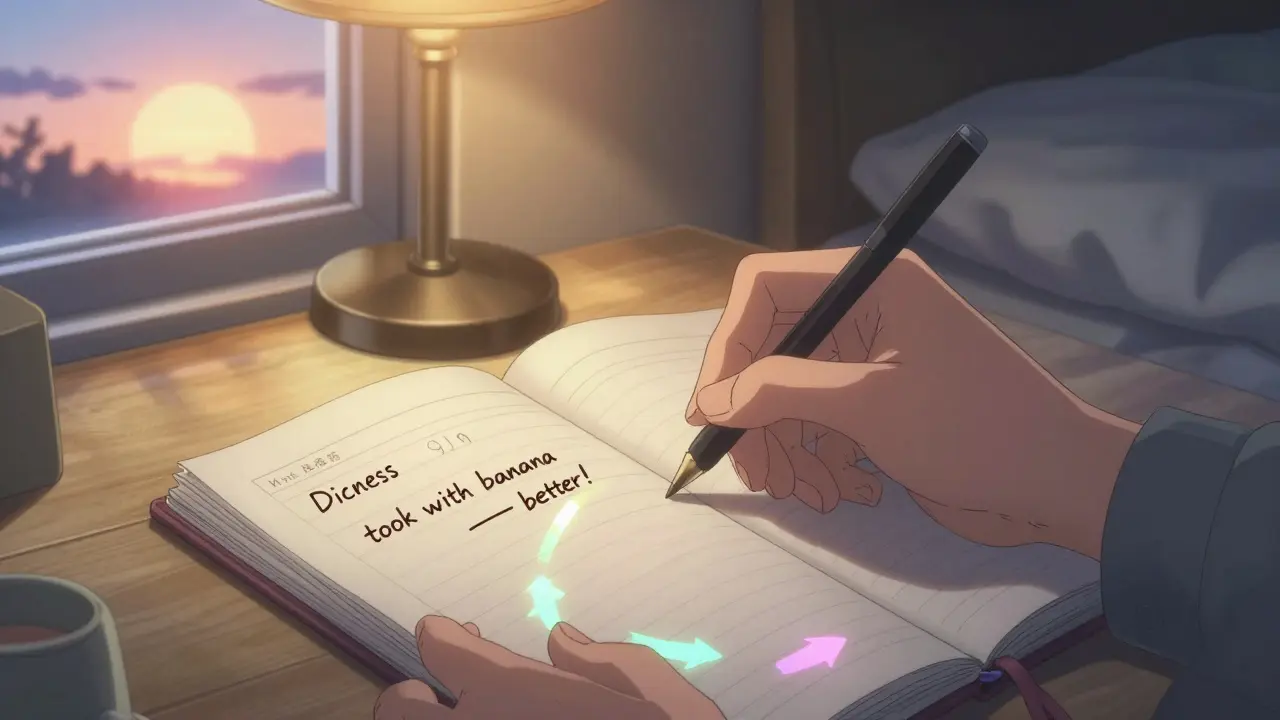
Track It - Even If It’s Just on Paper
You don’t need an app. Just grab a notebook. Every day, write:- What medication you took
- What side effect you felt
- When it started and how long it lasted
- What you did to cope (ate something, rested, drank water)
Some Side Effects Are a Sign It’s Working
This sounds strange, but it’s true. A 2021 study published in PMC found that when patients were told minor side effects like mild sweating or slight tremors were “a sign the treatment is active,” their anxiety dropped by 37%, and they were 29% less likely to quit. For example:- SSRIs sometimes cause mild jitteriness at first - that’s your brain adjusting to more serotonin.
- Thyroid meds can cause temporary heart palpitations - your body is waking up from slow metabolism.
- Statins might cause muscle soreness - it’s a sign the drug is lowering cholesterol in your bloodstream.
Ask About Alternatives - Not Just Quitting
Your doctor doesn’t have one option. There are often multiple drugs in the same class. If you’re having trouble with one, ask:- “Is there another medication in the same group that might not cause this?”
- “Can we try a lower dose first and build up slowly?”
- “Could I take it at night instead of in the morning?”
- “Is there a pill form that’s easier on my stomach - like extended-release?”
What to Do If You’re Still Worried
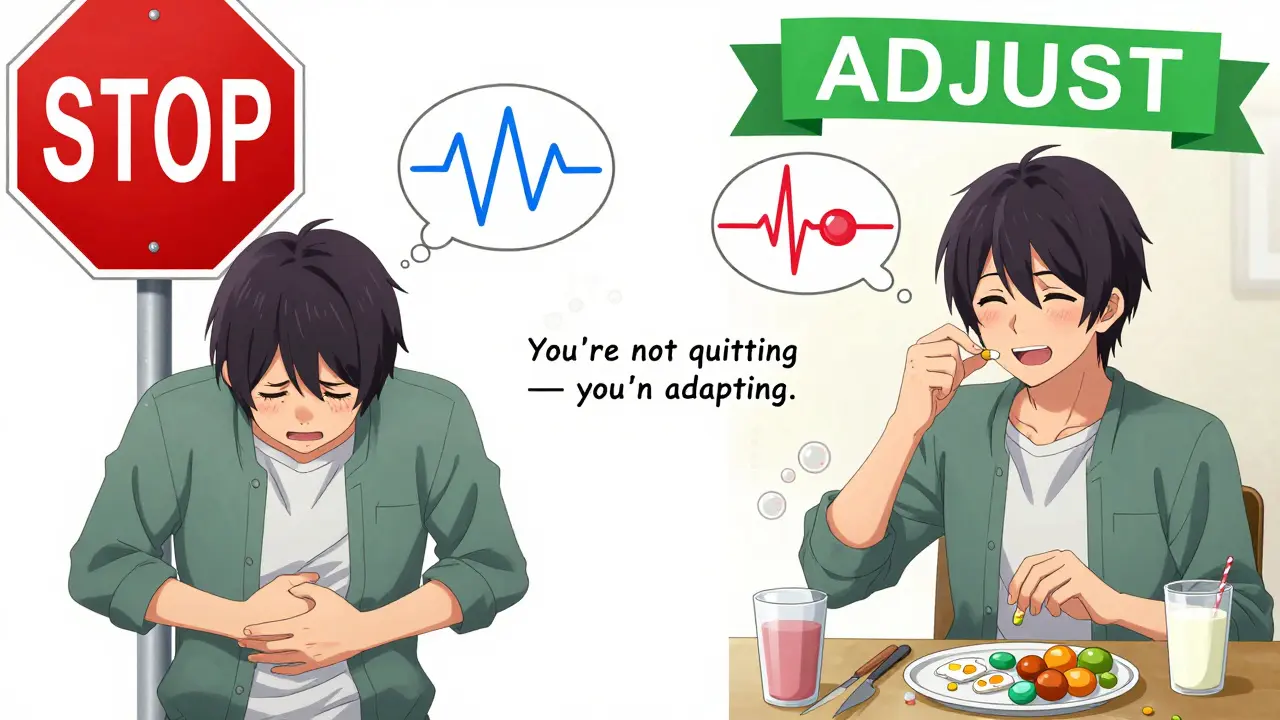
If you’re still unsure, here’s what to do next:- Don’t stop cold turkey. Some medications, like antidepressants or blood pressure pills, can cause dangerous rebound effects if stopped suddenly.
- Call your pharmacist. They’re trained to help with side effects. A 2023 Kaiser Permanente program found pharmacist-led consultations reduced discontinuation by 22%.
- Check the FDA’s medication guide. Every prescription comes with one. It lists common side effects and when to worry.
- Set a timeline. Say: “I’ll keep taking this for 10 more days and track it. Then we’ll revisit.”
Real Stories, Real Results
- A 58-year-old man on diabetes medication had constant bloating. He switched from taking it at breakfast to after dinner. The bloating dropped from daily to once a week. He stayed on the drug. - A woman on anticoagulants felt anxious and jittery. Her doctor added a low-dose beta-blocker for 10 days - the side effects vanished. She didn’t stop her blood thinner. - A teenager on ADHD medication had trouble sleeping. They moved the dose from 8 a.m. to 7:30 a.m. and added 10 minutes of light exposure after waking. Sleep improved. Focus stayed sharp. These aren’t exceptions. They’re routine.Final Rule: Never Guess. Always Ask.
You’re not being difficult. You’re being smart. Medications are powerful tools. Side effects are problems to solve - not reasons to quit. Your job isn’t to tolerate discomfort. Your job is to work with your care team to find a version of this treatment that works for you. The goal isn’t to suffer. The goal is to heal - without giving up on what could help you do that.What if my side effect feels too severe?
If you experience chest pain, trouble breathing, swelling of the face or throat, severe rash, or sudden confusion - stop the medication and seek emergency care immediately. These are signs of a serious reaction, not a normal side effect. But for most mild to moderate side effects - like nausea, dizziness, or fatigue - these are manageable. Talk to your provider before stopping.
Can I just lower my dose myself to reduce side effects?
No. Never change your dose without talking to your doctor or pharmacist. Some medications, like antibiotics or blood thinners, need to be taken at full strength to work. Lowering the dose on your own can make the treatment ineffective or even dangerous. Always ask: “Can we try a lower dose together?”
How long should I wait before deciding a side effect won’t go away?
For most side effects, give it 7-14 days. Your body needs time to adjust. If it’s still bothering you after two weeks, bring your symptom log to your provider. If it’s getting worse instead of better, don’t wait - call sooner.
I’m embarrassed to talk about side effects like sexual dysfunction or weight gain. What do I do?
You’re not alone. These are common but rarely discussed. Start by saying: “I know this is uncomfortable to talk about, but it’s affecting my quality of life.” Most providers have heard it before and have solutions - like switching medications or adding a second one to help. Your comfort matters. Your doctor’s job is to help you live well, not just survive.
What if my doctor says, “Just deal with it”?
That’s not okay. You deserve better. Say: “I’m committed to this treatment, but I need help managing this side effect. Can we explore options?” If they dismiss you, ask for a referral to a pharmacist or specialist. Many health systems now have medication therapy management programs designed specifically for this. You’re not being difficult - you’re advocating for your health.





13 Comments
Matthew Brooker
February 24, 2026I've been on blood pressure meds for 3 years and the dizziness was brutal at first. I almost quit until I started taking it with a tiny snack. Now it's fine. Don't let fear make you quit something that could save your life. You got this.
Side effects aren't a sign it's not working-they're your body saying "hold up, let me adjust." Just talk to your doc. They're not here to judge.
Emily Wolff
February 25, 2026Most people don't track anything. That's why they fail. If you can't write down nausea timing, you shouldn't be on medication.
Lou Suito
February 26, 2026The AMA says 50% quit? That's not a statistic-it's a lie. The real number is closer to 70% when you factor in non-prescription abandonment. And no one mentions that some side effects NEVER go away. Like weight gain. Or sexual dysfunction. You're glossing over the real trade-offs.
Joseph Cantu
February 27, 2026They don't want you to know this-but pharma companies profit when you stay on meds forever. They don't care if you feel nauseous. They care about quarterly earnings. The ‘just wait two weeks’ line? That's corporate propaganda. My cousin died because they told her to ‘push through’ the chest pain. Don't trust the system.
Jacob Carthy
February 28, 2026I'm all for sticking with it but come on. If your pill makes you feel like a zombie, maybe it's not right for you. We ain't in some Soviet labor camp here. You don't gotta suffer for capitalism. Just say no to toxic meds.
Lisandra Lautert
March 2, 2026I showed my doctor my log. She cried. Not because I was dramatic-because she'd never seen someone so organized. We changed my dosing. I'm thriving.
Cory L
March 3, 2026Man I remember when I first started my SSRI. Felt like I swallowed a live wasp. But I stuck with it. Now I'm sleeping through the night for the first time in 10 years. Side effects are just the price of admission. The view on the other side? Worth every second of nausea.
Bhaskar Anand
March 4, 2026In India we don't have this luxury. People stop meds because they can't afford to buy food. This post sounds like a rich man's fantasy. You think everyone has a doctor who listens? We need systemic change not personal hacks
William James
March 6, 2026I think what this post really gets is that healing isn't about enduring-it's about collaborating. Your body isn't your enemy. Your meds aren't your enemy. The system that makes you feel alone in this? That's the enemy. When you start seeing your treatment as a conversation-not a battle-you stop fighting yourself.
Also I typoed 'dizziness' as 'diziness' in my log. My doctor laughed. Then we fixed my schedule. We're human.
David McKie
March 6, 2026I can't believe people still believe in the ‘it’ll pass’ myth. That’s what they told my sister before she had a stroke. Her doctor said ‘give it time.’ She gave it two weeks. She gave up her independence. Don’t romanticize suffering. If it hurts, it’s wrong. Period.
Southern Indiana Paleontology Institute
March 7, 2026I'm a paleontologist. I study bones. I know what damage looks like. If you're taking meds that make you feel like garbage, that's not adjustment. That's poisoning. I don't care if it's FDA approved. My great grandfather died from a pill they said was safe. Don't trust the labels.
Anil bhardwaj
March 8, 2026I took my pill at night instead of morning. No more dizziness. No doctor visit needed. Sometimes the answer is just simple. Why make it complicated?
lela izzani
March 10, 2026This is the most helpful thing I've read all year. I brought my log to my appointment. My doctor said, 'I wish more patients did this.' We changed my timing. My anxiety dropped 80%. You're not weak for struggling. You're brave for speaking up.