
Living with a pet and having allergies doesn’t have to mean saying goodbye to your furry friend. Millions of people in the UK and beyond share their homes with cats or dogs while managing allergic reactions - and they’re not just surviving, they’re thriving. The secret isn’t getting rid of the pet. It’s understanding what’s really causing the problem and taking smart, science-backed steps to cut down on the allergens.
Let’s clear up a big myth right away: it’s not the hair. Pet hair gets all the blame, but it’s really the tiny flakes of skin - called dander - along with proteins in saliva and urine that trigger sneezing, itchy eyes, and breathing trouble. These particles are so small and sticky they cling to clothes, couches, and even the air. They can hang around for months, even after a pet leaves the house. That’s why simply vacuuming once a week or opening a window won’t cut it.
Start in the Bedroom - It’s the Most Important Room
If you’re allergic, your bedroom should be a pet-free zone. This isn’t just advice - it’s backed by clinical studies. When allergists at the Cleveland Clinic tracked people with pet allergies who kept their pets out of the bedroom, they saw a 40% drop in nighttime symptoms like congestion and wheezing. Why? Because you spend a third of your life there. Your pillow, sheets, and blankets become allergen traps. Dust mites and pet dander mix together, making it worse.
Start tonight. Keep your pet out. Use washable, hypoallergenic bedding if you haven’t already. Wash your sheets weekly at 130°F (54°C). That’s hot enough to kill both dust mites and pet allergens. Don’t just toss the bedding in the wash - use a high-spin cycle to remove as much moisture as possible. Dampness invites mold and mites, which make allergies even worse.
Upgrade Your Vacuum - Not Just Any Model Will Do
Standard vacuum cleaners? They’re part of the problem. Most of them just blow allergens back into the air. You’re cleaning, but you’re also spreading the problem around.
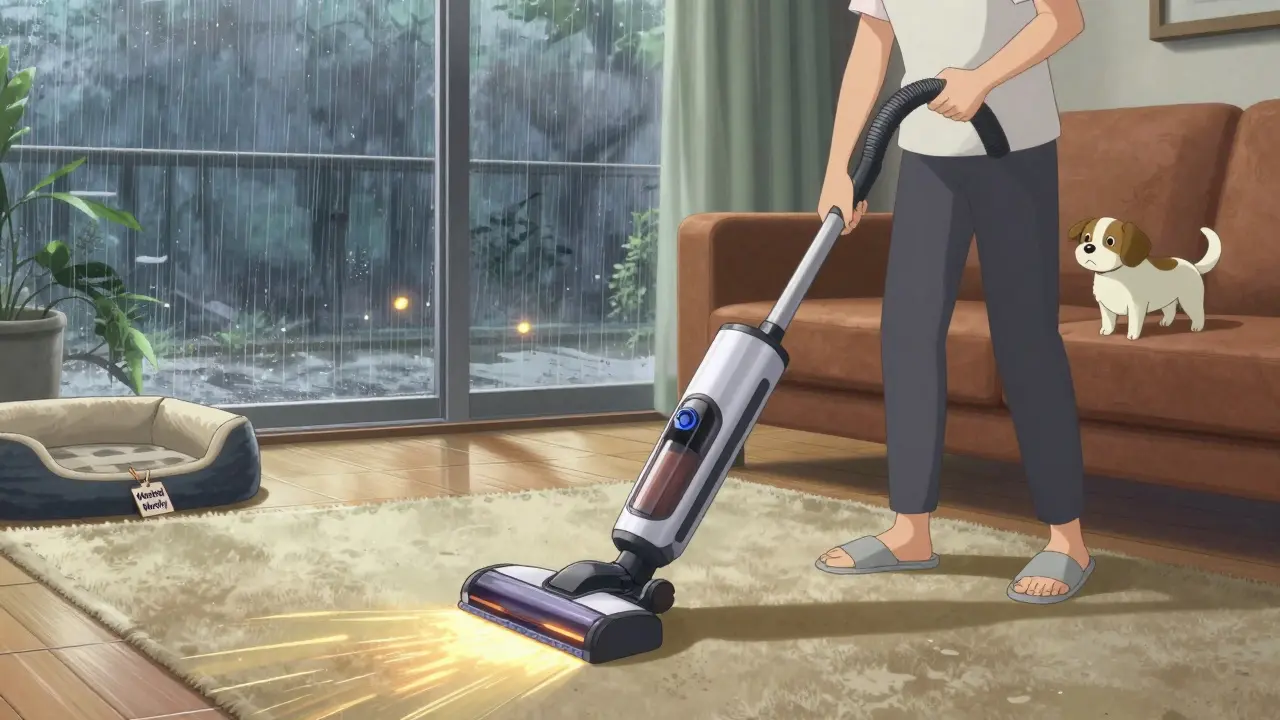
What you need is a vacuum with a true HEPA filter. These filters capture 99.97% of particles as small as 0.3 microns - and pet dander is often 0.5 to 10 microns. That means it gets trapped, not released. Filtrete’s 2023 testing showed HEPA vacuums remove 30-50% more dander than regular ones. You don’t need the most expensive model, but avoid anything labeled “HEPA-style” or “HEPA-like.” Only buy one that says “True HEPA” on the box.
Vacuum at least twice a week - more if you have multiple pets or long-haired animals. Focus on carpets, rugs, upholstered furniture, and under the bed. If you have hard floors, sweep first, then vacuum. Even tile and wood can hold onto dander if it’s not cleaned regularly.
Use an Air Purifier - But Choose Wisely
Not all air purifiers are created equal. You want one with a true HEPA filter and a clean air delivery rate (CADR) that matches your room size. A small purifier in a large living room won’t help. Look for models rated for at least 200 square feet if you’re placing it in your main living area.
Studies from Baz Allergy show that properly sized HEPA air purifiers can reduce airborne pet allergens by 40-60%. Place it near where your pet spends the most time - usually the living room or by the window. Run it on high during the day, and lower it at night if noise bothers you. You don’t need to run it 24/7, but consistency matters. Replace the filter every 6-12 months. A clogged filter stops working.
Swap Carpets for Hard Floors - It’s a Game Changer
Carpet is a dander magnet. Those fibers hold onto allergens like a sponge. Hardwood, laminate, linoleum, or tile? They’re much easier to clean. Studies from Allergy Fort Worth found that hard floors have 50-75% less pet dander than carpeted areas.
If replacing all your carpet isn’t in the budget right now, start with the bedroom and main living areas. Use washable area rugs instead. Wash them every two weeks in hot water. Even better - choose low-pile rugs. The shorter the fibers, the less dander they trap.
Bathe Your Pet - Weekly, Not Optional
This is the step most people skip. And it’s the one that makes the biggest difference. Bathing your dog or cat once a week reduces allergens on their skin and fur by up to 80%. The water washes away dried saliva and loose dander. It doesn’t matter if your pet is “hypoallergenic.” That’s a myth. All cats and dogs produce allergens. Some breeds produce less, but no breed is truly allergy-free.
Use a gentle, allergen-reducing shampoo. Look for ones labeled “anti-allergen” or “dander control.” Avoid human shampoos - they can dry out your pet’s skin and make shedding worse. If your cat hates baths, start slow. Use a damp cloth to wipe them down daily. Some owners find that pet wipes work well as a daily maintenance tool. For dogs, a quick rinse after walks helps too.
Ohio State University found that 60% of cat owners struggle with weekly baths because their cats resist. If yours does too, don’t give up. Try brushing them outdoors with a rubber grooming glove. It removes loose dander before it spreads. And always wash your hands after petting them.
Wipe Down Surfaces and Wash Pet Bedding
Dander doesn’t just stick to carpets. It lands on countertops, shelves, TV screens, and even your laptop. Wipe down hard surfaces once or twice a week with a damp microfiber cloth. Dry dusting just moves allergens around. Moisture traps them.
Wash your pet’s bed weekly at 130°F. If it’s not machine-washable, vacuum it thoroughly and let it sit in the sun for a few hours. UV light helps break down allergens. Also, consider replacing fabric pet beds with ones made of easy-to-clean materials like vinyl or leather.
Use Allergen-Reducing Sprays - But Don’t Rely on Them Alone
There are sprays on the market that neutralize pet allergens on contact. Independent tests show they can reduce allergen potency by 30-70% for up to 72 hours. They’re great for couches, car seats, and curtains - places you can’t easily wash.
But here’s the catch: they’re not a replacement for cleaning. They’re a supplement. Use them after vacuuming or wiping down surfaces. Spray lightly. Don’t soak fabrics. Some sprays can irritate pets’ skin or lungs if overused. Always check the label.
Manage Symptoms With Medicine - But Think Long-Term
Antihistamines like cetirizine or loratadine help about 60-70% of people with mild symptoms. They work fast - often in under an hour. But they don’t fix the problem. They just mask it.
If your symptoms are worse - especially if you have asthma - talk to your doctor about immunotherapy. Allergy shots or the newer sublingual tablets (like Odactra for cat allergies) train your immune system to stop reacting. After 3-5 years, 80-85% of patients see lasting relief, even after stopping treatment. It’s not quick, but it’s the closest thing to a cure.

What Doesn’t Work - And Why
Here’s what people waste money on:
- “Hypoallergenic” breeds: No dog or cat is truly hypoallergenic. All produce allergens. Some may shed less, but the proteins are still there.
- Essential oils or air fresheners: They mask smells but don’t remove allergens. Some can even irritate lungs.
- One-time deep cleans: Allergens rebuild fast. Daily habits beat monthly marathons.
- Keeping pets outside: Dander still gets inside on their fur. And in the UK, many pets aren’t suited to outdoor living.
Real Results - What People Actually See
Kaiser Permanente tracked over 500 pet-owning allergy sufferers who followed a consistent plan: HEPA vacuum twice a week, pet-free bedroom, weekly pet baths, and air purifier. Within 4-6 weeks, 75% reported fewer sneezes, less itchy eyes, and better sleep. After three months, allergen levels in their homes dropped by 50-70%.
It’s not perfect. You’ll still find a stray hair on your coat. You might still sneeze once in a while. But you won’t need to choose between your health and your pet. The goal isn’t zero allergens - it’s manageable levels.
Cost and Time - Is It Worth It?
Setting up a full dander-reduction system costs between £200-£500 upfront:
- HEPA vacuum: £150-£300
- HEPA air purifier: £100-£250
- Anti-allergen shampoo: £10-£20 per bottle
- Washable bedding and wipes: £50
Monthly costs? About £10-£20 for replacement filters and shampoo. That’s less than a weekly coffee run.
Time? 15-20 minutes every few days for vacuuming. 10 minutes to wipe surfaces. 15 minutes to wash pet bedding. You’re not adding hours to your week - you’re replacing inefficient habits with effective ones.
And if you’re thinking about getting a pet? Do this first. Set up your home before bringing the animal home. It’s easier than trying to fix things after.
What’s Next? The Future of Pet Allergies
Science is moving fast. In 2023, the FDA approved a new tablet for cat allergies - Odactra - that you take under your tongue. No needles. Just daily. Early results show 80% symptom reduction. And researchers at UC Davis are using CRISPR to create cats that produce 90% less Fel d 1 - the main cat allergen. That’s still years away, but it’s coming.
Smart homes are next. By 2025, you’ll see air purifiers that auto-adjust based on real-time allergen sensors. They’ll turn up when your cat jumps on the sofa and quiet down when the room’s clear. It’s not sci-fi - it’s already in testing.
For now, though, the best tools are simple: clean air, clean floors, clean pets, and clean habits. You don’t need to be perfect. Just consistent.
Can I live with a pet if I’m allergic?
Yes, many people do. It’s not about removing the pet - it’s about controlling allergens. With a consistent plan - HEPA filters, pet-free zones, weekly baths, and hard floors - most people can live comfortably with their pets. Studies show 75% of users see clear symptom improvement within 4-6 weeks.
Is there such a thing as a hypoallergenic dog or cat?
No. All dogs and cats produce allergens in their skin, saliva, and urine. Some breeds shed less hair, which might reduce how much dander spreads, but the allergens are still there. The idea of a truly hypoallergenic pet is a marketing myth. Focus on reducing allergens, not choosing a breed.
How long does pet dander last in a home?
Pet dander can stay in dust for up to six months after a pet is gone. It clings to fabrics, carpets, and furniture. That’s why just removing the pet doesn’t solve the problem. You need to clean thoroughly and keep cleaning.
Do air purifiers really help with pet allergies?
Yes - if they have a true HEPA filter and are sized right for the room. Studies show they can reduce airborne pet allergens by 40-60%. They work best when paired with regular vacuuming and keeping pets out of bedrooms.
Should I bathe my pet every week?
Weekly baths are ideal for reducing allergens. For dogs, it’s often manageable. For cats, it’s harder - but not impossible. Use a gentle anti-allergen shampoo. If your cat resists, try daily wiping with a damp cloth or grooming glove. Even reducing baths to twice a month helps - but once a week is best.
What’s the fastest way to reduce pet dander in my home?
Start with your bedroom: keep pets out, wash bedding weekly at 130°F, and install a HEPA air purifier. Then add a HEPA vacuum and bathe your pet weekly. These four steps alone can cut allergen levels by 50% in under a month.
Can I use a regular vacuum if I clean often?
No. Regular vacuums blow allergens back into the air. Even cleaning every day won’t help if you’re spreading the problem. HEPA filters trap the particles. Without them, you’re not solving the issue - you’re just moving it around.
Are allergy shots worth it for pet allergies?
For people with moderate to severe allergies, yes. Allergy shots (immunotherapy) work for 80-85% of patients after 3-5 years. They train your body to stop reacting. Unlike pills, they can lead to long-term relief - even after stopping treatment. The newer sublingual tablets (like Odactra) offer the same results without needles.
If you’ve been avoiding your pet because of allergies, it’s time to try a better way. You don’t have to choose between your health and your companion. With the right steps, you can breathe easier - and still cuddle up on the couch.




11 Comments
Skye Kooyman
January 25, 2026Just started using a HEPA vacuum and honestly? My sneezing stopped within days. No joke.
rasna saha
January 26, 2026I’m from India and we have tons of street cats everywhere. I used to hate it when I’d sneeze all day, but after washing my sheets weekly at 54°C and keeping my bedroom pet-free, I can actually sleep now. Thank you for this. 🙏
shivam utkresth
January 26, 2026Man, I’ve been telling my cousin for years that ‘hypoallergenic’ is a scam. My Bengal cat sheds less hair but still makes me wheeze like I’m running a marathon. Once I started wiping her down daily with those pet wipes and got a proper HEPA purifier? Game. Changer. Also, never thought about UV light on pet beds-now I’m leaving hers on the balcony every Sunday. Genius.
Uche Okoro
January 27, 2026It is imperative to recognize that the primary allergenic proteins responsible for IgE-mediated hypersensitivity in felines and canines are Fel d 1 and Can f 1, respectively. These glycoproteins are secreted via sebaceous glands and salivary apparatuses, and their particulate dispersion is facilitated by aerosolization during grooming. Therefore, interventions targeting epidermal desquamation and airborne particulate filtration are not merely palliative-they are pathophysiologically justified. The efficacy of HEPA filtration in reducing ambient particulate matter below 0.3 microns is empirically validated in peer-reviewed aerosol dynamics literature. Additionally, the thermal denaturation of allergens at 54°C is consistent with protein coagulation thresholds established in immunobiochemistry protocols.
Aurelie L.
January 27, 2026I tried everything. Then I got a cat. Now I’m crying in the bathroom again.
bella nash
January 29, 2026One must consider the ontological implications of cohabitation with non-human animals in an anthropocentric domestic sphere. The very notion of ‘allergy’ implies a failure of biological adaptation to symbiotic ecological relationships. Perhaps the solution is not to manipulate the environment, but to reevaluate our anthropocentric expectations of cleanliness and control.
Betty Bomber
January 30, 2026My dog’s bed is on the couch now. I just vacuum the couch every other day and it’s fine. I don’t need to buy all that stuff.
Renia Pyles
January 30, 2026Wow. So you’re telling me I have to wash my sheets? And bathe my cat? And spend hundreds on a vacuum? What a scam. I’ve had my dog for 7 years and I’ve never had a problem. You’re just weak. Maybe you should just get rid of your pet and stop being dramatic.
Ashley Karanja
January 31, 2026I’ve been doing all of this for 18 months now and I’m not just surviving-I’m thriving. I use the anti-allergen spray on my couch after every time my golden retriever jumps up, I’ve got a Dyson Pure Cool linked to my phone, and I wipe down my laptop every morning with a damp cloth. I even started using a microfiber glove to brush her outdoors before she comes in. The stats are real. My sleep quality improved so much I started meditating again. I used to feel like I was always breathing through cotton. Now I can smell rain again. And honestly? I cried the first time I didn’t need an antihistamine for a whole week. It’s not magic. It’s just… consistency. And yeah, I’m a total pet hygiene nerd now. No regrets. 🌿🐶❤️
Napoleon Huere
January 31, 2026There’s something poetic about sharing your space with a living creature that doesn’t care if you sneeze. They just want to be loved. Maybe the real lesson here isn’t about dander-it’s about learning to care for someone who doesn’t ask for perfection. We clean not because we have to, but because we choose to. That’s the quiet kind of love that doesn’t make headlines.
Aishah Bango
February 1, 2026You people are so lazy. You’d rather spend $500 on a vacuum than just not get a pet in the first place. Allergies are nature’s way of saying ‘no.’ You’re not ‘managing’-you’re ignoring biology. Get a fish. Or a cactus. Or a robot dog. Stop forcing your allergies on everyone else.