
Every year, millions of people reach for ibuprofen or naproxen to ease a headache, back pain, or arthritis flare-up. It’s quick, it’s easy, and it’s available over the counter. But what most users don’t realize is that these common painkillers carry hidden dangers - especially to the stomach and kidneys. The truth is, NSAID safety isn’t just about taking the right dose. It’s about understanding who’s at risk, what to watch for, and how to monitor before it’s too late.
How NSAIDs Damage the Gut - Even When You Feel Fine
NSAIDs work by blocking enzymes called COX-1 and COX-2. That’s how they reduce pain and inflammation. But COX-1 also helps protect the lining of your stomach and intestines by producing prostaglandins - the body’s natural defense against stomach acid. When NSAIDs shut down COX-1, that protective layer thins out. The result? Ulcers, bleeding, and silent damage.
Here’s the scary part: half of all NSAID-related stomach injuries show no symptoms until it’s serious. You won’t feel burning or pain. You might just feel tired, dizzy, or notice your stool is darker than usual. That’s not normal. It could be internal bleeding. A 2023 study from the American College of Gastroenterology found that NSAIDs cause over 107,000 hospitalizations in the U.S. each year - and 16,500 deaths. Most of those cases happened in people who thought they were fine because they had no warning signs.
Long-term users are especially vulnerable. About 15% of people who take NSAIDs daily for more than three months develop peptic ulcers. Even worse, lower GI damage - like inflammation or bleeding in the small intestine - is harder to detect. There’s no reliable test to catch it early. A 2020 study in Gut and Liver confirmed that no treatment exists to fully prevent or repair this kind of damage. Once it happens, it’s often permanent.
Kidney Damage: The Silent Threat
Your kidneys rely on prostaglandins to keep blood flowing through them. NSAIDs block those same prostaglandins. In healthy people, that’s usually not a problem. But if you’re dehydrated, older than 65, or already have kidney issues, your kidneys can’t compensate. That’s when trouble starts.
Acute kidney injury from NSAIDs isn’t rare. Studies show 1% to 5% of users develop it - and many don’t even know it. Symptoms? Swelling in the ankles, fatigue, reduced urine output, nausea. But often, there are no symptoms at all until kidney function drops dangerously low. The FDA now requires a boxed warning on all prescription NSAIDs for patients over 65 because of this risk.
Chronic use can lead to more severe problems: interstitial nephritis (inflammation of kidney tissue), papillary necrosis (tissue death), and even permanent loss of function. The American College of Cardiology’s 2024 guidelines now say: avoid all NSAIDs if you have stage 3 or worse chronic kidney disease (eGFR below 60). That’s a big change - and it’s based on hard data showing NSAIDs accelerate decline.
Who’s Most at Risk? The Real Numbers
Not everyone is equally at risk. Some people are walking into danger without knowing it. Here’s who needs to be extra careful:
- Age 65 or older - risk doubles after 65
- History of stomach ulcers or GI bleeding - 3x higher chance of recurrence
- On blood thinners like warfarin or aspirin - bleeding risk spikes
- Taking corticosteroids (like prednisone) - adds another layer of damage
- Have heart failure, liver disease, or high blood pressure - kidneys are already under stress
A validated risk calculator from the American College of Gastroenterology gives points for each factor. Add up the points: 4 or more means you’re high risk. That’s not a suggestion - it’s a red flag. If you’re in this group, you shouldn’t be taking NSAIDs without a plan.
Monitoring: What You Need to Check and When
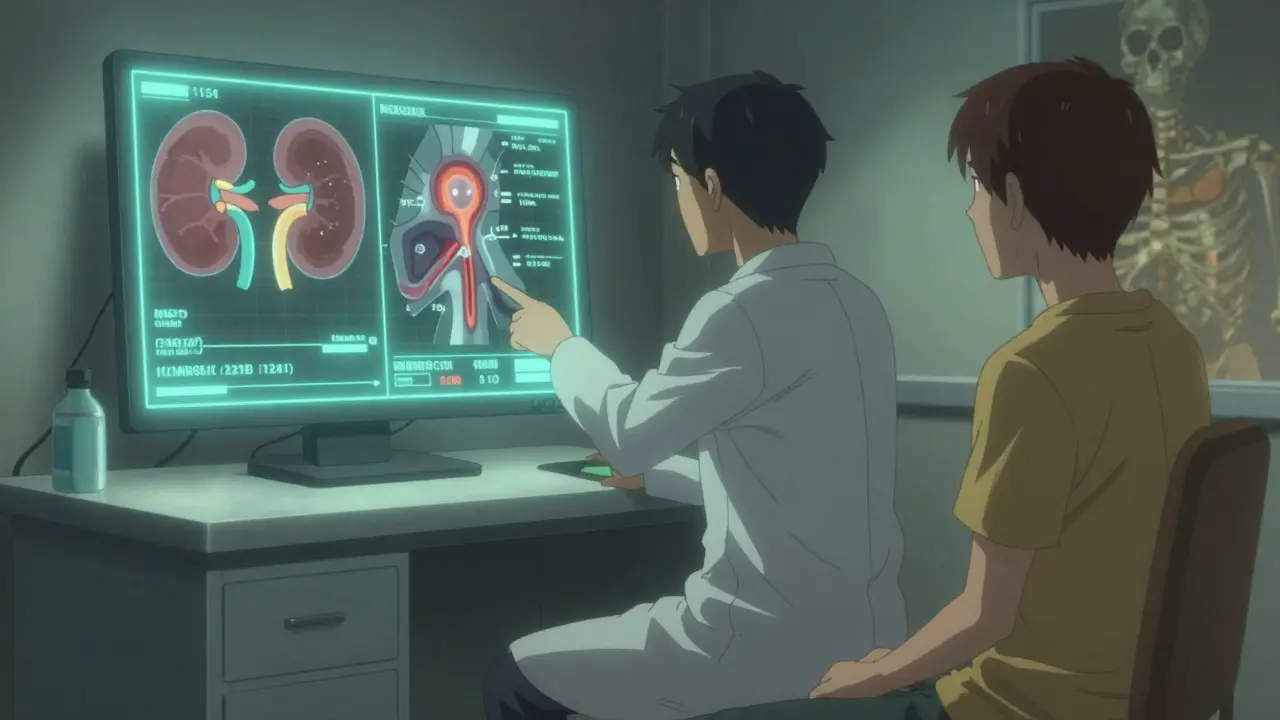
Monitoring isn’t optional. It’s essential. Here’s what your doctor should be checking - and how often:
- Serum creatinine - check within 30 days of starting NSAIDs, then every 3-6 months if you’re on it long-term. A rise of 0.3 mg/dL or more means your kidneys are under strain.
- Blood urea nitrogen (BUN) - often checked with creatinine. High levels suggest poor kidney filtration.
- Complete blood count (CBC) - look for low hemoglobin. That’s a sign of slow, hidden bleeding.
- Fecal occult blood test - done every 6 months for high-risk patients. This catches bleeding you can’t see.
Many patients never get these tests. A 2023 Medicare analysis found only 52% of NSAID users had creatinine checked within 90 days of starting. That’s dangerously low. If your doctor doesn’t bring it up, ask for it.
COX-2 Inhibitors: Safer? Not Always
You’ve probably heard celecoxib (Celebrex) is safer for your stomach. That’s true - compared to naproxen or ibuprofen, it cuts upper GI bleeding risk by more than half. A 2023 meta-analysis in Clinical Pharmacology & Therapeutics found celecoxib had only a 1.9-fold increased risk of bleeding, while naproxen had a 4.2-fold increase.
But here’s the catch: celecoxib doesn’t protect your lower GI tract. It still causes intestinal damage. And it carries its own risks - fluid retention, swelling in the legs, higher blood pressure. A Drugs.com survey showed 22% of users reported leg swelling, a sign of kidney strain.
Plus, the FDA and European Medicines Agency now warn against using celecoxib if you have heart disease. It’s not a magic bullet. It just shifts the risk from your stomach to your heart and kidneys.
Proton Pump Inhibitors (PPIs): Help or Harm?
Doctors often prescribe PPIs like omeprazole with NSAIDs to protect the stomach. And yes - they reduce ulcer risk by 70-90%. But that’s only part of the story.
A 2022 study in the Journal of the American Medical Informatics Association found that taking PPIs with NSAIDs for 4-12 months increases the risk of microscopic colitis by over six times. That’s a chronic inflammatory bowel condition that causes severe diarrhea and weight loss. And it’s often misdiagnosed as IBS.
Dr. Kenneth W. Mahaffey of Stanford calls this the "therapeutic paradox." You’re solving one problem but creating another. And PPIs don’t help with kidney or lower GI damage. They’re a band-aid, not a cure.

What to Do Instead: Safer Alternatives
If you’re at high risk, NSAIDs might not be worth it. Here’s what works:
- Acetaminophen (Tylenol) - safer for stomach and kidneys, but don’t exceed 3,000 mg/day. Liver damage is the risk here.
- Topical NSAIDs - gels or patches applied to the skin (like diclofenac gel). They deliver pain relief with far less systemic exposure.
- Physical therapy - for arthritis or back pain, movement is often more effective than pills.
- Non-drug options - heat, massage, acupuncture, TENS units. These work for many people and carry no chemical risk.
And if you must use NSAIDs? Use the lowest dose for the shortest time possible. Dr. Charlotte H. Clarke’s research shows each extra week of use increases complication risk by 3-5%. That’s not a small detail. It’s a rule.
The Future: What’s Changing
There’s new hope on the horizon. In 2023, the FDA approved naproxcinod - a new NSAID that releases nitric oxide to protect blood vessels. In trials, it caused 58% fewer ulcers than regular naproxen. And in 2024, a new point-of-care stool test (FIT) became available - specifically designed to detect NSAID-related bleeding with 92% accuracy. That’s a game-changer for early detection.
But experts warn: without better ways to protect the lower GI tract, hospitalizations will rise 18% by 2035. The problem isn’t going away. It’s just getting more complex.
Final Takeaways
- NSAIDs aren’t harmless. They cause real, sometimes silent, damage to your stomach and kidneys.
- Asymptomatic bleeding is common. Don’t wait for pain to act.
- Check your kidney function and blood count regularly - every 3-6 months if you’re on long-term NSAIDs.
- COX-2 inhibitors reduce stomach bleeding but don’t protect your intestines or kidneys.
- PPIs help the stomach but can cause other gut problems. Use them only if absolutely necessary.
- For high-risk patients, avoid NSAIDs entirely. Try acetaminophen, topical treatments, or physical therapy instead.
If you’re taking NSAIDs daily - even just one tablet - talk to your doctor. Ask for your creatinine level. Ask if you need a stool test. Don’t assume it’s safe because it’s over the counter. Your body doesn’t know the difference.
Can NSAIDs cause kidney damage even if I have no symptoms?
Yes. NSAIDs reduce blood flow to the kidneys by blocking protective prostaglandins. In people over 65, those with high blood pressure, heart failure, or existing kidney disease, this can lead to acute kidney injury without any warning signs. Symptoms like swelling, fatigue, or reduced urine output may appear late. Regular blood tests (creatinine, BUN) are the only way to catch this early.
Is it safe to take ibuprofen every day for arthritis?
No. Daily use of ibuprofen increases the risk of stomach ulcers, bleeding, and kidney damage. The American College of Rheumatology recommends using the lowest effective dose for the shortest time possible. For chronic arthritis, alternatives like acetaminophen, topical NSAIDs, physical therapy, or weight management are safer long-term options. If you must use daily NSAIDs, ask your doctor about a PPI and regular kidney monitoring.
Why do some people get stomach bleeding from NSAIDs without warning?
NSAIDs suppress prostaglandins that protect the stomach lining. This damage happens slowly and silently. Up to 50% of NSAID-related ulcers show no symptoms until they bleed. The bleeding can be slow - causing iron deficiency anemia - or sudden and severe. That’s why routine blood tests (CBC for hemoglobin) and fecal occult blood tests are critical for long-term users, especially those over 65 or on blood thinners.
Do all NSAIDs carry the same risks?
No. Non-selective NSAIDs like ibuprofen and naproxen block both COX-1 and COX-2, increasing GI and kidney risks. COX-2 inhibitors like celecoxib are better for the stomach but still affect the kidneys and can raise blood pressure. Naproxen has a slightly lower cardiovascular risk than ibuprofen, but higher GI risk. There’s no "safest" NSAID - only "least risky" for your individual profile. Always discuss your medical history before choosing one.
Should I take a PPI like omeprazole if I’m on NSAIDs long-term?
It depends. PPIs reduce upper GI ulcer risk by 70-90% in high-risk patients - so yes, if you’re over 65, have a past ulcer, or take blood thinners. But long-term PPI use (over 4 months) increases the risk of microscopic colitis by over six times. Don’t take it "just in case." Only use it if your risk score is 4 or higher. And never use it indefinitely without reassessing your need.
12 Comments
Nandini Wagh
February 26, 2026So let me get this straight - we’re told to pop these pills like candy, but the real story is that they’re slowly turning our insides into Swiss cheese? And no one notices until they’re in the ER? Classic. I took naproxen for my period for years. Felt fine. Then one day I was just… exhausted. Turns out my hemoglobin was half of what it should’ve been. No warning. No pain. Just a quiet betrayal by my own body. 🤦♀️
Lillian Knezek
February 27, 2026THEY DON’T WANT YOU TO KNOW THIS. NSAIDs are part of the BIG PHARMA PLAN to keep you dependent. They know if you start checking your creatinine every 3 months, you’ll realize how many people are being quietly poisoned. And then? You’ll ask why the FDA allows this. They’re scared. They’re hiding the kidney damage stats. And don’t get me started on PPIs - those are just chemical mind-control agents in disguise. 🕵️♀️💊
Joanna Reyes
March 1, 2026I’ve been on daily ibuprofen for my lower back pain for nearly 5 years now. I thought I was being smart - low dose, occasional breaks, never more than 2 pills. But reading this, I realized I’ve been ignoring every red flag: the mild fatigue, the occasional ankle swelling, the fact that I never got a baseline blood test when I started. My doctor just nodded and said ‘it’s fine.’ But now I’m terrified. I’m scheduling a CBC and creatinine test tomorrow. If I’m high-risk (and I am - 68, on blood pressure meds), then continuing is reckless. I’m switching to topical diclofenac and physical therapy. This post didn’t just inform me - it saved me.
Stephen Archbold
March 2, 2026yo i just read this and i’m like… dang. i’ve been taking aleve every day for my knee since 2020. no symptoms, no issues. but now i’m wondering if i’ve been slowly wrecking my kidneys and not even knowing. i’m gonna ask my doc for a creatinine test next visit. also - topical stuff? i didn’t even know that was a thing. gonna try the gel. thanks for the wake up call. 🙏
Nerina Devi
March 4, 2026As someone from India where NSAIDs are sold like candy at every roadside pharmacy, this is desperately needed. My aunt took 4 ibuprofen a day for 8 years. No doctor. No test. Just pain and pills. Last year she had a GI bleed and ended up in ICU. She’s fine now, but she’ll never take another NSAID without a blood test. We need public awareness campaigns - not just for the rich who have doctors, but for the millions who don’t. This isn’t just a Western problem. It’s a global silent epidemic.
Dinesh Dawn
March 5, 2026My dad’s 72, has arthritis, and takes naproxen like it’s vitamin C. I showed him this post. He said, ‘Son, I’ve been feeling off lately - tired, dizzy. Thought it was just getting old.’ Now he’s booked an appointment. Honestly? This is why I love the internet. Real info. Real stakes. No fluff. Just truth. Thanks for writing this.
Vanessa Drummond
March 5, 2026Oh please. You think this is bad? Wait till you find out how many people are on PPIs because they’re on NSAIDs, and now they’re all getting vitamin B12 deficiency and bone fractures. It’s a cascade. One pill leads to another pill leads to another hospitalization. They’re not treating pain - they’re creating a whole new disease industry. And you’re all just sitting here like ‘oh, I’ll just get a test.’ Like that’s a solution. It’s a band-aid on a severed artery.
Nick Hamby
March 7, 2026There’s a profound philosophical tension here: we live in a culture that prioritizes immediate relief over long-term integrity. We treat symptoms as problems, not as signals. NSAIDs are not the enemy - our collective refusal to listen to our bodies is. The body whispers: fatigue, swelling, dark stool. We shout back with a pill. And then we wonder why we’re sick. The real question isn’t ‘which NSAID is safest?’ - it’s ‘why do we believe we can outsmart biology with chemistry?’
kirti juneja
March 9, 2026OMG I JUST REALIZED I’M A STATISTIC. I’ve been on celecoxib for 3 years because my doc said it’s ‘gentler on the stomach.’ But I’ve had swelling in my ankles since last winter. I thought it was my shoes. Turns out - it’s my kidneys screaming. I’m done. I’m switching to turmeric paste (yes, really) and yoga. Also - I’m getting that FIT test. No more ignorance. My body deserves better than a pill that’s just shifting damage from one organ to another. #BodyFirst
Haley Gumm
March 10, 2026Let’s be real - if you’re taking NSAIDs daily, you’re already in the danger zone. The data doesn’t lie. The FDA warnings? They’re just legal cover. The real issue? Doctors are overworked. Patients are rushed. Tests are expensive. And so we just keep popping pills. It’s not negligence - it’s systemic failure. You think you’re managing pain? You’re just delaying a crash. And when it comes? You’ll wish you’d listened.
Gabrielle Conroy
March 12, 2026Thank you SO MUCH for this detailed breakdown!!! 🙌 I’m a 58-year-old with osteoarthritis and I’ve been on naproxen for 6 years - and I’ve never had a single test. I’m booking my creatinine and CBC TODAY!!! Also - topical diclofenac? I had no idea! I’m ordering the gel right now. And I’m telling my mom (74) to stop her daily ibuprofen. This is LIFE-CHANGING info. Please keep sharing this! 💪❤️🩺
Spenser Bickett
March 13, 2026Wow. So the ‘safe’ over-the-counter pill is actually a slow-acting poison that your doctor ignores because they’re too busy checking boxes? Classic. I’m gonna start calling NSAIDs ‘The Silent Killer’ from now on. And PPIs? Those are just the ‘side-effect tax’ you pay for being dumb enough to take NSAIDs. Congrats, America - you turned pain relief into a multi-billion dollar death spiral. And you’re all still popping pills like they’re Skittles. 🍬💀