
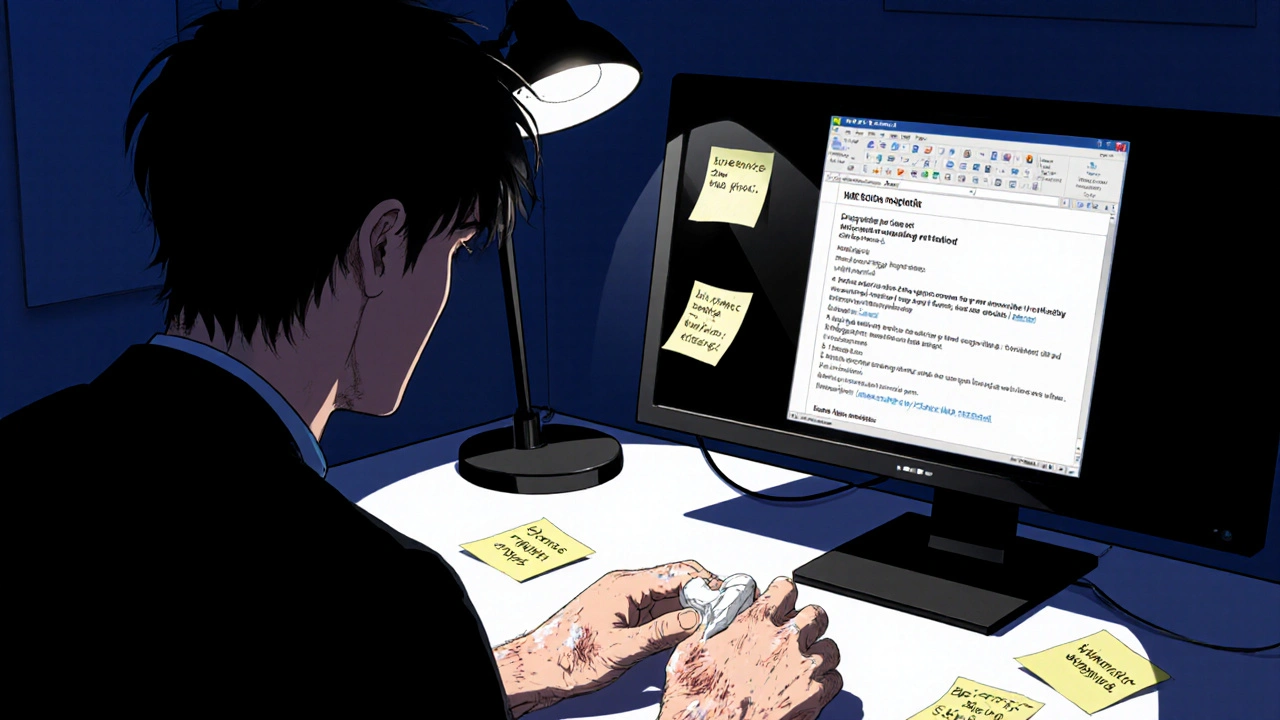
Imagine walking into a meeting, your hand instinctively covering your elbow. You’ve had the same patch of thick, red, scaly skin for months-plaque psoriasis-and every time someone glances at it, you feel their eyes linger. You smile, you speak, you lead the discussion-but inside, you’re bracing for the quiet questions, the awkward silence, the unspoken assumptions. This isn’t just a skin condition. For millions of working adults, plaque psoriasis is a silent barrier to confidence, promotion, and even job security.
Plaque Psoriasis Isn’t Just a Skin Issue
Plaque psoriasis is the most common form of psoriasis, affecting about 80% of people with the condition. It shows up as raised, inflamed patches covered with silvery-white scales, often on elbows, knees, scalp, and lower back. But what most people don’t realize is that it’s not contagious. It’s an autoimmune disease-your body attacks its own skin cells, causing them to grow too fast and pile up. It’s not caused by poor hygiene, stress alone, or diet. But stress? That can make it flare worse. And in a high-pressure job? That’s a dangerous mix.
The physical symptoms are only half the battle. The emotional toll is heavier. Studies from the British Journal of Dermatology show that over 60% of people with moderate to severe plaque psoriasis report feeling embarrassed or ashamed in professional settings. That shame doesn’t vanish when you put on a suit. It follows you into interviews, client calls, team lunches, and even virtual meetings where your camera stays on.
How It Shows Up at Work
Let’s be real. You don’t get to pick when your psoriasis flares. One week you’re on top of your game. The next, your scalp is flaking onto your collar, your hands are cracked and painful, or your back is so itchy you can’t sit still in a chair. You might skip a networking event because you’re afraid someone will ask, “What’s wrong with your skin?” You might turn down a promotion because it means more public speaking. Or worse-you stay quiet about it, hoping it’ll go away, while your anxiety grows.
Some people change jobs just to escape judgment. Others avoid wearing short sleeves, even in summer. One marketing director in London told me she wears long sleeves year-round, even in 25°C weather, because she’s tired of explaining herself. She’s been passed over for two leadership roles. No one said it outright-but she knows why.
And then there’s the fatigue. Psoriasis isn’t just skin deep. About half of people with the condition also deal with psoriatic arthritis, which causes joint pain and stiffness. Imagine trying to type for hours with swollen fingers, or standing through a full-day workshop when your knees ache. This isn’t laziness. It’s a chronic illness.
Workplace Bias Is Real-And Often Hidden
There’s a myth that workplaces are inclusive. But bias doesn’t always come in the form of a rude comment. Sometimes, it’s a manager who never invites you to client dinners. Or a recruiter who skips your resume because your LinkedIn photo shows visible plaques on your neck. Or a colleague who jokes, “You should try a new soap,” thinking it’s harmless.
In the UK, the Equality Act 2010 protects people with long-term health conditions that affect daily life-including psoriasis-if it’s severe enough. That means your employer must make reasonable adjustments: flexible hours for doctor’s appointments, remote work options during flares, or access to private spaces to apply treatments. But here’s the catch: you have to ask. And most people don’t, because they fear being seen as “difficult” or “not fit for the role.”
A 2024 survey by the Psoriasis Association UK found that only 18% of respondents had ever disclosed their condition to their employer. Of those who did, 42% reported improved support. The rest? Silence. And that silence costs careers.
When Treatment Helps You Perform Better
Treatment isn’t just about clearing skin. It’s about reclaiming your professional identity. Biologics-injectable or IV medications that target specific parts of the immune system-have changed the game. Many people see 75% to 90% skin clearance within 3 to 6 months. That’s not just cosmetic. It’s life-changing.
One software engineer in Manchester started biologic treatment after years of hiding his scalp plaques. Within four months, he stopped wearing hats in the office. Six months later, he volunteered to lead a company-wide presentation. He got promoted. He didn’t say, “I’m better now.” He just showed up-and people noticed the difference in his confidence, not his skin.
Topical creams, phototherapy, and lifestyle changes like reducing alcohol, quitting smoking, and managing stress also help. But they’re not magic fixes. They’re tools. And using them isn’t weakness-it’s strategy.
What You Can Do Right Now
You don’t have to wait for your employer to “get it.” Here’s what actually works:
- Track your flares. Keep a simple log: when they happen, what triggered them, and how they affected your work. This isn’t for pity-it’s for proof. If you need accommodations, data beats emotion.
- Speak to HR or your manager. You don’t need to overshare. Say: “I manage a chronic skin condition that sometimes affects my comfort at work. I’d appreciate flexibility around scheduling or remote days during flares.” That’s it. No justification needed.
- Know your rights. Under the Equality Act, you’re protected. If you’re denied reasonable adjustments, you can file a formal request. Most companies will comply if you’re clear and calm.
- Find your people. Online communities like the Psoriasis Association UK or Reddit’s r/Psoriasis have thousands of professionals who’ve been there. They’ll tell you what worked. And you’ll realize you’re not alone.

It’s Not About Hiding Anymore
The truth is, your career doesn’t depend on flawless skin. It depends on your skills, your reliability, your ideas. But if you’re spending energy hiding your body instead of your brilliance, you’re playing a rigged game.
Plaque psoriasis doesn’t define your worth. But how you respond to it? That does.
There are people out there-managers, colleagues, even CEOs-who have psoriasis and are thriving. They don’t apologize for their skin. They don’t wait for permission to be seen. They show up, fully, and let their work speak.
You can too.
Can plaque psoriasis affect my job chances during interviews?
Yes, it can-unfairly. Some hiring managers may make unconscious assumptions about your reliability, professionalism, or ability to represent the company. But under UK law, rejecting someone because of a visible skin condition like plaque psoriasis is illegal discrimination. If you feel you were passed over because of your skin, you have the right to ask for feedback and, if needed, file a complaint with the Equality and Human Rights Commission.
Should I tell my boss I have plaque psoriasis?
You don’t have to, but it can help. If your condition affects your ability to sit for long hours, use the bathroom frequently, or manage stress at work, disclosing it opens the door to reasonable adjustments. You can say it simply: “I have a chronic skin condition that sometimes requires flexibility. I’m fully capable of doing my job, and I’d appreciate support during flares.” Most employers respond positively when you frame it as a need for accommodation, not a request for special treatment.
Can I get time off work for psoriasis treatments?
Yes. If your treatments require regular appointments-like biologic injections or phototherapy-you’re entitled to time off as part of your sick leave or flexible working rights. Some employers offer additional paid leave for medical appointments. Check your company policy. If they don’t, you can request it as a reasonable adjustment under the Equality Act. Many people use lunch breaks or early/late hours to avoid disrupting their workday.
Does stress make plaque psoriasis worse at work?
Absolutely. Stress is one of the top triggers for psoriasis flares. High-pressure deadlines, difficult clients, long hours, or fear of judgment can all worsen symptoms. That creates a cycle: stress → flare → more stress. Managing stress through mindfulness, exercise, therapy, or even talking to a trusted colleague can break that cycle. Some workplaces offer mental health support-use it. Your skin will thank you.
Are there jobs I should avoid with plaque psoriasis?
There’s no job you’re medically barred from. But some roles may be harder to manage if your skin is sensitive to heat, chemicals, or frequent handwashing-like healthcare, food service, or industrial work. That doesn’t mean you can’t do them. It means you need to plan. Use protective gear, request accommodations, or choose employers who value inclusion. Many people with psoriasis thrive in these fields-they just need the right support.
Can I claim disability benefits for plaque psoriasis?
If your plaque psoriasis is severe enough to significantly limit your ability to work or perform daily tasks for over 12 months, you may qualify for Personal Independence Payment (PIP) in the UK. You don’t need to be housebound. Many people with psoriatic arthritis, chronic pain, or extreme fatigue qualify. Apply through the government website. Get support from your GP or a patient advocacy group-they can help you fill out the forms. Don’t assume you don’t qualify. Thousands do.
What Comes Next
If you’re reading this and thinking, “I’ve been hiding too long,” you’re not behind. You’re just starting.
Start small. Apply a moisturizer before your next Zoom call. Wear the shirt you’ve been avoiding. Ask HR for their policy on chronic illness accommodations. Talk to one colleague you trust.
Your career isn’t waiting for you to be perfect. It’s waiting for you to show up-as you are.

11 Comments
Lauren Hale
November 18, 2025I used to wear long sleeves in 90-degree heat just to avoid questions. Then I started bringing my moisturizer to meetings and keeping it on my desk. No big speech. No apology. Just normal. People noticed I wasn't hiding anymore-and they stopped staring.
It’s not about being brave. It’s about being tired of pretending.
One day I wore a short-sleeve shirt to a client pitch. My skin was clear. I didn’t mention it. They remembered my ideas, not my elbows.
That’s the shift. You don’t fix your skin to fit in. You fix your presence to own the room.
Brad Samuels
November 19, 2025There’s something quiet and powerful about showing up as you are-flares and all. We’ve been trained to believe professionalism means perfection. But real professionalism is showing up even when you’re not at your best.
Psoriasis doesn’t make you less capable. It makes you human. And humans don’t need to be flawless to be valuable.
I’ve worked with people who had invisible illnesses-chronic pain, depression, autoimmune stuff. The ones who thrived? They didn’t wait for permission. They just did the work, and let their consistency speak louder than their skin ever could.
Tyrone Luton
November 19, 2025Look, I get it. But let’s be honest-this isn’t discrimination. It’s perception. People make snap judgments. That’s just how it is.
If you’re worried about being judged for your skin, maybe you should’ve taken better care of it. Diet, sleep, stress management-these aren’t optional. They’re the foundation.
And if you’re asking for accommodations, don’t act like you’re being persecuted. You’re not a martyr. You’re a person with a condition that’s manageable.
Stop playing the victim card. Just fix it. Or don’t complain when people notice.
Jeff Moeller
November 20, 2025I had psoriasis for 12 years and never told anyone at work until I got biologics. Now I wear tank tops in the office. No one says anything. No one needs to. I just show up. That’s the whole thing.
Kenneth Meyer
November 21, 2025There’s a deeper layer here that no one talks about-identity. When you’ve spent years hiding your body, you start to believe the shame is yours to carry. But it’s not. It’s the world’s burden to unpack.
Psoriasis doesn’t ask for your permission to exist. And you don’t need permission to be seen.
The real barrier isn’t your skin. It’s the expectation that you must be invisible to be accepted. Break that expectation. Not for them. For you.
And when you do? You’ll realize most people were never looking at your skin. They were just waiting for you to stop hiding so they could finally see you.
Abdula'aziz Muhammad Nasir
November 22, 2025As someone from Nigeria where chronic conditions are often stigmatized, I can say this: the fact that you’re even discussing this in the workplace is progress.
Here, people hide illnesses until they collapse. But in the US and UK, you have rights. Use them. Don’t wait for someone to notice your pain. Tell them. Calmly. Clearly.
HR departments are more open than you think. I’ve seen managers cry when employees finally speak up. Not because they’re weak-but because they’re relieved.
Your skin doesn’t define your value. But your courage? That does.
Tara Stelluti
November 23, 2025Okay but like… why is this even a thing? I mean, I get the medical stuff but why are people so dramatic about it? Like, it’s just skin. You’re not dying.
And why do you need accommodations? Just wear long sleeves. Use makeup. Put on a smile. Everyone else does.
I’m just saying… maybe you’re making it harder than it needs to be. It’s not a disability. It’s a vibe issue.
Also, I saw someone on LinkedIn with the same thing and they got promoted. So… maybe you’re just not trying hard enough?
Will Phillips
November 23, 2025Big Pharma is pushing biologics because they make billions. The real cause? Glyphosate. Mold. 5G. EMF. The government doesn’t want you to know.
Why do you think they’re pushing ‘reasonable accommodations’? So you stay dependent. So you keep buying the drugs.
Try fasting. Cold showers. Sunlight. That’s what cured my cousin. No pills. No injections. Just nature.
And if your boss won’t let you work from home? That’s not discrimination-that’s corporate control. Wake up.
They don’t care about your skin. They care about your paycheck. And they’ll use your condition to keep you quiet.
Stop trusting the system. Start trusting yourself.
Jessica Engelhardt
November 24, 2025Look I’ve been through this and I’m telling you-this isn’t about psoriasis. It’s about your entire identity being weaponized by woke HR departments.
They don’t care if you’re in pain. They care about optics. They want you to perform your suffering so they can pat themselves on the back for being ‘inclusive.’
And don’t get me started on the ‘reasonable adjustments.’ That’s just code for ‘we’re gonna make your manager’s life hell because you’re a liability.’
Real talk? You’re better off staying quiet. Let them think you’re just ‘sickly.’ It’s easier than letting them turn you into a mascot.
Also, biologics? They’re toxic. You think your skin looks better? Wait till your liver gives out.
Trust me. I’ve seen the data. It’s all propaganda.
Greg Knight
November 25, 2025Let me tell you something real. I used to sit in meetings with my hands under the table because my knuckles were cracked and bleeding. I thought that was normal. I thought I had to endure it.
Then I started tracking my flares. I wrote down what triggered them-stress, sleep, that one coffee place downtown. I brought it to my manager and said, ‘I need flexibility during flare weeks.’
He didn’t make a big deal. He just said, ‘Got it. Let me know when you need a remote day.’
That’s it. No drama. No tears. Just a simple conversation.
And guess what? Six months later, I was leading the team. Not because I was ‘inspiring’ or ‘brave.’ Because I showed up. Consistently. Reliably.
You don’t need to be perfect. You just need to be present.
And if you’re reading this and thinking, ‘I’m not ready,’-you already are. Start with one moisturizer. One short-sleeve shirt. One conversation.
You don’t have to fix your skin to be worthy. You just have to stop letting it silence you.
Lauren Hale
November 25, 2025Greg, you just said everything I’ve been too tired to articulate.
I didn’t realize until I started tracking my flares how much I was blaming myself. I thought if I just slept more, ate cleaner, wore less wool-I’d be ‘fixed.’
But the truth? My skin doesn’t care if I’m a ‘good’ person. It just reacts.
And the moment I stopped trying to control it and started managing it? That’s when my career actually took off.
It’s not about being brave. It’s about being done with pretending.
Thanks for saying it out loud.