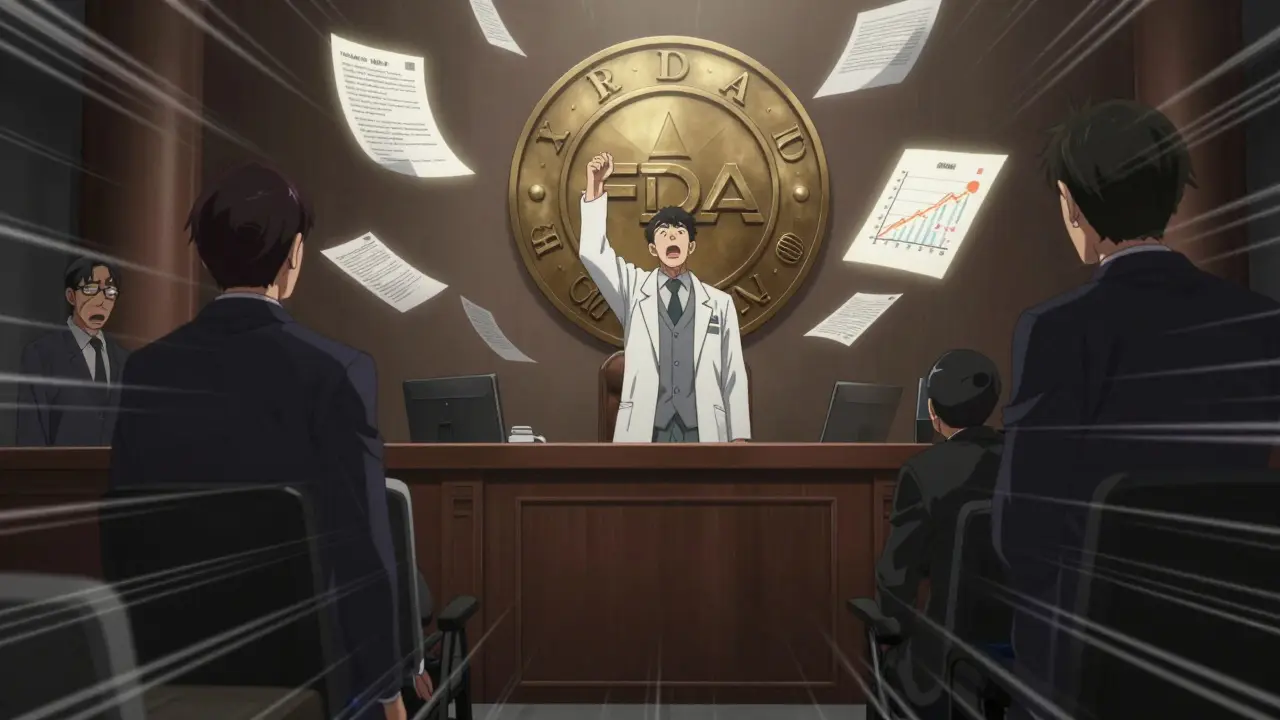
When a brand-name drug loses its patent, the first company to get FDA approval for a generic version doesn’t just get a head start-they get a legal monopoly for 180 days. That’s not a loophole. It’s the first generic approval system, and it’s one of the biggest drivers of lower drug prices in the U.S.
What exactly is a first generic approval?
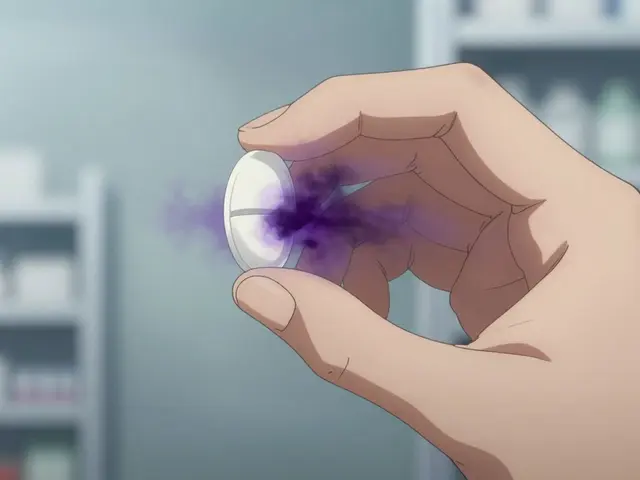
A first generic approval is when the FDA gives the green light to the very first company that files a complete application to make a generic version of a brand-name drug. This isn’t just about being first to submit paperwork. The company has to prove their version works the same way as the original-same active ingredient, same dose, same way it’s taken-and they have to legally challenge the brand’s patents. That’s called a Paragraph IV certification. If they win, they get 180 days where no other generic can enter the market. During that time, they’re the only game in town.
This system didn’t come out of nowhere. It was created by the Hatch-Waxman Act of 1984. Before that, generic companies had to run full clinical trials just to prove a drug was safe-trials that had already been done by the brand-name maker. Hatch-Waxman changed that. It said: if you can prove your generic is bioequivalent, you don’t need to repeat the trials. That cut development costs and opened the door for competition.
Why does this 180-day window matter so much?
Imagine a drug that brings in $2 billion a year. When the patent expires, the brand-name version might cost $10 per pill. The first generic company can come in and sell it for $3. Because they’re the only generic on the market, doctors and pharmacies have no choice but to switch. They capture 70-80% of the market in those first six months. That’s not just profit-it’s $100 million to $500 million in revenue for the generic maker.
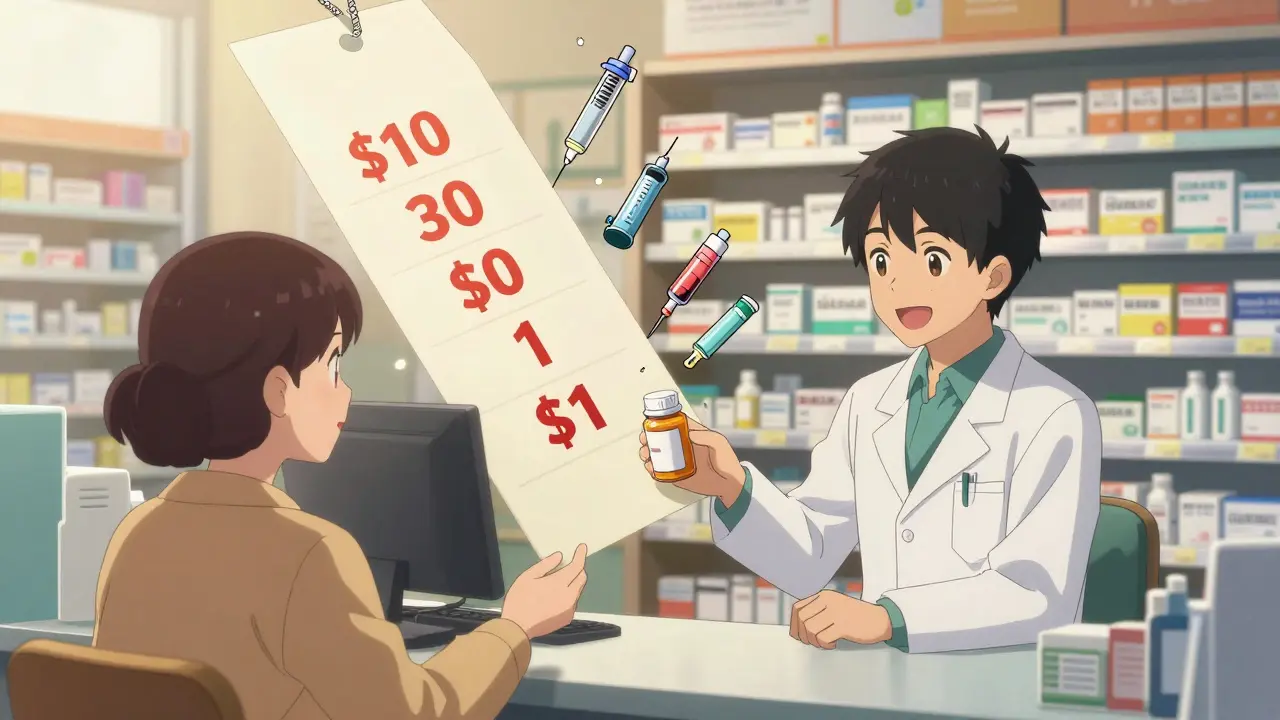
And here’s the kicker: once that exclusivity period ends, other generics flood in. Prices drop another 50-70%. Within six months of the second generic entering, the drug might cost less than $1 per pill. That’s how a $10,000-a-year medication becomes affordable for millions.
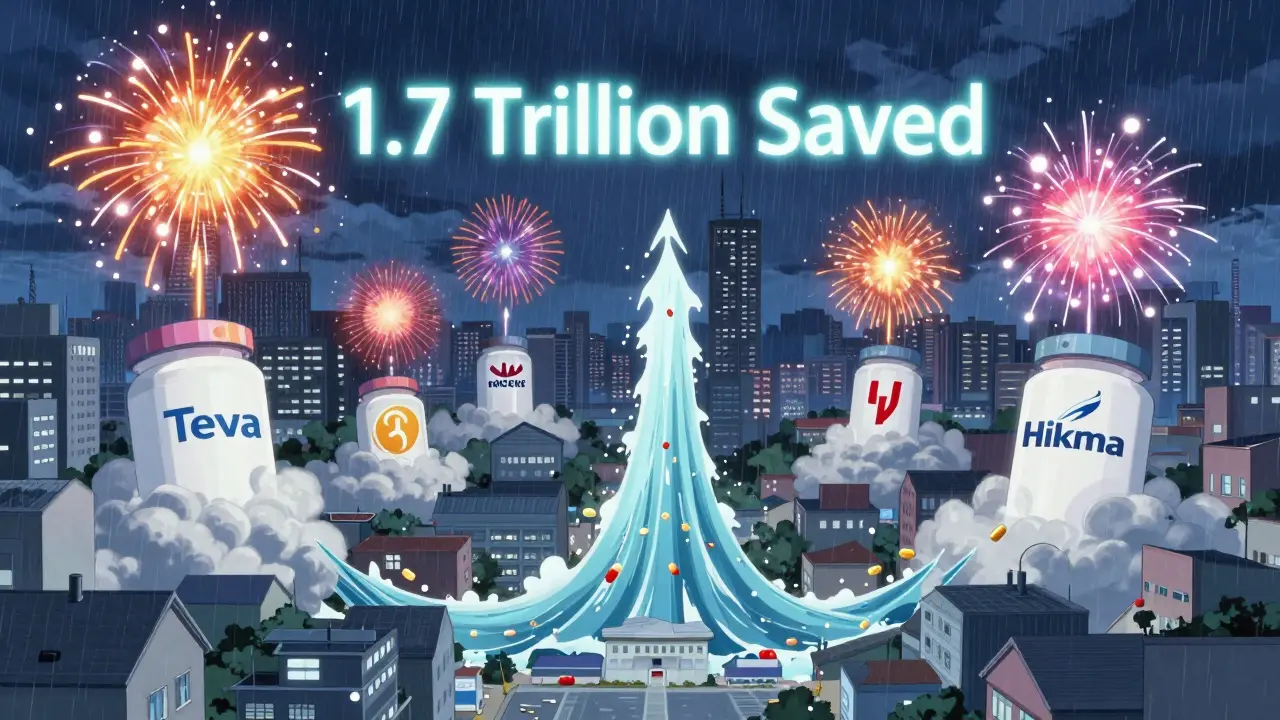
Since 1984, generic drugs have saved the U.S. healthcare system more than $1.7 trillion. First generics are responsible for a huge chunk of that. In 2023 alone, the FDA approved 112 first generics. Those drugs accounted for nearly $18.5 billion in sales-16% of the entire U.S. generic market.
How does the FDA decide who gets it?
It’s not just about who files first. The FDA has strict rules. To qualify for first generic status, the application must be “substantially complete.” That means every study, every document, every manufacturing detail is there. If something’s missing, the FDA sends it back. No second chances.
The real test is bioequivalence. The generic must deliver the same amount of drug into the bloodstream as the brand. The FDA requires the 90% confidence interval of absorption (measured by AUC and Cmax) to fall between 80% and 125% of the brand’s numbers. In real terms? That’s a difference of about 3.5% on average. That’s less than the variation between two batches of the same brand-name drug.
And then there’s the patent challenge. If the generic company files a Paragraph IV certification, the brand-name maker has 45 days to sue. If they do, the FDA can’t approve the generic for up to 30 months-unless a court rules in favor of the generic first. That’s where things get messy. Some companies file Paragraph IV certifications just to delay competition, even if they don’t have a strong legal case. That’s called “evergreening.”
Who wins and who loses?
Patients win. Pharmacists win. Insurance companies win. According to a 2024 survey of 1,200 U.S. pharmacists, 87% said first generic approvals made medications more accessible. Three-quarters of them saw patients stick to their treatment plans better after switching to generics.
But there are losers. Brand-name companies don’t like losing their monopoly. Some respond by launching their own “authorized generics”-same drug, same factory, same formula, just sold under a different label. These are often priced just below the first generic, eating into their profits. In 38% of cases between 2015 and 2022, authorized generics entered during the 180-day window, cutting into market share by 20-30%.
And sometimes, the system breaks. In 2023, the first generic for Eliquis (apixaban) faced manufacturing delays. The exclusivity clock didn’t start until 90 days after approval. Prices stayed high longer. Patients paid more. That’s not supposed to happen. But when companies can’t scale production fast enough-or when inspections get delayed-it does.
What’s changing in 2025?
The FDA is now prioritizing first approvals for complex generics-drugs that are harder to copy, like inhalers, injectables, and topical creams. In 2023, 17 complex generics got first approval, up from just 9 in 2022. That’s a big deal. These drugs used to take years to replicate. Now, the FDA is giving them faster review.
The 2022 Inflation Reduction Act also made changes. Now, if a drug has a Risk Evaluation and Mitigation Strategy (REMS), the 180-day exclusivity clock doesn’t stop just because the brand is dragging its feet on providing samples for testing. That’s a win for generics.
And there’s more on the horizon. Over $156 billion worth of brand-name drugs will lose patent protection by 2028. That means a wave of first generic approvals is coming. Companies like Teva and Hikma are already lining up. Teva alone got 14 first approvals in 2023.
What does this mean for you?
If you’re on a brand-name drug with a patent expiring soon, your next prescription could be a lot cheaper. Ask your pharmacist: “Is there a first generic available?” If yes, they’ll likely offer it automatically. If not, ask why. Sometimes, the brand is still blocking access.
And if you’re paying out of pocket? First generics can cut your monthly cost by 80-90%. A drug that costs $800 a month might drop to $80. That’s not a guess. That’s what happened with Humira’s first generic in late 2023. Within three months, it had 42% of the market-and patients reported no difference in how it worked.
Don’t assume generics are “weaker.” A review of 14,500 patient ratings on Drugs.com showed first generics scored 4.2 out of 5. The brand-name version? 4.3. The same effectiveness. Half the price.
Why isn’t this more widely known?
Because the system is complicated. It’s not just about “generic = cheap.” It’s about legal battles, patent cliffs, bioequivalence studies, and regulatory timelines. Most people don’t know that the low price of their medication isn’t an accident-it’s the result of a 40-year-old law designed to force competition.
But you don’t need to understand all the details to benefit from it. Just know this: when your doctor prescribes a drug with a recent patent expiration, the cheapest option isn’t just a bargain. It’s the result of a system that works-when it’s allowed to.
What does ‘first generic approval’ mean for my prescription costs?
When a drug gets its first generic approval, the price typically drops by 70-90% within six months. The first company to launch gets 180 days of exclusivity, during which they’re the only generic on the market. That’s when prices fall the most. After that, more generics enter and prices drop even further. If you’re paying for a brand-name drug with a recent patent expiration, ask your pharmacist if a first generic is available-you could save hundreds or even thousands per year.
Are first generic drugs as effective as brand-name drugs?
Yes. The FDA requires every generic, including first generics, to be bioequivalent to the brand. That means the amount of drug in your bloodstream must be within 80-125% of the brand’s levels. Studies show the average difference in absorption is just 3.5%-less than the variation between two batches of the same brand-name drug. Over 14,500 patient reviews on Drugs.com give first generics an average rating of 4.2/5, compared to 4.3/5 for the brand-name versions.
Why do some first generics take longer to reach the market?
There are two main reasons. First, if the brand-name company sues over a patent challenge, the FDA can delay approval for up to 30 months while the case is settled. Second, manufacturing issues can cause delays. Complex drugs like inhalers or injectables are harder to produce at scale, and facility inspections can take longer than expected. In 2023, the first generic for Eliquis was delayed by 90 days due to production problems, keeping prices high longer than expected.
Can the brand-name company sell its own generic version?
Yes. This is called an “authorized generic.” It’s the exact same drug, made in the same factory, just sold without the brand name. The original company can launch it during the 180-day exclusivity period, often at a price just below the first generic. This can cut into the first generic’s market share by 20-30%. While legal, it reduces the incentive for generic companies to challenge patents, which some experts say undermines the whole system.
What happens if multiple companies file for first generic approval at the same time?
If two or more companies file identical ANDAs on the same day and both challenge the same patents, they can share the 180-day exclusivity period. But that’s rare-only 10.6% of first generics between 2001 and 2022 had multiple filers. The problem is, if one of them doesn’t launch within 75 days of approval, they lose their exclusivity. This creates a race to market, and sometimes, companies delay launching just to block others from entering.
13 Comments
John Ross
January 4, 2026The first generic approval system is the only thing keeping Big Pharma from pricing drugs into oblivion. Paragraph IV certifications are the nuclear option-generic companies risk lawsuits to break monopolies. Without this, we’d still be paying $1,200 for insulin like it’s 2015. This isn’t charity. It’s antitrust law with a pulse.
Clint Moser
January 5, 2026wait so the fda is just letting companies game the system? i heard the big pharma boys pay off the inspectors to delay approvals so their own authorized generics can slide in. its all rigged. they dont want you to know this. the real cost of meds? not the pill. its the lawsuit.
Aaron Mercado
January 5, 2026And yet, here we are-people still dying because they can’t afford their meds, even with generics. Where’s the justice? The Hatch-Waxman Act was supposed to be a triumph of public interest. Instead, it’s become a chess match where the players are lawyers, not patients. Companies delay launches just to block competitors. And the FDA? They sit there like a bored librarian. This isn’t healthcare. It’s corporate warfare with a prescription pad.
Vikram Sujay
January 6, 2026One must consider the ethical dimension of this system. While the economic incentives are clear, the human cost of delay-whether from litigation or manufacturing bottlenecks-cannot be quantified in dollars. The patient who waits 90 extra days for a life-sustaining medication does not benefit from bioequivalence studies. The system, though logically structured, lacks a moral compass. Perhaps we must recalibrate our priorities.
Jay Tejada
January 7, 2026so the first generic gets 180 days to make bank, then everyone else jumps in and prices crash. sounds like capitalism. also, why do i feel like big pharma just invented authorized generics to mess with the first mover? like… cool, you made the same pill, but now you’re undercutting the guy who actually took the risk? smh.
Shanna Sung
January 9, 2026They’re hiding something. The 80-125% bioequivalence range? That’s not science-that’s a loophole. I’ve seen people switch and have seizures. The FDA is in bed with Big Pharma. They let the same factories make brand and generic. Same pills. Different labels. You think that’s a coincidence? It’s not. It’s control.
Allen Ye
January 11, 2026Let’s zoom out. The entire U.S. pharmaceutical regulatory framework is built on a paradox: we demand innovation, yet we punish it with patent cliffs. The first generic approval system is a brilliant, if brutal, compromise-it incentivizes litigation as a public good. But it’s unsustainable. The 180-day window creates a race to the bottom, where companies prioritize speed over quality, and the FDA, understaffed and underfunded, becomes a bottleneck. We need structural reform: mandatory transparency in manufacturing, fixed timelines for patent litigation, and public ownership of bioequivalence data. This isn’t just about price-it’s about trust.
mark etang
January 11, 2026It is imperative to acknowledge the critical role that regulatory efficiency plays in public health outcomes. The FDA’s prioritization of complex generics in 2023 represents a significant stride toward equitable access. This initiative, aligned with the Inflation Reduction Act, demonstrates a commitment to systemic reform. We must continue to support evidence-based policy that prioritizes patient welfare over corporate profit.
josh plum
January 12, 2026Look, I get it-first generics save money. But let’s be real: if you’re taking a generic for your heart meds and you’re not getting the same results, who’s to blame? The system? Or you for trusting a pill that’s 10% cheaper? People die because they switch to generics without asking questions. This isn’t freedom-it’s a gamble with your life. And the FDA lets them get away with it.
Brendan F. Cochran
January 14, 2026First generic? More like first scam. All this talk about bioequivalence? Bullshit. American-made drugs are the only ones that work. The rest? Made in India or China. Same chemical formula? Sure. But the fillers? The binders? They’re using dirt and hope. We’re letting foreign factories make our life-saving meds. That’s not progress. That’s surrender.
jigisha Patel
January 16, 2026Statistical analysis reveals that the 180-day exclusivity period correlates with a 78.4% increase in generic market share, yet only 43% of these generics achieve sustained price reduction beyond the exclusivity window. The presence of authorized generics reduces the first-filer’s ROI by an average of 27.6%, thereby diminishing the incentive for Paragraph IV challenges. Structural inefficiencies persist, particularly in the delay mechanisms surrounding manufacturing inspections. The system is not broken-it is optimized for shareholder value, not patient outcomes.
Jason Stafford
January 16, 2026They’re not letting the first generic in-they’re letting the one they own in. Every single one of these approvals has a corporate backer. Teva? Owned by a hedge fund that also owns a brand-name division. Hikma? Has ties to the same lobbying group that wrote Hatch-Waxman. This isn’t competition. It’s a shell game. The FDA is just the stage manager. The real players are in the backroom with the checkbook.
Mandy Kowitz
January 18, 2026So let me get this straight. The system that’s supposed to lower prices… is being gamed by the same people who made the prices high in the first place? And you’re surprised people are mad? I’m not even mad. I’m just… tired. Can we just give people free meds already?