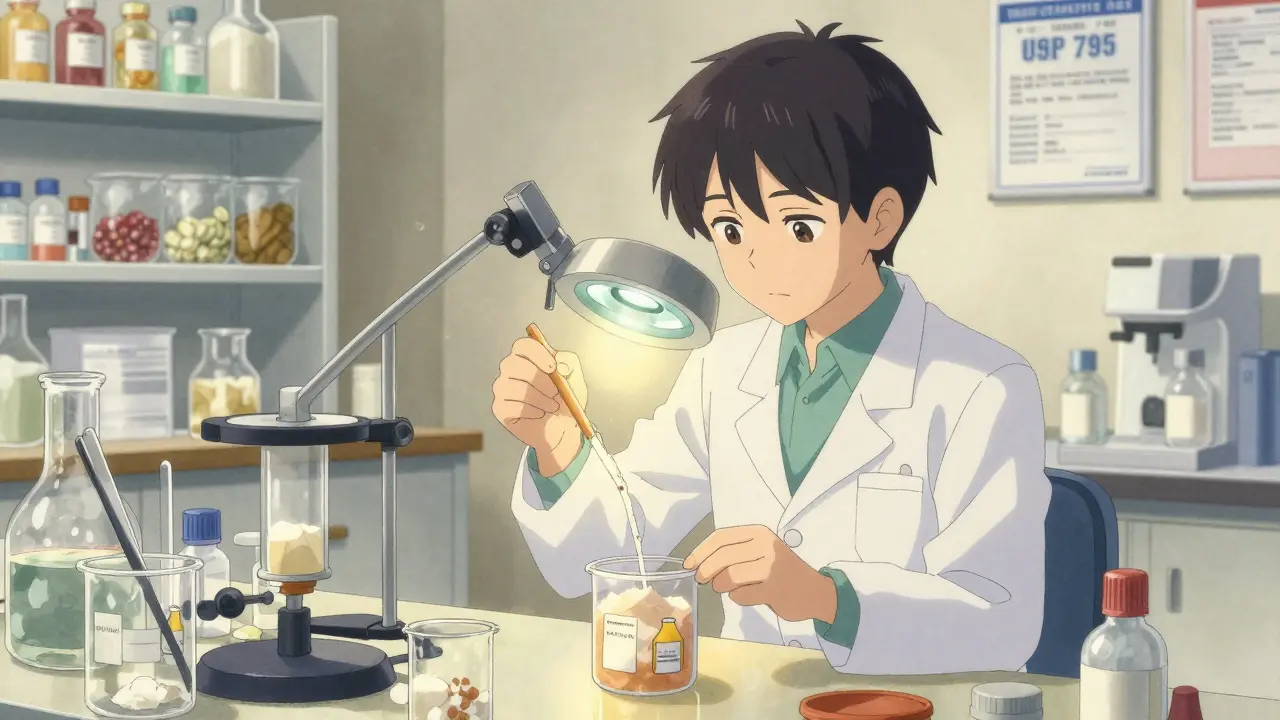
When your doctor prescribes a medication and the pharmacy says it’s out of stock-again-you’re not alone. In 2025, over 350 prescription drugs were in short supply across the U.S., from common antibiotics to life-saving heart medications. Waiting weeks isn’t always an option. That’s where compounding pharmacies step in-not as a first choice, but as a critical backup when standard drugs simply aren’t available or don’t work for you.
What Exactly Is a Compounding Pharmacy?
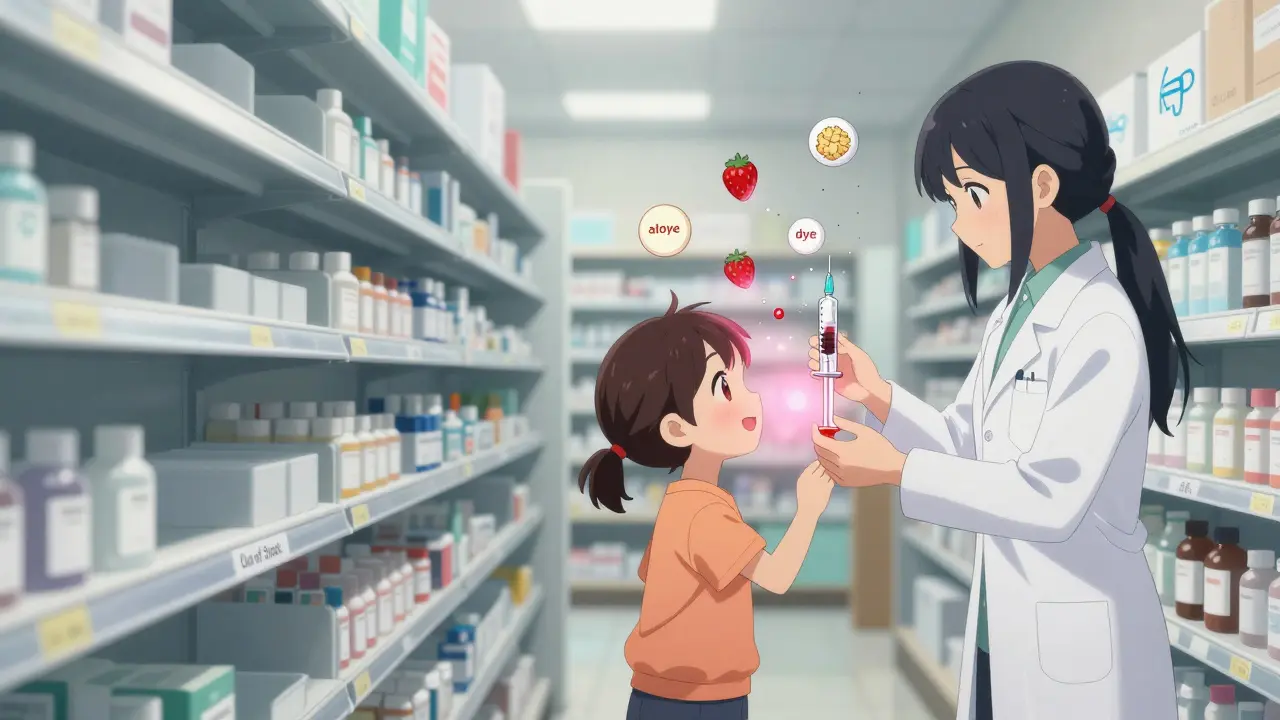
A compounding pharmacy doesn’t just fill prescriptions. It builds them from scratch. These pharmacies take raw chemical ingredients and mix them into custom formulations tailored to a single patient’s needs. Think of it like a chef cooking a meal for someone with allergies, instead of serving a pre-made dish that contains ingredients they can’t touch. Unlike regular pharmacies that stock mass-produced pills and capsules, compounding pharmacies work with pharmacists who are trained in chemistry and formulation. They can create medications in forms you won’t find at CVS or Walgreens: flavored liquids for kids who gag on pills, topical gels for seniors who can’t swallow, or hormone creams without the dyes and fillers that trigger rashes. The FDA recognizes these pharmacies under two categories: 503A for small, community-based operations and 503B for larger outsourcing facilities. Most patients rely on 503A pharmacies-local, independent shops that handle about 1.5% of all U.S. prescriptions. That’s not a lot, but for the people who need them, they’re essential.When Do You Really Need One?
You don’t need a compounding pharmacy just because a drug is temporarily out of stock. But you might need one if:- You’re allergic to dyes, gluten, or lactose in commercial pills
- You can’t swallow tablets and need a liquid or transdermal version
- Your child refuses to take medicine because it tastes like chemicals
- Your doctor prescribed a dose that’s not manufactured (like 12.5 mg instead of 25 mg)
- The drug you need has been pulled from the market due to shortages
How Are They Different From Regular Pharmacies?
Regular pharmacies rely on FDA-approved drugs made by big manufacturers. They’re consistent, cheap, and widely covered by insurance. Compounding pharmacies? They’re handmade, one-off, and often not covered. Here’s how they compare:| Feature | Standard Pharmacy | Compounding Pharmacy |
|---|---|---|
| Medication Source | Mass-produced, FDA-approved | Custom-mixed from raw ingredients |
| Availability | Immediate (in stock) | 24-72 hours to prepare |
| Dosage Flexibility | Fixed strengths only | Custom doses down to the milligram |
| Form Options | Pills, capsules, injections | Liquids, creams, gels, troches, suppositories |
| Allergen-Free? | Often contains fillers, dyes, preservatives | Can remove allergens like gluten, lactose, FD&C dyes |
| Insurance Coverage | Usually covered | Often out-of-pocket (45% of patients pay fully) |
| Regulation | FDA pre-market approval | USP <795>/<797> standards, PCAB accreditation |

Who Uses Them the Most?
Compounding isn’t for everyone. But it’s vital for specific groups:- Children (12% of compounded prescriptions): Flavored suspensions, dissolvable strips, or smaller doses for premature babies or kids with autism who can’t swallow pills.
- Elderly patients (28%): Transdermal pain patches, easy-to-swallow liquids, or hormone creams that avoid liver stress from oral meds.
- Allergy-sensitive patients (22%): Those reacting to dyes, preservatives, or lactose in commercial drugs-often left with no options otherwise.
- Chronic pain and hormone therapy patients: Compounded creams for testosterone, estrogen, or pain meds like ketamine or gabapentin are common in these areas.
What Can’t They Do?
Compounding pharmacies aren’t magic. They can’t make:- Biologics (like insulin or monoclonal antibodies)
- Complex IV chemotherapy drugs without sterile facilities
- Drugs that require patented manufacturing processes
- Medications that are already available and safe for you
How to Find a Reputable One
Not all compounding pharmacies are equal. Some are highly skilled. Others cut corners. Here’s how to find one you can trust:- Look for PCAB accreditation. Only about 1,200 out of 7,500 compounding pharmacies in the U.S. have this seal. It means they pass strict audits on cleanliness, training, and quality control.
- Ask if they follow USP <795> and <797> guidelines. These are the gold standards for non-sterile and sterile compounding.
- Check if they do stability testing. A good pharmacy will tell you how long your compounded medicine will last and how to store it.
- Ask your doctor for recommendations. Many prescribers have trusted compounding partners.
- Call ahead. Ask about turnaround time and whether they work with your insurance.
Cost and Insurance: What to Expect
This is the biggest hurdle. Most insurance plans don’t cover compounded medications-or they cover them partially. You might pay $50-$200 out of pocket, depending on the formula. Compare that to a $10 generic pill. Some insurers will cover it if your doctor submits a letter of medical necessity. That’s a note explaining why the commercial version won’t work for you. It helps. But it’s not guaranteed. A 2022 survey found 89% of patients who used compounded meds would recommend them. Why? Because they finally had a solution. But 60% also said the cost was a major stressor.What’s Next for Compounding?
The market is growing fast. It was worth $11.2 billion in 2022 and is expected to hit $15.8 billion by 2027. Why? Drug shortages aren’t going away. More people want personalized care. And technology is helping. New digital tools reduce compounding errors by 37%. Better testing extends shelf life by up to 40%. Some pharmacies now use genetic data to tailor hormone doses. That’s the future: precision medicine, made on-site. But regulators are watching. The FDA still says compounding should be an exception-not a replacement. They’re tightening rules after past outbreaks linked to unsafe practices. That’s good. It means the field is maturing.Final Thoughts
If you’re stuck because your medication is unavailable, don’t give up. Talk to your doctor. Ask if a compounding pharmacy can help. It’s not always easy. It’s not always cheap. But for many, it’s the only way to keep taking the medicine they need. It’s not about avoiding FDA-approved drugs. It’s about making sure no one falls through the cracks because the system only makes pills in one size, one strength, one flavor-and that doesn’t fit everyone. Compounding pharmacies are the quiet heroes of the pharmacy world. They don’t advertise. They don’t have apps. But they show up when it matters most.Are compounded medications safe?
Yes-when they’re made by accredited pharmacies following USP <795> and <797> standards. These pharmacies use sterile techniques, test for purity, and track every batch. But safety depends on the pharmacy. Avoid ones that don’t disclose their accreditation or testing process. The FDA warns that compounded drugs aren’t tested like commercial ones, so quality varies.
Can any pharmacist compound medications?
No. While all pharmacists learn basic compounding in school, only those with specialized training and equipment handle complex formulations. Most community pharmacies don’t have clean rooms or the tools to make sterile products. Look for pharmacies that advertise compounding as a core service-not just an add-on.
How long does it take to get a compounded prescription?
Typically 24 to 72 hours. Simple non-sterile formulations (like creams or liquids) can be ready in a day. Sterile injections or IV solutions take longer-up to 3 days-because they require extra testing and validation. Always ask for a timeline when your doctor sends the prescription.
Can I get compounded medications through my regular pharmacy?
Some larger chain pharmacies offer basic compounding, like flavoring liquids or making topical gels. But for complex or sterile preparations, you’ll need a specialized compounding pharmacy. Most regular pharmacies don’t have the space, equipment, or expertise.
Why don’t drug companies make these custom versions?
It’s not profitable. Drug companies make billions by producing one version of a drug for millions of people. Making a 5 mg liquid for 50 kids with rare epilepsy? That’s not a market they’ll invest in. Compounding pharmacies fill that gap-because they’re built for small batches and individual needs, not mass production.


12 Comments
Sazzy De
January 30, 2026Been there. My kid’s seizure med was out for months. Compounding pharmacy made a strawberry liquid he actually took. No more tears at 6am.
Worth every penny.
calanha nevin
January 30, 2026Compounding pharmacies are a lifeline for patients with complex needs. The lack of insurance coverage remains a systemic failure. Physicians must advocate more aggressively for reimbursement pathways. This isn’t luxury medicine-it’s essential care for vulnerable populations.
Accreditation standards like PCAB and USP must be mandatory, not optional.
Diksha Srivastava
January 30, 2026So happy to see this topic getting attention! I’ve seen how compounding changed lives in my community-kids who couldn’t swallow pills now thriving, seniors avoiding stomach damage. Small pharmacies doing big work. Keep pushing for better access!
Natasha Plebani
January 31, 2026The epistemological rupture between mass-produced pharmaceuticals and individualized compounding reveals a deeper fissure in neoliberal healthcare logic. The market optimizes for scalability, not somatic specificity. Compounding pharmacies operate as ontological counter-spaces-sites of therapeutic autonomy where the body’s idiosyncrasies are not pathologized as inefficiencies but honored as legitimate variables in pharmacological design.
Yet this autonomy is precarious, constrained by regulatory arbitrage and capital scarcity. The FDA’s ambivalence is not bureaucratic caution-it’s ideological hostility toward decentralized care. We must reframe compounding not as a workaround, but as a paradigm shift toward embodied pharmacology.
Niamh Trihy
February 1, 2026Important to note: not all compounding is equal. I’ve seen pharmacies skip stability testing to cut costs. Always ask for batch records and expiration dates. If they hesitate, walk away.
PCAB accreditation isn’t just a sticker-it’s your safety net.
Sidhanth SY
February 1, 2026My uncle used a compounded testosterone cream after oral meds wrecked his liver. Took 3 weeks to get it, paid $180 out of pocket. But he finally slept through the night.
Worth it. More docs need to know this exists.
Jason Xin
February 3, 2026Oh great, another post about how the system fails us and we should all just pay $200 for magic liquid.
Meanwhile, the FDA is trying to keep people from dying and you’re over here romanticizing unregulated potions like it’s 1842.
At least the $10 generic pill has been tested on 10,000 people. Your ‘custom cream’? Maybe.
Amy Insalaco
February 4, 2026One must interrogate the ontological hegemony of the FDA’s monolithic approval framework, which enshrines pharmaceutical homogeneity as the sole epistemic authority over therapeutic efficacy. Compounding pharmacies, by contrast, embody a hermeneutic of individuality-a pharmacological phenomenology wherein the patient’s bioindividuality is not merely accommodated but ontologically privileged.
Moreover, the economic inefficiency argument collapses under scrutiny: the cost of hospitalizations due to non-adherence from unpalatable or allergenic formulations far exceeds the marginal expense of compounding. The real inefficiency lies in a system that forces 30% of elderly patients into aspiration pneumonia because they can’t swallow a tablet designed for a 25-year-old male in a clinical trial.
KATHRYN JOHNSON
February 6, 2026Compounding is dangerous. Unregulated. Untested. You’re gambling with your life. If a drug is out of stock, wait. Or find an alternative. Don’t risk contamination, incorrect dosing, or bad chemistry from some basement lab calling itself a ‘pharmacy.’
Lisa McCluskey
February 7, 2026My mom’s on a compounded thyroid med after reacting to every commercial version. She’s been stable for 3 years. The pharmacy sends her test results with every refill.
It’s not perfect, but it’s the only thing that works.
Don’t dismiss it because it’s not big pharma.
Russ Kelemen
February 9, 2026Jason’s got a point about risk, but Kathryn’s ignoring the real problem: the system doesn’t give people options. If you’re allergic to every filler, and every brand has the same ones, what’s your choice? Die? Or find someone who’ll make you a pill without the poison?
Compounding isn’t the problem. The lack of competition in drug manufacturing is.
Adarsh Uttral
February 9, 2026my bro got a compounded version of his migraine med after 4 meds gave him rashes. took 2 days, cost $90. he’s been fine since. no drama. no hospital. just a local pharmacy doing their job.
stop acting like its magic potion. its just medicine made right for one person.