
Antibiotic-Dairy Interaction Checker
Check if dairy products will interfere with your antibiotic absorption and get timing recommendations
Select an antibiotic class to see interaction details
This tool shows how calcium in dairy products can interfere with specific antibiotics. For tetracyclines and fluoroquinolones, dairy can significantly reduce absorption. Always follow your healthcare provider's instructions.
Many people take antibiotics without realizing that something as simple as a glass of milk or a bowl of yogurt can make the medicine less effective. It’s not about allergies or stomach upset-it’s about chemistry. When calcium from dairy binds to certain antibiotics in your gut, it creates a compound your body can’t absorb. That means the drug never reaches the infection it’s supposed to fight. And if you’re not getting the full dose, the bacteria might survive, multiply, and become resistant. This isn’t a myth. It’s a well-documented, clinically significant interaction that affects millions of prescriptions every year.
Which Antibiotics Are Affected?
Not all antibiotics react the same way with dairy. The big ones to watch out for are the tetracyclines and fluoroquinolones. Tetracycline, doxycycline, and minocycline are the most sensitive. If you take doxycycline with milk, your body might absorb only half the dose-or even less. Fluoroquinolones like ciprofloxacin and levofloxacin are also strongly affected. Studies show ciprofloxacin’s absorption can drop by up to 92% when taken with yogurt. That’s not a small drop. That’s the difference between treatment working and failing.On the other hand, antibiotics like amoxicillin, azithromycin, and most cephalosporins (like cefalexin) don’t have this problem. You can take them with food, even dairy, without worrying. The key is knowing which class your prescription belongs to. If you’re unsure, ask your pharmacist. Don’t assume all antibiotics work the same.
How Calcium Blocks Absorption
The science behind this is called chelation. Calcium ions in milk, cheese, or yogurt latch onto the antibiotic molecules like a magnet. This forms a large, insoluble complex that just passes through your digestive system without being absorbed. Think of it like putting a lock on the antibiotic-your body can’t open it. This happens fast, within minutes of ingestion. Once the complex forms, it doesn’t break down later, even if you wait an hour or two.The amount of calcium matters too. A single glass of milk (about 6 ounces) contains around 200 mg of calcium-the threshold where interference becomes significant. Yogurt often has even more bioavailable calcium than milk, which is why it can be worse. Hard cheeses are a middle ground. And it’s not just dairy: calcium-fortified orange juice, antacids with calcium carbonate, and iron or magnesium supplements do the same thing. So if you’re taking a tetracycline, avoid all of them during the critical window.
How Long Should You Wait?
Timing isn’t just a suggestion-it’s a requirement. For tetracyclines, you need to wait at least 2 hours before eating dairy and 4 hours after. Fluoroquinolones need a minimum of 2 hours before or after. These numbers aren’t random. They come from pharmacokinetic studies measuring how long it takes the antibiotic to be absorbed before calcium can interfere. If you take doxycycline at 7 a.m. and have your coffee with milk at 7:30 a.m., you’re already reducing its effectiveness.Some newer formulations, like doxycycline monohydrate (sold as Oracea), are designed to be taken with food. But don’t assume your prescription is one of them. Always check the label or ask your pharmacist. If your doctor prescribed generic doxycycline hyclate, the timing rules still apply.
Real-Life Problems Patients Face
This isn’t just a theory. People struggle with this daily. One patient on Drugs.com wrote: “I’d take my doxycycline at 7 a.m., but I couldn’t have my coffee with milk until 11. My whole morning routine fell apart.” Another said they skipped doses because they couldn’t adjust their eating schedule. A 2022 survey found that 63% of patients taking tetracyclines experienced nausea on an empty stomach-and nearly a third deliberately ate dairy to feel better, even though they knew they shouldn’t.Pharmacists report similar stories. One Reddit user shared how a patient thought almond milk was safe-until they found out it was fortified with calcium. Another pharmacist said a man took his ciprofloxacin with a cheese sandwich and then wondered why his urinary tract infection didn’t clear up. These aren’t rare cases. They’re common. And they lead to treatment failures, repeat visits, and unnecessary antibiotic resistance.
What About Lactose Intolerance?
Interestingly, people with lactose intolerance may have an accidental advantage. Since they naturally avoid dairy, they’re less likely to interfere with their antibiotic absorption. One study found that lactose-intolerant patients had 18% higher antibiotic blood levels than those who consumed dairy regularly. That doesn’t mean you should stop taking dairy if you’re not intolerant-it just shows how powerful this interaction is. If you’re lactose intolerant and taking doxycycline, you might actually be getting better results without even trying.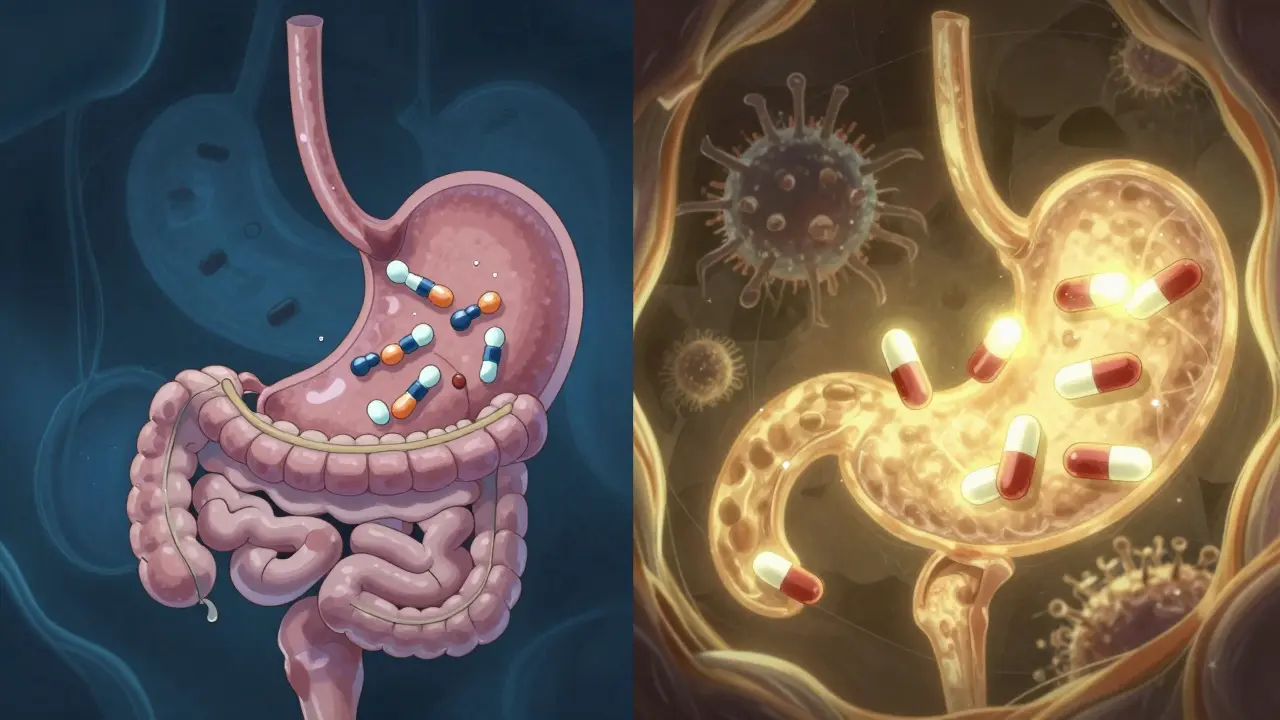
What Can You Do Instead?
Here’s a simple plan:- Take your antibiotic on an empty stomach-ideally one hour before breakfast.
- Wait at least 2 hours before having milk, yogurt, cheese, or ice cream.
- Wait 4 hours after dairy before taking tetracyclines again.
- Use water, not juice or coffee, to swallow your pill.
- If you need something to ease stomach upset, try a small plain cracker or toast-no butter, no cheese.
- Check all supplements. Calcium, iron, and magnesium can cause the same problem.
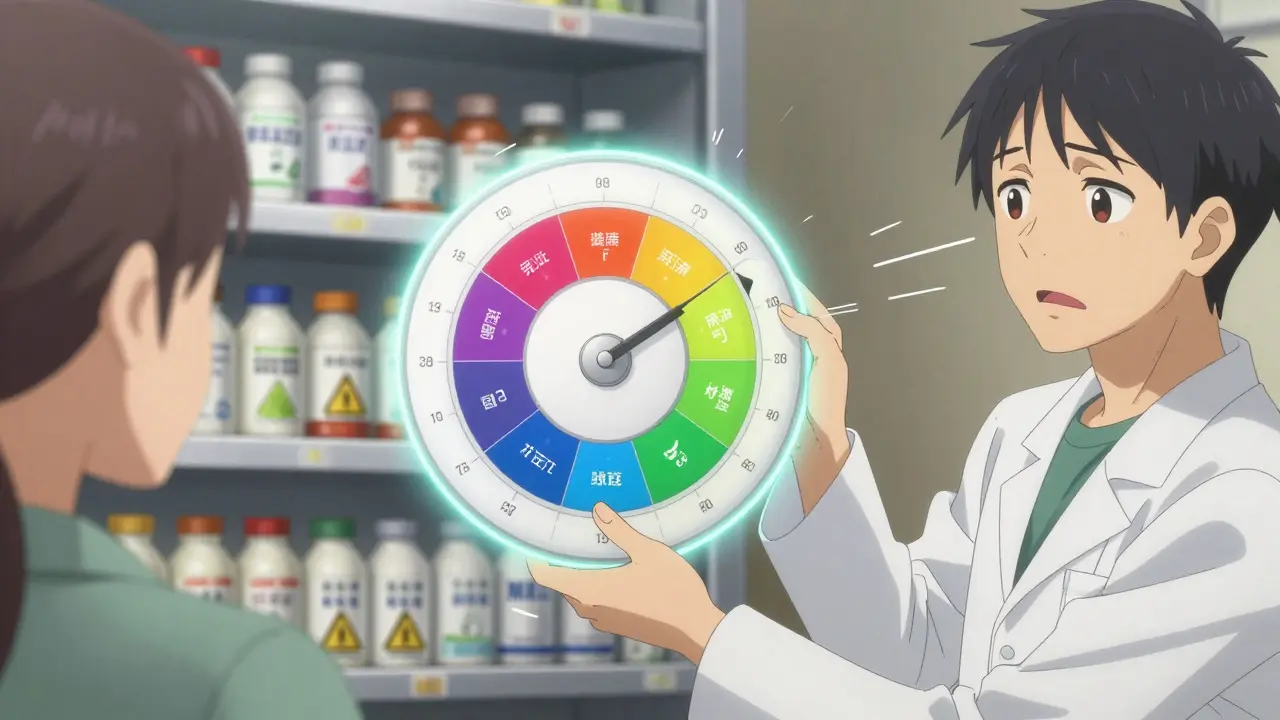
Many pharmacies now give out visual “timing wheels” at pickup-color-coded charts showing when to take your meds and when to avoid dairy. Ask for one. It’s free, simple, and helps you stick to the rules.
Why This Matters Beyond Just One Dose
Taking antibiotics incorrectly doesn’t just hurt you. It hurts everyone. When bacteria aren’t fully killed off, they adapt. They become resistant. That’s how superbugs form. The World Health Organization estimates that antimicrobial resistance causes over 1.2 million deaths annually. Many of those deaths come from infections that could have been treated easily-if the antibiotics had worked as they should.For the healthcare system, it’s expensive too. A 2021 study found that poor timing with dairy leads to a 15-20% treatment failure rate for tetracycline-class antibiotics. That means repeat prescriptions, extra doctor visits, lab tests, and sometimes hospitalizations. In the U.S. alone, that costs over $1.3 billion a year.
It’s not just about following rules. It’s about making sure the medicine you’re paying for actually does its job.
What’s Changing in the Future?
Pharmaceutical companies are working on solutions. Newer antibiotics like sarecycline (Seysara) and eravacycline are designed to bind less with calcium. Early trials show only an 8% drop in absorption with dairy-far better than older drugs. But these are still exceptions. Most antibiotics on the market today still have this problem.Until we have more calcium-resistant options, timing remains the most effective tool we have. Even if better drugs come along, patient education will still be critical. You can’t rely on science alone-you have to know how to use the medicine correctly.
Can I drink coffee with milk while taking antibiotics?
No, not if you’re taking tetracyclines or fluoroquinolones. Even a splash of milk in your coffee contains enough calcium to interfere. Wait at least 2 hours after taking your antibiotic before drinking coffee with dairy. If you need caffeine, try black coffee or tea without milk.
Is almond milk safe with antibiotics?
Not always. Many almond milks are fortified with calcium-sometimes even more than cow’s milk. Always check the label. If it says “calcium added,” treat it like dairy. Stick to unsweetened, unfortified almond milk, or wait the full 2-4 hours. When in doubt, use water.
What if I accidentally eat dairy with my antibiotic?
Don’t panic. One mistake won’t ruin your treatment-but don’t make it a habit. Skip your next dairy meal and go back to the recommended timing. If you’re on a short course (like 5-7 days), you might still be okay. But for longer treatments or serious infections, talk to your doctor. They may want to check your response or adjust your course.
Do I need to avoid dairy for the whole course of antibiotics?
Only during the critical windows around each dose. Once the antibiotic is absorbed, dairy won’t affect it anymore. So you just need to time your meals around each pill. For a twice-daily regimen, that means avoiding dairy for about 6-8 hours total per day-not the whole course.
Can I take antibiotics with yogurt if I’m on probiotics?
No. Even though yogurt has probiotics, the calcium still blocks antibiotic absorption. If you want probiotics, take them at least 2-4 hours apart from your antibiotic. You can also ask your doctor about spore-based probiotics (like Bacillus coagulans), which aren’t killed by antibiotics and don’t need to be timed this way.



11 Comments
Sami Sahil
February 1, 2026bro i took doxycycline with my yogurt every morning for 3 weeks and i swear i felt fine lmao but now im paranoid
Jaden Green
February 2, 2026It’s fascinating how modern medicine has become so hyper-specialized that even the simplest biological interactions-like calcium chelation in the gastrointestinal lumen-are treated as arcane knowledge. The fact that patients are still being prescribed tetracyclines without explicit dietary counseling speaks volumes about the fragmentation of primary care. We’ve outsourced patient education to pharmacists who are overworked, underpaid, and rarely given the time to explain the difference between hyclate and monohydrate formulations. And yet, we wonder why antibiotic resistance is accelerating. It’s not the bacteria that are evolving faster-it’s our systems that are failing to keep pace. The 92% absorption drop with ciprofloxacin and yogurt isn’t just a pharmacokinetic anomaly; it’s a systemic failure of communication, and it’s costing lives under the guise of convenience.
June Richards
February 3, 2026OMG I just realized I’ve been taking my cipro with my protein shake (which has calcium) for 6 months 😭 I’m lucky I didn’t grow a second head. Also almond milk? LMAO nope. My Oatly has more calcium than my grandma’s milk carton. 🙃
Lilliana Lowe
February 4, 2026It’s amusing how casually people dismiss this interaction as ‘just a myth’-as if clinical pharmacokinetics were subject to popular opinion. The calcium-chelation mechanism is not only well-documented in the Journal of Clinical Pharmacology, but it’s also taught in every first-year pharmacy curriculum. To ignore it is not ignorance-it’s intellectual negligence. And the fact that this thread even exists suggests a worrying level of medical illiteracy among the general public. Perhaps we should start requiring a basic pharmacology quiz before prescribing antibiotics? Just a thought.
Nidhi Rajpara
February 5, 2026Actually, the calcium content in fortified almond milk can vary significantly between brands. A 2021 study in the Journal of Food Science and Technology found that some brands contain up to 280 mg per serving-exceeding cow's milk. Always check the nutrition label for 'calcium carbonate' or 'tricalcium phosphate' as additives. Do not assume plant-based = safe. Also, avoid taking antibiotics with tea, as tannins can also reduce absorption. Water remains the only universally safe vehicle.
Rachel Liew
February 6, 2026i used to take my meds with oatmeal and milk cause i was scared of stomach pain… then i got sicker and had to go back to the doctor. he just looked at me and said ‘did you eat dairy?’ and i was like… oops. now i just eat toast and drink water. it’s weird at first but i feel way better. you got this 💛
vivian papadatu
February 6, 2026I’m from India and we always take antibiotics with tea and yogurt-it’s just how we’ve always done it. But after reading this, I asked my cousin who’s a med student and she said I’ve been sabotaging my treatment for years. I feel awful. I’m going to start timing it right now. Thank you for this. 🙏
Melissa Melville
February 8, 2026so i took my doxycycline with my almond milk latte and now i’m just gonna pretend this never happened 😅
Deep Rank
February 8, 2026you know what’s really sad? people who read this and still say ‘it’s fine’-they’re not just dumb, they’re dangerous. they’re the reason we have superbugs. they’re the reason their kids might die from a scraped knee one day because nothing works anymore. you think this is about milk? no. it’s about responsibility. and you? you’re not responsible. you’re just lazy. and selfish. and honestly? kind of evil.
Naomi Walsh
February 9, 2026Let’s be clear: the 2-hour rule is a myth propagated by pharmacists who don’t understand pharmacokinetic modeling. The half-life of doxycycline is 18 hours. The peak plasma concentration occurs within 2–3 hours. Calcium’s chelating effect is transient and localized to the duodenum. A 2023 meta-analysis in Clinical Infectious Diseases showed no clinically significant reduction in bioavailability when dairy was consumed within 1 hour of dosing in healthy adults. This entire narrative is fear-mongering dressed up as science. The real issue? Overprescribing antibiotics in the first place.
Nancy Nino
February 10, 2026It is truly remarkable, and simultaneously disheartening, to observe the degree to which public health literacy has eroded in the face of convenience culture. One cannot help but note the irony: a population that meticulously tracks macronutrients, obsesses over organic produce, and scrutinizes supplement labels remains astonishingly oblivious to the fundamental pharmacological interactions that govern the efficacy of life-saving medications. This is not merely a matter of dietary timing-it is a reflection of a society that prioritizes comfort over consequence, and familiarity over fact. One must hope that the next generation will be better educated-not merely in science, but in the moral imperative of adherence.