Prior Authorization: What It Is, Why It Matters, and How to Navigate It
When your doctor prescribes a medication, but your insurance says prior authorization, a process where insurers require approval before covering certain drugs. Also known as pre-approval, it's meant to control costs—but for many, it becomes a roadblock to getting the medicine they need. This isn’t just paperwork. It’s a gatekeeping step that can delay treatment by days or weeks, and in some cases, it pushes people to skip doses or switch to less effective drugs.
Prior authorization isn’t random. It’s often required for brand-name drugs when a cheaper generic exists, for high-cost specialty meds like those for rheumatoid arthritis or hepatitis C, or for drugs with known misuse risks. Insurers use lists called formularies to decide what needs approval, and those lists change often. Your doctor’s office handles the request, but they’re often buried under paperwork. You might get a call asking for your medical records, or worse—you won’t hear back until the prescription is already expired. And if you’re on Medicare Part D or a private plan, you’re likely dealing with this more than you realize. A 2023 study by the American Medical Association found that 87% of physicians reported prior authorization delays directly harmed patient outcomes.
This system doesn’t just affect patients. It ties up nurses, pharmacists, and doctors in administrative tasks that have nothing to do with care. But there’s a way through it. Knowing which drugs commonly trigger prior authorization helps you prepare. If your doctor prescribes something new, ask right away: "Will this need approval?" Get the insurer’s phone number and track the request. Keep copies of every form. If you’re denied, you can appeal—and many appeals succeed when you have the right documentation. You’re not powerless here. The system is broken, but you can still move it.
Below, you’ll find real stories and practical guides from people who’ve been through this. From how to fight a denial to understanding why your insulin or antidepressant keeps getting flagged, these posts give you the tools to cut through the red tape. This isn’t about theory. It’s about getting your medicine on time, without begging or guessing.
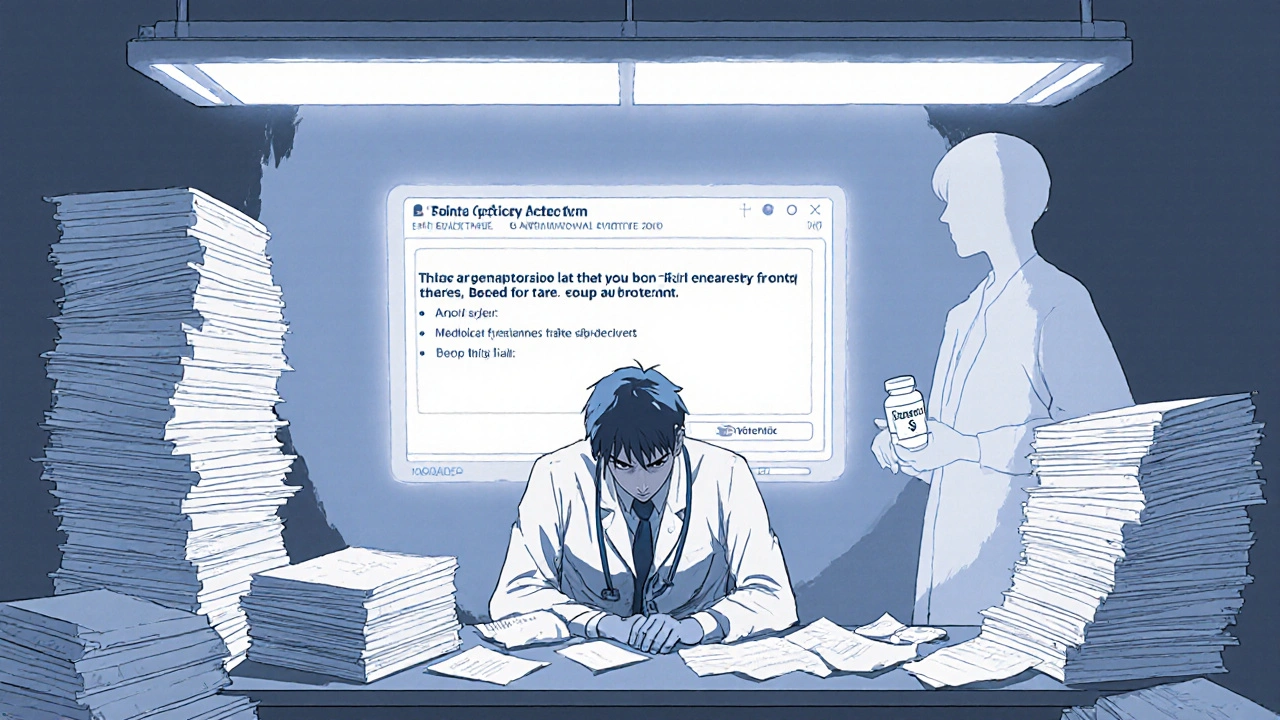
How Healthcare Providers Respond to Insurer Requirements for Generic Drug Substitution
Insurers push generic drug substitution to cut costs, but providers face mounting administrative burdens and clinical risks. Learn how doctors are adapting-and fighting back-against rigid insurance rules.
Continue Reading