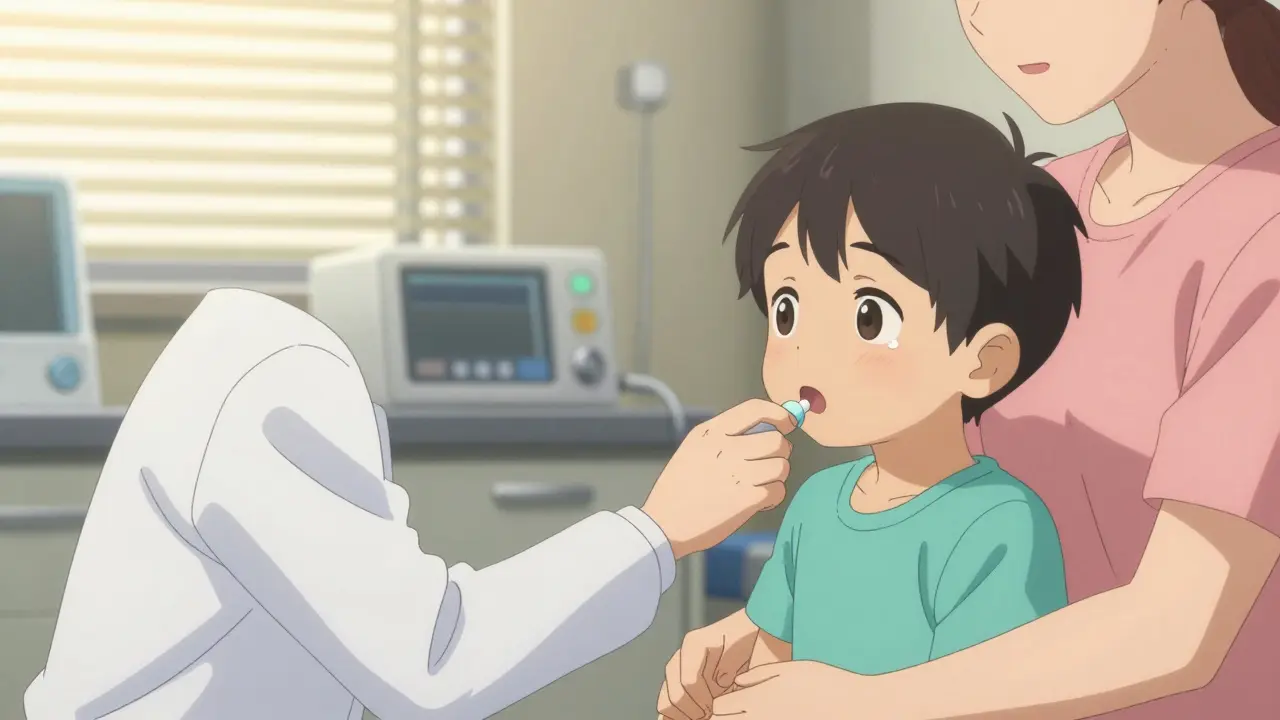
Preparing a child for surgery or a medical procedure isn’t just about giving them medicine-it’s about reducing fear, preventing complications, and making the whole experience smoother for everyone. When done right, pre-op medications can cut postoperative anxiety by nearly 40%, lower the chance of breathing problems during anesthesia, and even reduce how often procedures get canceled. But getting it wrong? That can lead to delays, emergencies, or long-lasting trauma for the child. This isn’t guesswork. It’s a science backed by years of clinical data from top children’s hospitals like CHOP, RCH Melbourne, and Texas Children’s.
Why Pediatric Pre-Op Prep Is Different from Adult Prep
Kids aren’t small adults. Their bodies process drugs faster, their airways are smaller and more sensitive, and their brains react differently to stress. A 5-year-old might panic at the sight of a needle, while a 12-year-old might freeze up from worry about what’s happening. Adults can be told, “Just relax, it’ll be over soon.” Kids need more than words-they need medication, timing, and a calm environment.That’s why fasting rules are shorter for children. While adults are told to stop eating 8 hours before surgery, kids can have clear liquids up to 2 hours before. Why? Because their stomachs empty faster. Breast milk is allowed until 4 hours before, formula and milk until 6 hours. Solid foods? None after midnight for kids over 12 months. These aren’t suggestions-they’re safety rules backed by data showing that even a small delay in fasting increases aspiration risk.
Which Medications Are Used, and When?
The most common pre-op sedative for kids is midazolam. It’s not a sleeping pill-it’s a calming agent that helps kids feel safe before they’re taken to the operating room. Dosing is precise: 0.5 to 0.7 mg per kilogram of body weight, given orally 20 to 30 minutes before the procedure. The max dose is 20 mg, no matter how big the child. Too much can cause breathing trouble; too little and the child stays terrified.For kids who won’t swallow pills or are extremely anxious, intranasal midazolam is an option. It’s sprayed into the nose at 0.2 mg/kg (max 10 mg). It works faster-within 10 minutes-but can cause nose irritation in about 12% of cases. That’s why some hospitals keep oral midazolam as the first choice.
If the child is uncooperative, has severe anxiety, or has a history of difficult IV access, ketamine might be used. Given as an injection in the thigh, it takes 3 to 5 minutes to kick in. It doesn’t make kids sleep-they enter a dream-like state where they’re calm but still breathing on their own. Parents often report their child seems “in another world,” but still recognizes their voice. The downside? About 8 to 15% of kids have emergence delirium-crying, thrashing, or confusion when waking up. That’s why ketamine is only used when absolutely necessary.
Special Cases: Asthma, Epilepsy, and Obesity
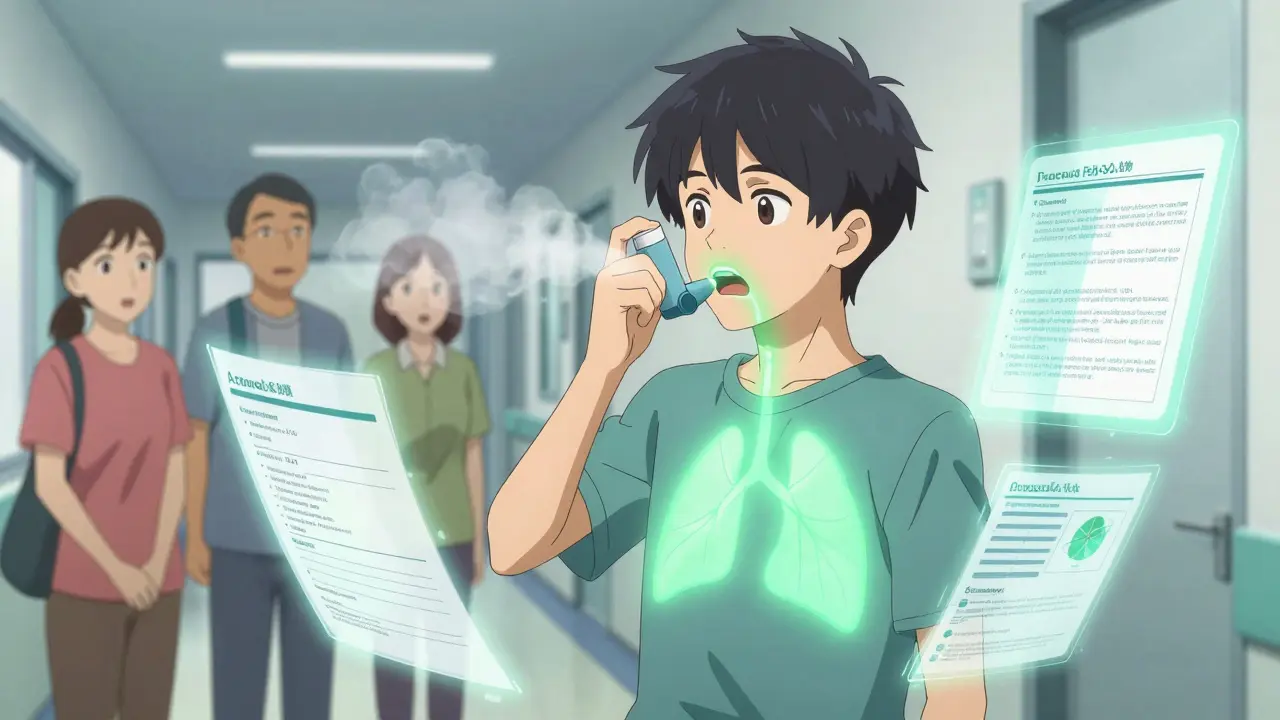
Not all kids are the same. Some have conditions that change the rules.If your child has asthma, they need their inhaler-usually albuterol-given 30 to 60 minutes before the procedure. Skipping this increases the risk of bronchospasm during anesthesia by up to 40%. Hospitals like CHOP track this closely: 94% of asthmatic patients get their bronchodilator on time, and their complication rates reflect that.
Children on seizure meds? Don’t stop them. Antiepileptic drugs like levetiracetam or valproic acid should be taken with a sip of water on the morning of surgery. Stopping them, even for a day, can trigger seizures. Yet, 32% of pre-op errors involve incorrectly holding these medications. That’s why every hospital now uses a checklist that flags these drugs.
Obesity changes dosing too. A 2023 multicenter trial found that standard midazolam doses were too low in 35% of obese children. New guidelines now recommend increasing the dose by 20% for kids with a BMI over the 95th percentile. This isn’t guesswork-it’s based on blood level studies showing underdosing leads to higher anxiety and more movement during procedures.
What About GLP-1 Agonists? (Semaglutide, Exenatide)
This is new. In 2023, the American Society of Anesthesiologists added a warning: if your child is taking semaglutide (Ozempic, Wegovy) or exenatide (Byetta, Bydureon) for weight management or diabetes, they must stop it before surgery.These drugs slow down stomach emptying. In kids, that means food stays in the stomach longer-increasing the risk of vomiting and inhaling stomach contents during anesthesia. The recommendation? Stop semaglutide one week before. Stop exenatide three days before. This isn’t optional. There are documented cases of pediatric aspiration linked to these drugs. If your child is on one, tell the anesthesiologist-even if it was prescribed by a pediatric endocrinologist, not a surgeon.
How to Prepare Your Child at Home
The day before surgery, talk to your child in simple terms. Don’t say, “You’re going to get put to sleep.” Say, “You’ll get a special medicine that helps you feel calm and rest while the doctors fix your tooth/ear/leg.” Use books or videos made for kids-many hospitals have them online.Stick to the fasting schedule exactly. Clear liquids mean water, Pedialyte, Sprite, 7-Up, or apple juice with no pulp. Orange juice? No. Milkshakes? No. Gummy vitamins? No. Even a small amount of pulp or fat can delay emptying and risk cancellation.
Give the pre-op medicine exactly when instructed. If the nurse says “give at 7 a.m.,” don’t give it at 6:45 or 7:15. Timing affects how well it works. And if your child vomits after taking it? Call the hospital immediately. Don’t assume it’s fine.
What Happens in the Hospital
When you arrive, the team will check your child’s weight, review their meds, and confirm fasting times. They’ll ask about allergies, past reactions to anesthesia, and any behavioral issues-like autism or ADHD. If your child has autism, they might need clonidine (4 mcg/kg) given 4 hours before to reduce overstimulation. RCH Melbourne reports that 40% of autistic children need this adjustment.Then comes the sedative. Most kids get it in the pre-op area, with a parent beside them. Oral midazolam tastes sweet-like grape soda. Some kids laugh. Some fall asleep. Some just sit quietly. That’s normal.
After the medicine kicks in, the child is calmer, less fearful, and more cooperative. Parents are often surprised at how quickly their child relaxes. The goal isn’t to knock them out-it’s to make the transition to the operating room feel safe.

Common Mistakes Parents Make
- Giving juice with pulp thinking it’s “clear.” It’s not. - Forgetting to give asthma inhalers on the day of surgery. It’s as important as the sedative. - Stopping seizure meds because they “don’t want the child too sleepy.” That’s dangerous. - Not telling the team about GLP-1 drugs. It’s not a diet pill-it’s a medical risk. - Assuming “no food” means “no medicine.” Some meds must be taken with water.One parent on Reddit shared: “We gave our son his seizure meds with a sip of water. The nurse said, ‘Good call.’ That’s the only thing that kept him from having a seizure in recovery.”
What to Expect After the Medication
After the sedative, your child might be drowsy, giggly, or quiet. That’s normal. They won’t remember much of the walk to the OR. Don’t force them to talk or play. Let them rest. When they wake up, they might be confused or cry-but that’s usually because they’re disoriented, not in pain.Most kids bounce back quickly. Studies show that when pre-op meds are used correctly, behavioral changes like nightmares, bedwetting, or fear of doctors drop by 37%. That’s the real win-not just a smooth surgery, but a child who doesn’t carry trauma from the experience.
Final Checklist Before the Day
- Confirm fasting times: solids after midnight, milk/formula until 6 hours before, breast milk until 4 hours, clear liquids until 2 hours.
- Check all medications-keep seizure meds, asthma inhalers, H2 blockers, and PPIs unless told otherwise.
- Stop GLP-1 agonists: semaglutide 7 days before, exenatide 3 days before.
- Prepare a list of all meds, allergies, and past reactions.
- Bring a favorite toy, blanket, or book.
- Ask if the hospital offers a pre-op tour or video for kids.
- Write down the time you’ll give the pre-op medicine-and set a phone alarm.
Preparing for pediatric surgery isn’t about perfection. It’s about preparation. The right meds, at the right time, with the right information, make all the difference. You’re not just helping your child get through a procedure-you’re helping them feel safe, calm, and supported when they need it most.
Can I give my child water before surgery?
Yes, clear liquids like water, Pedialyte, Sprite, 7-Up, or apple juice without pulp are allowed up to 2 hours before the procedure. Avoid anything with pulp, milk, or fat. Even a small amount of orange juice can delay stomach emptying and risk canceling the surgery.
What if my child vomits after taking the pre-op medicine?
Call the hospital immediately. If your child vomits after taking midazolam or ketamine, the medication may not be absorbed properly, and the procedure may need to be delayed or rescheduled. Do not give another dose unless instructed by a medical professional.
Is it safe to give my child their seizure medication the morning of surgery?
Yes. Antiepileptic medications should be taken with a small sip of water on the morning of surgery. Stopping them-even for one day-can trigger seizures during or after the procedure. This is one of the most common medication errors in pediatric pre-op care.
Why is ketamine used for some kids instead of midazolam?
Ketamine is used when a child is extremely anxious, uncooperative, or has difficulty with oral or nasal medications. It works quickly-in 3 to 5 minutes-and helps the child stay calm without suppressing breathing. However, it can cause emergence delirium in 8-15% of cases, so it’s reserved for situations where other options won’t work.
Should I stop my child’s asthma inhaler before surgery?
No. Asthma medications like albuterol should be given 30 to 60 minutes before the procedure. Skipping them increases the risk of bronchospasm during anesthesia by up to 40%. Hospitals like CHOP have seen a 40% drop in breathing complications when this rule is followed.
My child is on Ozempic. Do I need to do anything before surgery?
Yes. If your child is taking semaglutide (Ozempic, Wegovy), they must stop it one week before surgery. These drugs slow stomach emptying and increase the risk of vomiting and aspiration during anesthesia. This is a recent guideline from the American Society of Anesthesiologists (2023) and is now standard in all major children’s hospitals.
How do I know if my child’s pre-op medicine worked?
Your child should appear calmer, less fearful, and more relaxed. They may be drowsy, giggly, or quiet. They might not respond to questions or seem disconnected-but they should still be breathing normally and able to respond to gentle touch. If they’re still screaming, kicking, or extremely agitated, let the medical team know immediately.



8 Comments
Marlon Mentolaroc
January 24, 2026Man, this guide is legit. I had no idea about the GLP-1 stuff until my kid’s anesthesiologist brought it up last month. We were on Ozempic for his weight and totally missed that it could mess with surgery. They made us stop it a week out and honestly? Best decision ever. He was chill as heck in pre-op, didn’t even cry when they took him away. That midazolam grape soda taste? He asked for more. Weird kid.
Gina Beard
January 25, 2026Preparation is the quiet art of preventing trauma.
Not control. Not compliance. But presence.
Medication is just the vessel. The real medicine is the calm hand holding theirs.
Don Foster
January 26, 2026Midazolam dosing at 0.5 to 0.7 mg/kg is standard but outdated. Recent meta-analysis in JAMA Pediatrics shows IV dexmedetomidine has better sedation-to-respiratory-depression ratio in kids under 6. Why are we still using oral benzos like it's 2008? Also ketamine emergence delirium is overblown - it's just the brain rewiring during emergence. Parents panic because they don't understand neuropharmacology. Stop being dramatic.
siva lingam
January 27, 2026So you’re telling me I gotta stop my kid’s weight loss shot for a surgery that might not even happen? Cool. I’ll just wait till he’s 12 and obese and then get him fixed. Meanwhile I’ll keep giving him soda and calling it ‘clear liquid’
Shelby Marcel
January 27, 2026wait so if my kid has asthma do i just give the inhaler like 30 mins before? like no need to call or anything? i thought maybe theyd want it done earlier or something? also is sprite really okay? or is it just diet sprite? i always get confused with the clear liquid rules lol
blackbelt security
January 27, 2026This is the kind of info that saves lives. Not just the meds - the mindset. You’re not just preparing a child for surgery. You’re preparing them for trust. One calm moment at a time. Keep sharing this. Someone’s kid is going to wake up without nightmares because of this.
Patrick Gornik
January 29, 2026Let’s not romanticize the pharmacological pacification of pediatric anxiety as some noble act of care - it’s institutionalized chemical compliance wrapped in a velvet glove. We medicate children not because they’re terrified, but because our healthcare system can’t afford the time to sit with their fear. Midazolam isn’t a solution - it’s a containment protocol disguised as compassion. And don’t get me started on the neoliberal framing of GLP-1 agonists as ‘diet pills’ - these are metabolic modulators prescribed under the guise of weight management while the system ignores root causes of pediatric obesity. The real tragedy isn’t aspiration risk - it’s that we’ve outsourced emotional labor to benzodiazepines and call it medicine.
Tommy Sandri
January 31, 2026Thank you for this comprehensive and clinically grounded resource. The alignment with international pediatric anesthesia guidelines from CHOP, RCH Melbourne, and Texas Children’s is commendable. For healthcare professionals in resource-limited settings, this document serves as an invaluable reference point. I will be distributing this to our pediatric anesthesia training cohort in Nairobi. The clarity on GLP-1 agonists and seizure medication protocols is particularly timely and necessary.