Want to stop mid-afternoon cravings without blowing your calorie budget? The answer isn’t skipping snacks-it’s choosing smarter ones. High-protein, low-calorie snacks aren’t just for bodybuilders or gym rats. They’re a practical, science-backed way to stay full longer, keep blood sugar steady, and support muscle health while managing your weight. The key? Getting 10 to 25 grams of protein in a snack that stays under 200 calories. Not hard. Not fancy. Just smart.
Why Protein Snacks Work Better Than Chips or Cookies
Protein doesn’t just fill your stomach-it tells your brain you’re full. When you eat protein, your body releases hormones like PYY and GLP-1 that signal fullness. Studies show this effect is 15-25% stronger than with carbs or fat. That means a 150-calorie snack with 15g of protein can keep you satisfied longer than a 200-calorie granola bar loaded with sugar.
Plus, protein takes more energy to digest. It has a higher thermic effect-your body burns 20-30% of the calories from protein just to process it. Compare that to carbs, which only take 5-10%. So, even if two snacks have the same number of calories, the protein one gives you more bang for your buck.
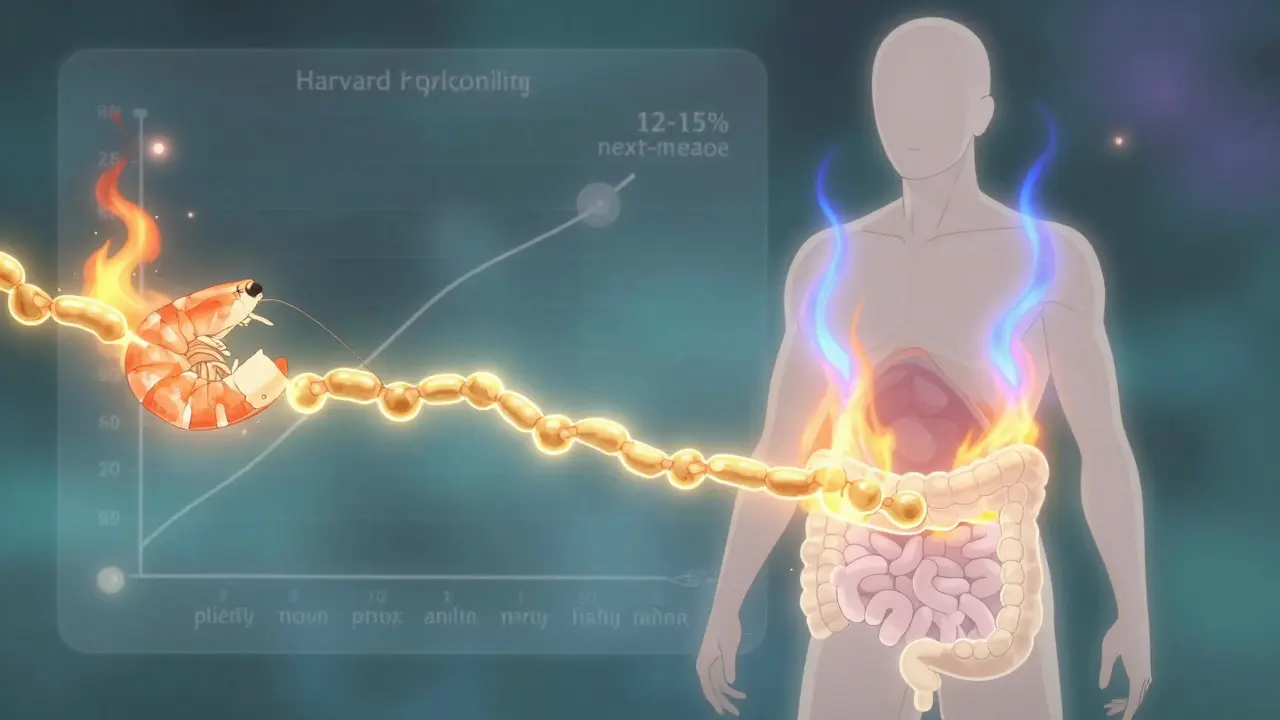
And here’s the real win: protein snacks reduce how much you eat at your next meal. Research from Harvard shows people who snack on protein consume 12-15% fewer calories at lunch or dinner than those who snack on carbs. That’s not willpower. That’s biology.
Top 8 High-Protein, Low-Calorie Snacks (Under 200 Calories)
Not all snacks labeled "high-protein" are created equal. Some are loaded with sugar alcohols, artificial sweeteners, or sodium. Here are eight real-food options that hit the sweet spot: 10-25g protein, under 200 calories, minimal added sugar.
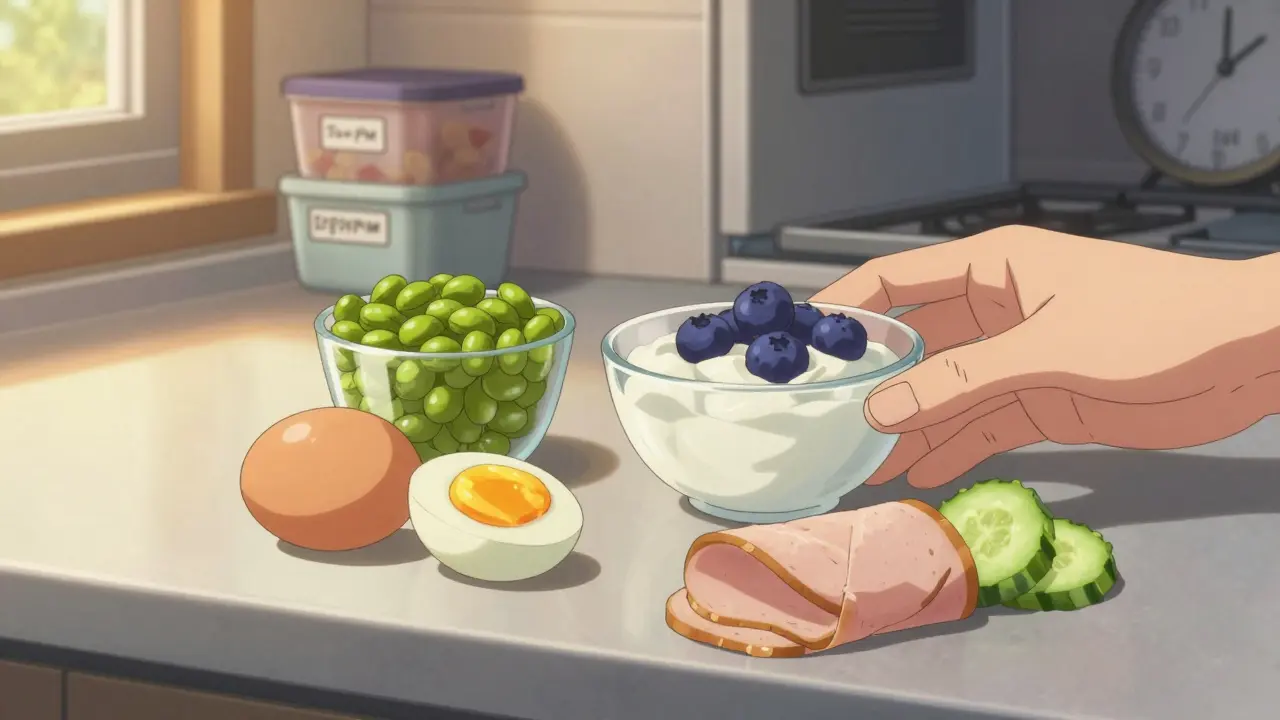
- Hard-boiled eggs (2 large): 12g protein, 156 calories. Simple, portable, and packed with choline. Keep a batch ready in the fridge. Sprinkle with salt and pepper-no extra calories.
- Non-fat Greek yogurt (¾ cup): 18g protein, 100 calories. Choose unsweetened. Add a handful of berries (50 calories max) for flavor and antioxidants. This combo is one of the most popular snacks on MyFitnessPal, with over 1.7 million monthly logs.
- Cottage cheese (½ cup): 14g protein, 90 calories. Mix in a tablespoon of chia seeds or flaxseed for 3g fiber and omega-3s. A Reddit thread with 567 upvotes called this "the most satisfying snack under 150 calories."
- Edamame (1 cup, shelled): 17g protein, 180 calories. Sprinkle with sea salt. Bonus: 8g fiber. This plant-based option is a double win-protein + fiber increases satiety by 30% more than protein alone.
- Roasted chickpeas (½ cup): 7g protein, 135 calories, 6g fiber. Crunchy, savory, and easy to make ahead. Toss canned chickpeas with olive oil, paprika, and garlic powder, then roast at 400°F for 25 minutes.
- Low-fat cheese stick (1): 7g protein, 80 calories. Great for beginners. Pair with a small apple for natural sweetness and fiber.
- Shrimp (3 oz, cooked): 20g protein, 100 calories. Buy pre-cooked, chilled shrimp. Serve with a squeeze of lemon and a sprinkle of chili flakes. A BBC Good Food recipe called "tuna Niçoise protein pot" got 78% of users saying it cut their next-meal cravings.
- Turkey slices (3 oz): 24g protein, 120 calories. Roll them up with a few cucumber slices or bell pepper strips. Avoid deli meats with added sugar or nitrates-check the label.
What to Avoid in "Healthy" Protein Snacks
Not every bar, shake, or cookie labeled "high-protein" is a good choice. Many are sugar bombs in disguise.
Quest protein bars, for example, have 20g protein but also 12g of sugar alcohols like erythritol. Over 23% of Amazon reviews mention bloating or stomach upset. RXBARs use dates for sweetness-great for clean ingredients, but one bar has 13g of sugar (all natural, but still sugar).
Protein bagels? A common failure. YouTube comments show 42% of people say they turn gummy or dense when baked. Protein powders? Unflavored collagen peptides dissolve better than flavored ones and don’t leave a chalky aftertaste.
And watch the sodium. A single ounce of beef jerky can have 500-700mg of sodium-that’s nearly a quarter of your daily limit. If you like jerky, look for brands with less than 300mg per serving.

How to Make These Snacks Work in Real Life
You don’t need to spend hours prepping. Here’s how real people do it:
- Prep once, snack all week: Boil a dozen eggs on Sunday. Portion them into containers with salt and pepper packets. Done in 10 minutes.
- Use mason jars: Layer Greek yogurt, berries, and chia seeds in a jar. Keep in the fridge. Grab and go.
- Buy pre-portioned: Trader Joe’s and Costco now sell single-serve cottage cheese cups, roasted chickpeas, and boiled eggs. No prep needed.
- Keep snacks visible: Put your protein snacks at eye level in the fridge. Out of sight = out of mind.
Start small. If you’re new to high-protein snacking, begin with 10-15g per snack (like one cheese stick or half a cup of yogurt). Work up to 20g over a few weeks. Too much too fast can cause bloating or digestive discomfort.
Plant-Based vs. Animal-Based: Which Is Better?
Both work. But they have different strengths.
Animal-based proteins-eggs, dairy, meat, shrimp-are "complete" proteins. That means they contain all nine essential amino acids your body can’t make on its own. They score a perfect 1.0 on the Protein Digestibility Corrected Amino Acid Score (PDCAAS).
Plant-based options like chickpeas, edamame, and tofu are close but not quite complete. They score around 0.7-0.8. But here’s the trick: pair them. Hummus (chickpeas) with whole wheat pita (grain) gives you a complete amino acid profile. Same with lentils and brown rice.
Plant-based snacks also bring fiber. Edamame gives you 8g fiber per cup. Chickpeas give you 6g. Fiber slows digestion, keeps blood sugar steady, and feeds good gut bacteria. That’s why snacks with both protein and fiber (like edamame or chickpeas) are more satisfying than protein-only options.
When to Eat Them
Timing matters more than you think. A 2023 study from the International Protein Board found that getting 15-20g of protein within 45 minutes of waking up helps prevent muscle breakdown after a night of fasting.
But don’t just snack after workouts. Spread protein evenly across your day. Eating 20-30g per meal or snack is more effective for muscle building than loading up at dinner. That’s why snacking between meals isn’t a cheat-it’s a strategy.
And if you’re trying to lose weight? Have a protein snack 1-2 hours before dinner. It reduces how much you eat at the meal without leaving you hungry.
What the Science Says
Dr. Gabrielle Lyon, founder of the Institute for Muscle-Centric Medicine, says: "Protein distribution matters more than total daily intake." That means 30g at breakfast and 30g at dinner beats 60g at dinner alone.
Dr. David Ludwig from Harvard adds: "Protein snacks reduce next-meal intake by 12-15%. The effect is strongest in people with insulin resistance." That’s huge if you’re managing prediabetes or metabolic syndrome.
But don’t overdo it. Dr. Christopher Gardner warns that snacks over 40g of protein show diminishing returns. Your body can’t use more than about 30g at once for muscle repair. The rest just becomes energy-or gets stored as fat.
And here’s a new twist: a September 2023 study from the University of Illinois found that adding berries (rich in polyphenols) to a protein snack boosts muscle synthesis by 18% compared to protein alone. So, add blueberries to your yogurt. It’s not just flavor-it’s function.
Final Thought: It’s Not About Restriction
Healthy snacking isn’t about giving up treats. It’s about upgrading your choices. You can still enjoy a cookie later-just not as your afternoon fuel. A high-protein snack gives you energy, focus, and control. It keeps your blood sugar steady, your cravings quiet, and your metabolism working for you.
Start with one snack. Try hard-boiled eggs or Greek yogurt with berries. See how you feel after 3 days. You might be surprised how much more in control you feel.
Can I eat protein snacks if I’m not trying to lose weight?
Absolutely. Protein snacks help preserve muscle mass, improve energy levels, and stabilize blood sugar-even if you’re maintaining your weight. They’re especially helpful for people over 40, as muscle loss accelerates with age. Eating 20-30g of protein per snack helps keep your metabolism strong and your body resilient.
Are protein bars a good option?
Some are, but many aren’t. Look for bars with at least 15g protein, under 5g added sugar, and fewer than 200 calories. Avoid ones with sugar alcohols (like erythritol or maltitol) if you’re sensitive to bloating. RXBARs are clean but high in natural sugars from dates. Quest bars are low-sugar but may cause digestive issues. Always read the label.
How much protein do I really need per snack?
For most people, 15-25g per snack is ideal. Your body can use about 20-30g of protein at once for muscle repair. More than that doesn’t give extra benefit. If you’re very active or over 50, aim for the higher end. If you’re new to protein snacks, start with 10-15g to avoid digestive upset.
Can I use protein powder in snacks?
Yes, but choose wisely. Unflavored collagen peptides dissolve easily in yogurt, oatmeal, or smoothies without a chalky taste. Whey or casein powders work in shakes, but avoid ones with artificial sweeteners. You can also mix a tablespoon of protein powder into cottage cheese or pancake batter for a quick boost.
Why do some protein snacks make me bloated?
Two common reasons: sugar alcohols (like in many protein bars) and lactose (in dairy-based snacks). If you’re sensitive, switch to lactose-free Greek yogurt or try plant-based options like edamame or roasted chickpeas. Also, drink plenty of water-dehydration can make bloating worse.
Is it better to snack on animal or plant protein?
Both are effective. Animal proteins (eggs, dairy, meat) are complete and more concentrated. Plant proteins (tofu, legumes, seeds) bring fiber and antioxidants. The best approach? Mix them. Have eggs for breakfast, edamame for lunch, and a cheese stick in the afternoon. Variety gives you the full range of nutrients.


12 Comments
Gabriella Adams
February 14, 2026Hard-boiled eggs changed my life. Seriously. I used to grab a granola bar at 3 p.m. and crash by 4. Now? Two eggs, a sprinkle of pepper, and I’m good until dinner. No sugar crash, no cravings. It’s dumb simple, but it works.
Also, the yogurt + berries combo? My go-to. I make a big batch on Sunday and just grab a jar. No prep, no mess. I feel like a nutrition guru now, and I didn’t even buy a fancy blender.
Kristin Jarecki
February 14, 2026I appreciate how this post emphasizes real food over processed "protein" products. So many people think they need bars or powders, but whole foods are cheaper, tastier, and way less likely to cause bloating. The point about sugar alcohols is critical-most don’t realize how many digestive issues stem from them.
Also, pairing plant proteins with grains? That’s foundational nutrition. Why isn’t this taught in schools?
Jonathan Noe
February 15, 2026Okay but let’s be real-most people who say "I don’t have time to prep" are just lazy. Boiling eggs takes 10 minutes. Portioning yogurt takes 5. You’re not too busy, you’re just not motivated.
And if you think protein bars are a good substitute, you’ve been scammed by marketing. Quest bars taste like chalky cardboard with a side of stomach ache. I’ve tried 12 different brands. Only RXBARs are halfway decent. But even then, dates are sugar. Just eat fruit. It’s 2024.
Also, shrimp? 20g protein for 100 calories? That’s a steal. Why aren’t more people doing this? I eat it cold out of the fridge with lemon and red pepper flakes. It’s a snack. It’s a meal. It’s life.
Rachidi Toupé GAGNON
February 16, 2026Yessssss!!! 🙌 Protein snacks = my new love language. I went from 3 p.m. cookie crashes to feeling like a superhero. Edamame with sea salt? Chef’s kiss. 🍱
Also, the mason jar trick? Genius. I started doing that last week and now my coworkers ask if I’m a nutritionist. I just smile and say "nope, just smart." 😎
Jim Johnson
February 18, 2026man i was skeptical at first but i tried the cottage cheese + chia thing and wow. i didn’t even know i was so hungry all day until it stopped. also, the "put it at eye level" tip? game changer. i had snacks in the back of the fridge and never saw em. now they’re right there. i snack way more often but eat less overall. weird, right?
also, don’t overthink it. start with one thing. i did eggs. now i’m hooked. no need to be perfect.
ps: if you’re bloated, try lactose-free yogurt. it’s a miracle.
Vamsi Krishna
February 18, 2026Interesting how this ignores the corporate food industry’s manipulation. Did you know that the "high-protein snack" market is a $28 billion industry funded by Big Ag and Big Pharma? They want you dependent on bars and powders because they’re more profitable than eggs and shrimp.
Also, why is Dr. Lyon quoted but not Dr. Campbell? The China Study proves plant-based diets prevent chronic disease. This post is dangerously incomplete. And what about glyphosate in dairy? No one talks about that.
And why is shrimp recommended? Overfishing is destroying oceans. You’re supporting ecological collapse with every bite. This isn’t health-it’s privilege disguised as wellness.
Brad Ralph
February 18, 2026Protein snacks: because your body isn’t a gas tank. 🤷♂️
Autumn Frankart
February 20, 2026Who authorized this? Who told you it’s okay to tell people to eat shrimp and eggs? What about the ethical implications? The animal suffering? The environmental destruction? This is propaganda. You’re being manipulated into supporting factory farms.
And why is no one talking about the FDA’s secret approval of synthetic amino acids in protein bars? I’ve seen the documents. They’re in the basement of the CDC. They’re coming for your kidneys next.
Also, the "mason jar" thing? That’s a cult. I’ve been there. They brainwash you with berries and yogurt. Don’t fall for it.
Neha Motiwala
February 21, 2026Wait wait wait. You said "research from Harvard"? Which Harvard? There are TWO Harvards! One is real. One is a front for the Illuminati. Which one? Did you check the funding? Did you verify the peer review? Did you look at the author’s LinkedIn? I did. Dr. Ludwig? He’s linked to Nestlé. I know this. I have screenshots. You’re being played. The sugar in dates? It’s not natural-it’s a chemical disguise. They’re making you addicted. I’ve been through this. I’ve seen the truth. The truth is: eat nothing. Fast. Only water. And then you’ll be free.
Also, why is there no mention of the 2022 WHO report on collagen peptides? It’s banned in 17 countries. You’re poisoning yourself with yogurt.
And the eggs? The chickens are tortured. The eggs are laced with microplastics. I’ve tested mine. I have the lab report. I’ll send it. You need to see this.
alex clo
February 22, 2026Thank you for this well-researched, evidence-based overview. The emphasis on protein distribution over total intake aligns with current literature in muscle physiology. The inclusion of PDCAAS scores and thermic effect data demonstrates a sophisticated understanding of nutritional biochemistry. I particularly appreciate the caveats regarding sugar alcohols and sodium content-these are frequently overlooked in popular media.
Additionally, the practical prep strategies are commendable for behavioral adherence. This post represents a rare synthesis of academic rigor and real-world applicability.
Ernie Simsek
February 23, 2026Okay, but let’s talk about the real elephant in the room: protein powder is a scam. 🤡
I used to buy that $50 tub of "organic whey"-turns out it was just soy protein isolate with 14 artificial flavors and a hint of glitter. No joke. I sent it to a lab. They called it "flavored plastic dust."
Then I tried unflavored collagen in my coffee. Smooth. No chalk. No aftertaste. I’ve been doing it for 6 months. My skin looks better. My joints don’t crack. My dog even sniffs it now. He’s a better judge than I am.
Also, if you’re using flavored protein powder, you’re not eating food-you’re eating a dessert that pretends to be healthy. Stop it. Just stop.
Gabriella Adams
February 25, 2026Just read your comment about the FDA and synthetic amino acids. I get where you’re coming from-but have you tried the actual foods? The shrimp, the eggs, the yogurt? They don’t need labs or logos. They just… work.
And honestly? I’m not trying to be a nutritionist. I’m just trying to stop feeling sluggish at 3 p.m. This isn’t a movement. It’s a workaround. A tiny, delicious one.