When you’re diagnosed with cancer, your mind races through treatment options, side effects, survival rates. But one question often gets pushed to the side: fertility preservation. If you’re someone who wants to have children one day, chemotherapy can threaten that future - not just emotionally, but physically. The good news? There are proven ways to protect your fertility before treatment starts. And the window to act is smaller than most people realize.
Why Chemotherapy Can Hurt Fertility
Not all chemo is the same, but about 80% of common chemotherapy drugs - especially alkylating agents used for breast, lymphoma, and leukemia cancers - are known to damage eggs or sperm. This isn’t just about getting pregnant later. It can lead to premature ovarian failure in women, meaning your body stops producing eggs years before natural menopause. For men, sperm counts can drop to zero, sometimes permanently. In women, the risk of losing fertility jumps to 30-80% depending on the drug, your age, and how much chemo you get. For men, even a single cycle of certain treatments can wipe out sperm production. And unlike women, men don’t have a biological clock ticking as loudly - so they often assume they’re fine. They’re not.What Options Are Actually Available?
There are six main ways to protect fertility before chemotherapy. Not all work for everyone. Not all are equally effective. But each has a place in modern cancer care.1. Egg Freezing (Oocyte Cryopreservation)
This is the most common option for women who have access to time and resources. You take hormone injections for 10-14 days to stimulate your ovaries to produce multiple eggs. Then, under light sedation, those eggs are retrieved through a needle guided by ultrasound. They’re instantly frozen using a technique called vitrification, which prevents ice crystals from forming and damaging the cells. Success rates? Around 4-6% chance of pregnancy per frozen egg. That sounds low, but it adds up. Most women aim to freeze 15-20 eggs to give themselves a 50-70% shot at one baby later. The process doesn’t require a partner or sperm - which makes it ideal for single women or those not ready to choose a donor. The catch? It takes time. Even with newer “random-start” protocols that let you begin at any point in your cycle, you still need 10-14 days. For someone with aggressive leukemia, that’s not always possible.2. Embryo Freezing
This method is very similar to egg freezing - same hormones, same retrieval - but the eggs are fertilized with sperm before freezing. The result is embryos, which have higher survival and pregnancy rates than unfertilized eggs. Live birth rates per embryo transfer are 50-60% for women under 35. That’s the highest success rate of any method. But here’s the trade-off: you need sperm. That means you need a partner, or you need to use donor sperm. For many women, that’s a huge emotional and ethical hurdle. And if you’re not in a relationship, or you’re not ready to make that decision under pressure, embryo freezing might not feel right.3. Ovarian Tissue Freezing
This is the only option for girls who haven’t hit puberty yet - and for women who can’t wait 10 days for hormone stimulation. A small piece of ovarian tissue is removed through a minimally invasive laparoscopic surgery. It’s frozen, stored, and later reimplanted when the person is ready to have children. The tissue contains thousands of immature eggs. When it’s thawed and put back in the body, it can start producing hormones again and even release eggs naturally. Success rates for restoring ovarian function? 65-75%. There have been over 200 live births worldwide from this method. It’s still considered experimental by the FDA - but that doesn’t mean it’s not used. In fact, it’s becoming standard for prepubescent girls with cancer. The big downside? You’re not guaranteed to get pregnant from it. The tissue can’t be used for IVF - only for natural conception or IVF after it’s transplanted back. And there’s a small risk of reintroducing cancer cells if the original tumor was blood-related.4. Ovarian Suppression with GnRHa
This isn’t about saving eggs or sperm. It’s about putting your ovaries to sleep. You get monthly shots of drugs like goserelin (Zoladex) - the same ones used for endometriosis - starting 10 days before chemo and continuing through treatment. The idea is that by turning off your ovaries, you reduce their exposure to chemo damage. Studies show this lowers the risk of premature ovarian failure by 15-20%. It’s not a guarantee. But it’s a low-risk, low-cost add-on that doesn’t delay treatment. The downside? You’ll get menopausal symptoms - hot flashes, night sweats, mood swings, vaginal dryness. One study found 31% of women stopped the treatment because it was too uncomfortable. And it doesn’t protect your eggs - just your ovaries’ ability to function after chemo.5. Radiation Shielding
If you’re getting radiation to your pelvis - say, for cervical, rectal, or prostate cancer - shielding can help. Custom-made lead shields are placed over your ovaries or testicles during each session. Studies show they can cut radiation exposure by 50-90%. But here’s the key: this only works for radiation. It does nothing for chemo. So if you’re getting both - which many people do - shielding alone isn’t enough. It’s a helpful tool, but not a standalone solution.6. Sperm Banking
For men, this is the simplest, most reliable option. You give a semen sample - usually after 2-3 days of abstinence - and it’s frozen in liquid nitrogen. No hormones. No surgery. No waiting. Post-thaw sperm motility is typically 40-60%. That’s enough for IVF or IUI later. Success rates? Very high if you freeze multiple samples. The American Urological Association recommends banking at least two samples before treatment starts. The biggest barrier? Shame. Many men feel embarrassed or think they’ll be fine. They’re not. And if you don’t bank before chemo, you might never get another chance.Timing Is Everything
You don’t have weeks. You might have days. For men: get sperm banking done within 72 hours of starting chemo. It’s fast, easy, and can be done even if you’re feeling sick. For women: the ideal window is 10-14 days before chemo. But if you’re diagnosed with acute leukemia, you might have only 48-72 hours. That’s why doctors now push for immediate referral to a fertility specialist - ideally within 14 days of diagnosis. Too many people wait. A 2022 study found 68% of women under 35 regretted not acting sooner because treatment started before they could get scheduled. Don’t be one of them.
Who Gets Left Behind?
Not everyone has access to these options - and that’s not fair. In the U.S., 24 states now require insurance to cover fertility preservation for cancer patients. But Medicaid only covers it in 12 states. Many rural patients have to drive over 175 miles to reach a fertility clinic. In the UK, access is patchy. Some NHS trusts offer it. Others don’t. And if you’re on a tight budget or don’t have a partner, the emotional and financial burden can be crushing. One Reddit user, diagnosed with breast cancer at 29, wrote: “I was told egg freezing was $10,000. My insurance denied it. I cried for three days. Then I got chemo. I don’t know if I’ll ever be a mom.” You shouldn’t have to choose between survival and motherhood. But right now, that’s the reality for too many.What’s Next? The Future Is Here
Science is moving fast. In 2023, the FDA approved a new closed-system vitrification device that cuts contamination risk by 92%. Researchers are now testing “artificial ovaries” - lab-grown structures that can support egg development outside the body. Early animal studies show 68% follicle survival. There’s also a breakthrough in ovarian tissue: scientists have learned how to activate frozen tissue in the lab, so it can produce mature eggs without needing to be transplanted back into the body. This could be a game-changer for women with high cancer recurrence risk, like BRCA carriers. And the numbers are growing. The global fertility preservation market hit $1.87 billion in 2022 and is expected to grow nearly 13% a year. More hospitals are setting up oncofertility programs. More doctors are trained to talk about it. But awareness still lags. Too many patients are blindsided. Too many are told, “We’ll see how you feel after chemo.” That’s not good enough.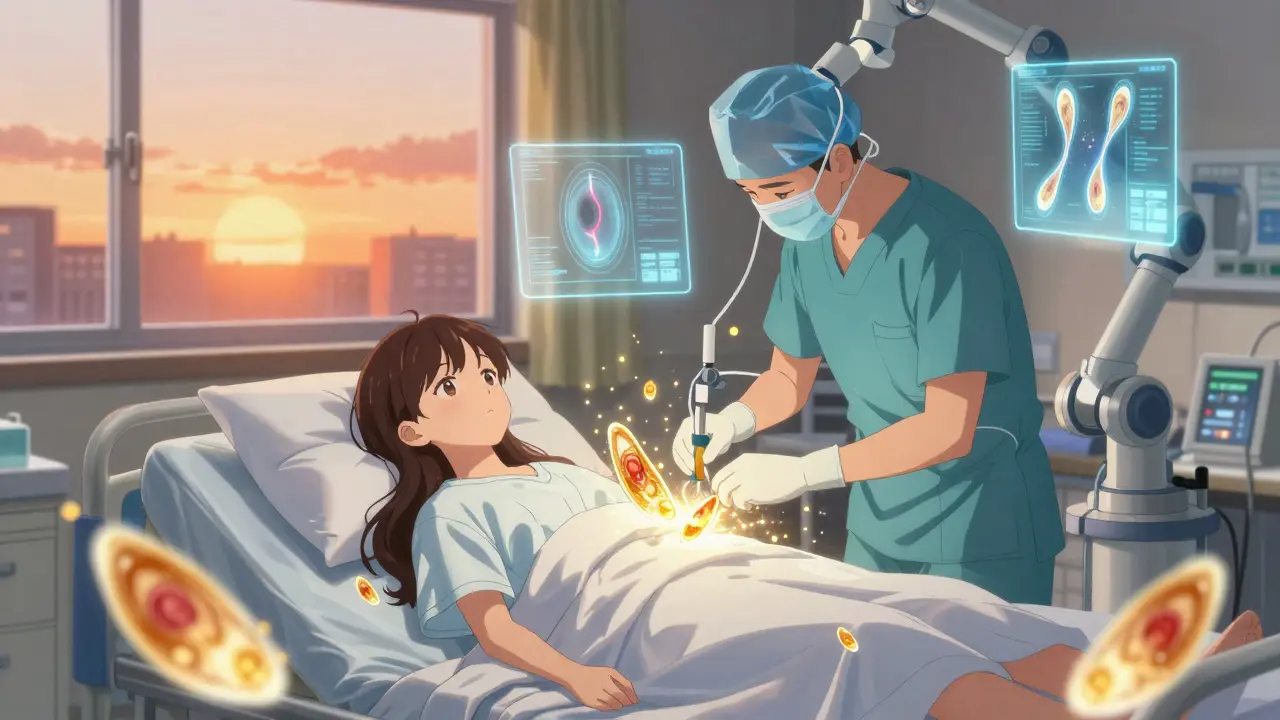
What Should You Do?
If you’re facing chemotherapy and want to have children:- Ask your oncologist for a referral to a fertility specialist - today.
- Don’t wait for “the right time.” There won’t be one.
- Know your options: egg freezing, embryo freezing, ovarian tissue freezing, sperm banking, GnRHa, radiation shielding.
- Ask about costs and insurance coverage. Ask if your hospital has a fertility program.
- If you’re under 18, ask about ovarian tissue freezing - it’s your only option.
- If you’re a man, bank sperm. No excuses.
Can I still have kids after chemotherapy if I didn’t preserve my fertility?
It’s possible, but unpredictable. Some people regain fertility naturally after chemo, especially younger women and men. But for many, the damage is permanent. If you didn’t preserve fertility and want to have children later, you’ll likely need donor eggs, donor sperm, or surrogacy. IVF with your own eggs may not work. The earlier you consult a fertility specialist after treatment, the better your chances of understanding your options.
How long can frozen eggs or sperm be stored?
There’s no known expiration date. Frozen eggs, embryos, and sperm can be stored indefinitely in liquid nitrogen. The longest successful pregnancy from frozen sperm is over 30 years. The key is the quality at the time of freezing - not how long it’s been stored. Most clinics recommend using stored samples within 10-15 years for the best outcomes, but many people wait longer without issues.
Does fertility preservation delay cancer treatment?
For most cancers, no - if you act quickly. Egg freezing can be done in 10-14 days using a “random-start” protocol. Sperm banking takes less than 72 hours. Ovarian tissue freezing can be scheduled in under a week. The only exception is aggressive blood cancers like acute leukemia, where even a 2-week delay can increase relapse risk. In those cases, doctors prioritize chemo and may only offer ovarian tissue freezing or GnRHa.
Is fertility preservation covered by insurance?
It depends on where you live and your insurance plan. In the U.S., 24 states require insurers to cover fertility preservation for cancer patients. In the UK, NHS coverage varies by region - some hospitals offer it, others don’t. Always ask your oncology team for help navigating insurance. Many clinics have financial counselors who can help you appeal denials or find grants.
Can I use fertility preservation if I’m single or LGBTQ+?
Yes. Egg freezing and ovarian tissue freezing don’t require a partner. You can use donor sperm later. For transgender men, egg freezing before starting testosterone is recommended. For transgender women, sperm banking before starting estrogen is the standard. Fertility clinics now routinely support LGBTQ+ patients - but you may need to ask specifically for inclusive care.


8 Comments
Kathryn Weymouth
December 21, 2025Wow, this is one of the most comprehensive overviews I’ve read on oncofertility. I work in oncology nursing and still get surprised by how often patients aren’t offered these options. The vitrification success rates and the 200+ live births from ovarian tissue freezing? That’s not experimental-it’s life-changing. Why isn’t this standard of care everywhere?
Julie Chavassieux
December 21, 2025My sister did egg freezing before chemo. It cost $15K. Insurance said no. She cried. Then she got treated. Now she’s in remission. But she’ll never be a mom. And no one told her until it was too late.
Candy Cotton
December 23, 2025It is an egregious oversight in modern oncological practice that fertility preservation is not universally mandated as part of the standard-of-care protocol for all patients of reproductive age diagnosed with malignancies requiring gonadotoxic chemotherapy. The American Society of Clinical Oncology has issued formal guidelines since 2006. The failure to implement these is not negligence-it is systemic malfeasance.
Sam Black
December 25, 2025I’ve seen this play out in rural Australia-patients driving 3 hours just to freeze sperm before chemo starts. One guy, 24, had lymphoma. He banked two samples on a Friday, started treatment Monday. He’s now a dad. But his cousin? Diagnosed in a town with no clinic. Told to ‘wait and see.’ Now he’s 30, cancer-free, and heartbroken. We need mobile fertility units. Or telehealth consults. Anything.
Cara Hritz
December 25, 2025omg i had no idea you could freeze ovary tissue!! i thought it was just eggs or sperm. wait so if you’re trans and on testo you can still freeze eggs? i’m so confused but also kinda hyped??
Jamison Kissh
December 26, 2025It’s strange how medicine treats survival as the only metric of success. We’ll save your life-but we won’t ask if you want to be a parent. Fertility preservation isn’t a luxury. It’s a question of identity. Who are you, beyond the tumor? Who do you hope to become? If we don’t honor those futures, we’re not healing people-we’re just extending their suffering.
Art Van Gelder
December 27, 2025Let me tell you about my buddy’s cousin’s neighbor’s daughter-she got diagnosed with Hodgkin’s at 26, had to start chemo in 48 hours, and they didn’t even mention fertility. She’s in remission now, but she’s 31 and her body just… stopped. No periods, no hormones, no hope. She’s been on HRT since 28. She says she’s fine. But I’ve seen her look at babies in the grocery store. You can’t unsee that. And here’s the kicker-she’s from a town with a hospital that has a fertility clinic 12 miles away. They just never talked about it. That’s not bad luck. That’s bad system.
Herman Rousseau
December 27, 2025THIS. IS. CRITICAL. 🙏 I’m a cancer survivor and I froze my sperm before chemo. Best decision I ever made. My daughter is 3 now. If you’re reading this and you’re about to start treatment-DON’T WAIT. Call your oncologist. Ask for the fertility team. Do it today. You’ve got this. And you’re not alone. 💪❤️