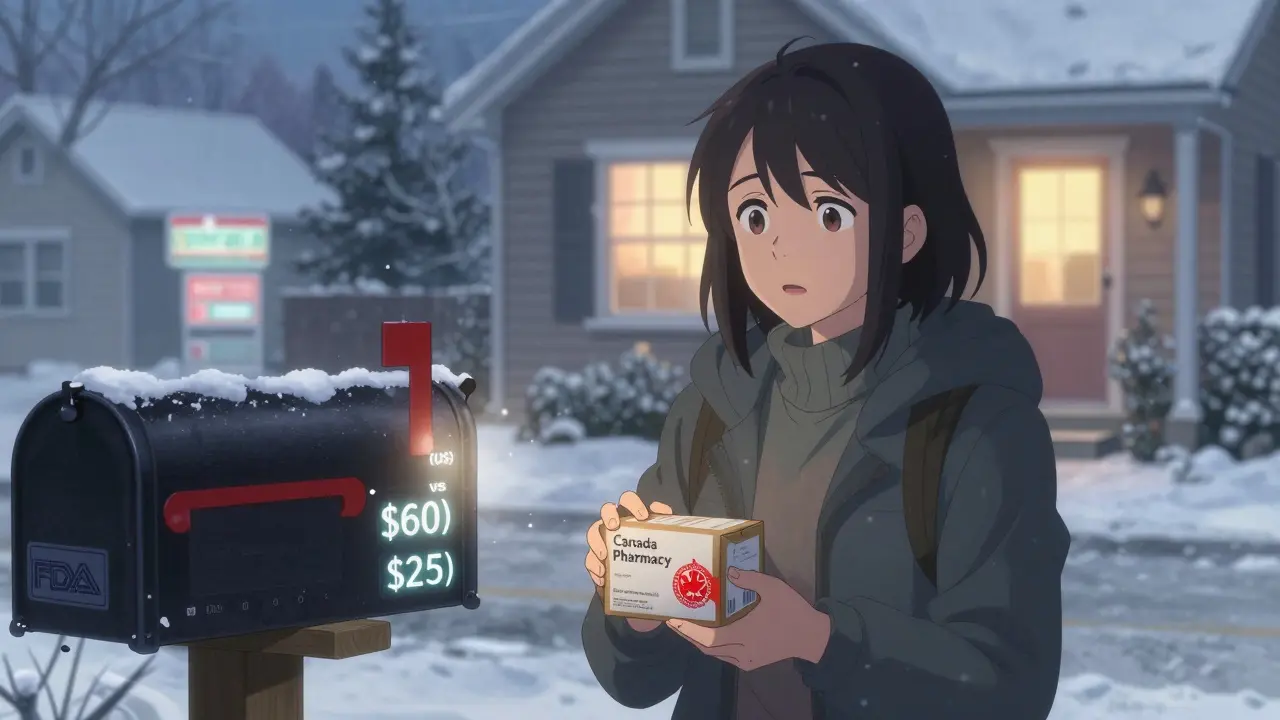
If you’ve ever stared at a prescription bill and wondered if there’s a way out, you’re not alone. In the U.S., even generic drugs can cost hundreds of dollars a month-while the same pills in Canada, India, or the UK often cost a fraction of that. So why not just buy them from overseas? It sounds simple. But the reality is messier than a Google search suggests.
Why Are Generic Drugs So Much Cheaper Overseas?
The U.S. doesn’t negotiate drug prices the way most other countries do. In places like Canada, Germany, or Sweden, the government sets price caps or uses reference pricing to keep costs down. In the U.S., pharmacy benefit managers (PBMs) handle bulk buying, but their discounts rarely make it to the patient at the counter. Meanwhile, countries with universal healthcare systems buy in massive volumes and demand lower prices-so manufacturers sell generics there for less.
Here’s the twist: U.S. generic prices aren’t always high. According to the U.S. Department of Health and Human Services, American generics actually cost 67% of what they cost in other OECD countries. But that’s misleading. Why? Because the U.S. buys so many more generics-90% of prescriptions-than other nations (41%). That volume gives U.S. buyers leverage, but it’s hidden behind high brand-name prices that fund drug research. The real pain point? Brand-name drugs cost over four times more in the U.S. than abroad. So when you’re stuck with a brand-name drug you can’t afford, switching to a generic isn’t always an option.
Meanwhile, countries like Sweden and Finland keep generic prices under $10 per month for common meds like atorvastatin or metformin. In Canada, the same pills cost about 32% less than U.S. retail prices. The UK? Nearly 47% lower. That’s why so many Americans look across borders.
Where Can You Actually Buy Safe Generic Drugs Online?
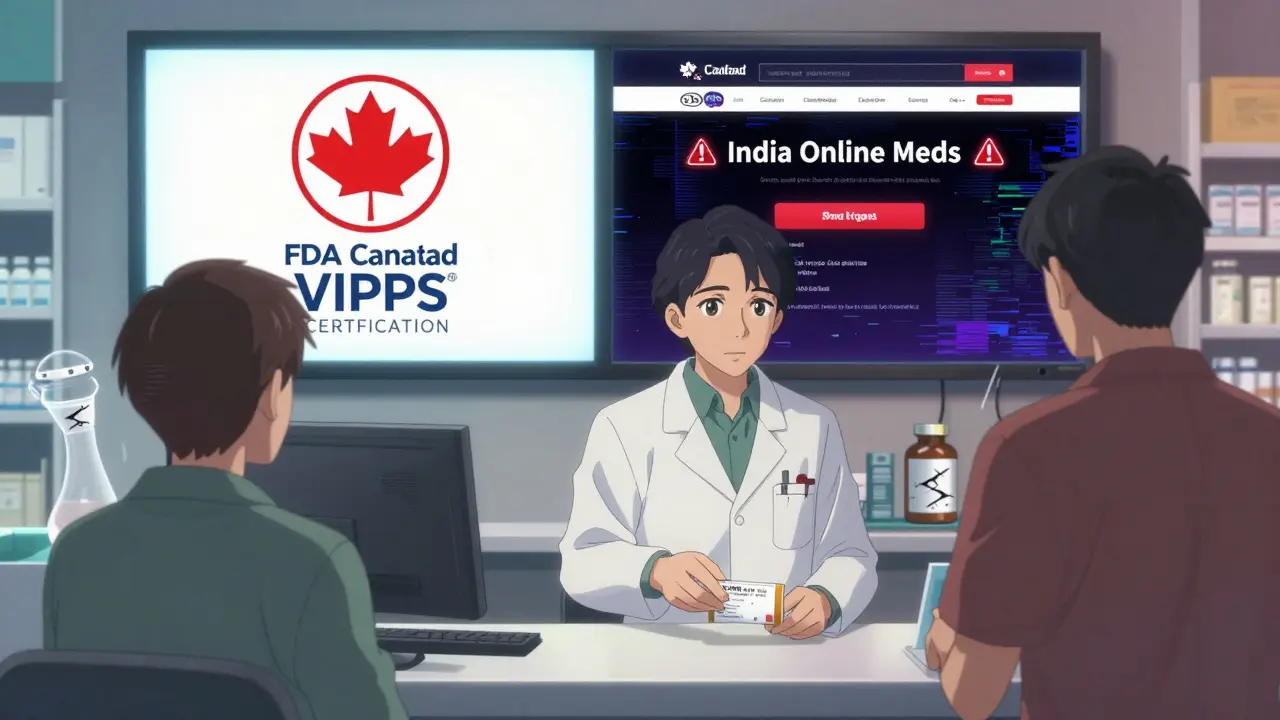
Not every website selling cheap pills is legit. In 2023, the FDA seized over 15% of counterfeit drugs entering the U.S. through international mail-89% came from just three countries: China, India, and Canada. But here’s the catch: Canada is also home to some of the most trusted international pharmacies.
Look for pharmacies accredited by the Verified Internet Pharmacy Practice Sites (VIPPS) program. As of mid-2024, only 63 international pharmacies had this certification. These are vetted for safety, licensing, and proper storage. You’ll find a handful of Canadian pharmacies on that list-like those in Ontario or British Columbia-that ship directly to U.S. patients.
India and Mexico also have reputable manufacturers, but buying directly from their online pharmacies is risky. Most aren’t FDA-recognized, and shipping isn’t monitored. The FDA allows personal importation under one condition: you’re buying for your own use, no more than a 90-day supply, and the drug isn’t considered dangerous. That’s why many Americans turn to state-run importation programs instead.
State Programs Are Making It Easier (and Safer)
In January 2024, Florida launched the first official state program allowing residents to buy drugs from Canadian pharmacies. Since then, over 12,000 prescriptions have been filled with an average savings of $427 per prescription. Vermont, Maine, Colorado, and Maryland have followed suit. These aren’t shady workarounds-they’re government-backed, with prescriptions routed through licensed U.S. pharmacists who verify the drugs before shipping.
It’s not perfect. You still need a valid U.S. prescription, and shipping can take 7-14 days. But the drugs are real. The packaging is in English. The expiration dates are clear. And if something goes wrong, you have a U.S.-based pharmacist to call.
These programs are growing fast. Maryland’s program alone is projected to save residents $150 million a year. But there’s pushback. PhRMA, the big pharma lobby, has sued several states, claiming importation violates federal law. In April 2024, a federal court blocked Minnesota’s program. So while it’s legal right now in some states, the future is uncertain.
The Hidden Risks: Potency, Shipping, and Counterfeits
Saving money is great-but not if your medicine doesn’t work.
Temperature matters. The International Air Transport Association found that 20-25% of temperature-sensitive drugs (like insulin, epinephrine, or certain antibiotics) experience “excursions” during international shipping. That means they were exposed to heat or cold outside safe limits. That doesn’t mean they’re toxic-it means they might lose potency. One Harvard study found up to 30% potency loss in improperly stored medications.
Then there’s quality control. The FDA inspected foreign manufacturing plants in 2022 and found 12.3% received “Official Action Indicated” ratings-meaning serious violations. Domestic plants? Only 4.7%. That gap isn’t about corruption-it’s about inconsistent oversight. Countries like India and China produce most of the world’s generics, but their regulatory systems aren’t all equal. The WHO says only 45% of countries have strong enough systems to guarantee consistent quality.
And then there’s the internet. Reddit threads are full of stories. One user saved $1,200 a year on generic atorvastatin from a Canadian pharmacy-no issues. Another bought sertraline from an Indian site and got pills that varied in size and color. They ended up in the ER with worsening depression. The FDA’s own survey says 32% of Americans who tried buying abroad ran into problems: seized packages, fake pills, or delays that disrupted treatment.
Real Savings, Real Trade-Offs
Let’s get practical. If you’re on a monthly generic like lisinopril, metformin, or levothyroxine, and you’re paying $60 a month in the U.S., you might pay $15-$25 in Canada. That’s a 58% average savings across common generics, according to FDA user data.
But here’s what you give up:
- Time: Shipping takes 2-4 weeks, sometimes longer in winter.
- Support: No pharmacist to call with questions. No refills without a new prescription.
- Convenience: No insurance coverage. You pay out of pocket.
- Legal gray area: Technically, personal importation is tolerated, not legal.
And if you’re on a complex regimen-multiple meds, injectables, or controlled substances-you’re better off sticking with your U.S. pharmacy. The risks multiply.

What Should You Do?
Don’t just Google “cheap generic pills” and click the first link. Here’s your step-by-step:
- Check if your state has an importation program. Florida, Vermont, Maine, Colorado, and Maryland are active. Others are rolling out.
- If not, find a VIPPS-accredited Canadian pharmacy. Use the NABP website to verify. Avoid sites that don’t require a U.S. prescription.
- Stick to well-known generics. Avoid obscure brands or medications with narrow therapeutic windows (like warfarin or lithium).
- Never buy from sites based in China or India unless they’re certified. Most aren’t.
- Keep your U.S. pharmacy as backup. If your international order gets stuck in customs, you need a safety net.
And always talk to your doctor. They might not know about these options, but they can help you weigh the risks. Some even have relationships with Canadian pharmacies and can guide you.
What’s Next?
The U.S. is waking up to the fact that people are already buying drugs abroad-whether legally or not. The proposed International Prescription Drug Price Transparency Act (H.R. 2347) could create a federal system to verify safe international pharmacies by 2026. If it passes, it could save the U.S. $12.7 billion over ten years.
But there’s a catch. The same companies that charge high prices in the U.S. fund most of the world’s drug research. If everyone switches to cheap generics from abroad, innovation could slow down. It’s a trade-off: affordability now, or new treatments later.
For now, the safest path is clear: use your state’s program if you can. If not, stick to verified Canadian pharmacies. Avoid the wild west of online drug sellers. And remember-saving $500 a year isn’t worth risking your health.
Frequently Asked Questions
Is it legal to buy generic drugs from Canada?
It’s technically against federal law to import prescription drugs from Canada, but the FDA allows personal importation under enforcement discretion if the drug is for personal use, in a 90-day supply, and not considered dangerous. Many Americans do it without issue, especially through state-approved programs that are legally sanctioned.
Can I trust Indian or Chinese online pharmacies?
Most are not trustworthy. The FDA reports that 89% of counterfeit drugs seized in the U.S. come from China, India, or Canada-but Canada has regulated pharmacies. Indian and Chinese sites often lack proper oversight, temperature control, or quality testing. Only buy from VIPPS-accredited pharmacies, which currently don’t include any based in India or China.
How do I know if a generic drug is the same as the brand?
By law, FDA-approved generics must contain the same active ingredient, strength, dosage form, and route of administration as the brand. They must also be bioequivalent-meaning they work the same way in your body. But overseas generics aren’t always FDA-approved. If you’re buying from outside the U.S., ask the pharmacy for the manufacturer’s name and batch number. You can then check if the manufacturer is listed on the FDA’s approved foreign facility list.
What if my package gets seized by customs?
Customs can and does seize packages containing prescription drugs without proper documentation. To reduce risk, always include a copy of your prescription and a letter from your doctor explaining the need. Shipments under $800 are less likely to be inspected, but there’s no guarantee. If your package is seized, you’ll get a notice from U.S. Customs. You can appeal, but you’ll likely lose the medication and the money.
Do generic drugs from other countries have the same side effects?
If the active ingredient is the same and the drug is properly manufactured, side effects should be identical. But if the inactive ingredients (fillers, dyes, binders) differ-or if the drug has degraded due to poor shipping-side effects can change. Some users report unexpected reactions when switching from a U.S. generic to an overseas version. Always monitor your response closely and report any changes to your doctor.


11 Comments
Michael Burgess
January 3, 2026I've been buying my metformin from a VIPPS-certified Canadian pharmacy for two years now. Saved $500 a year. No issues. The pills look identical, and my blood sugar is stable. My pharmacist even called me to confirm the switch. Real talk: if you're paying full price for generics in the U.S., you're getting robbed. 🤷♂️
erica yabut
January 4, 2026This is exactly why we can't have nice things. You're encouraging people to circumvent U.S. pharmaceutical regulations, which exist for a reason. The FDA doesn't approve these foreign generics because they're often substandard. You're not saving money-you're gambling with your life. And now you want everyone to join you in this reckless behavior? Shameful.
Shruti Badhwar
January 6, 2026I work in pharma logistics in Bangalore. Let me tell you: the same batch of atorvastatin that ships to Germany costs 1/3rd of what it does in the U.S. because of bulk purchasing and price caps. The U.S. isn't paying for innovation-it's paying for profit margins. And yes, some Indian manufacturers are world-class. But don't buy from random websites. Use only licensed distributors with GMP certification. I've seen the labs.
Angela Goree
January 8, 2026So let me get this straight-we’re supposed to trust Canada because they’re "nice"? But China and India are evil? What about the fact that 70% of all active pharmaceutical ingredients come from China? You think the FDA inspects every single pill? Wake up. This whole system is a scam. We’re being lied to about safety. The real danger is trusting the FDA at all!
Tiffany Channell
January 10, 2026The 30% potency loss stat is real. I know someone who took imported sertraline and ended up in a psych ward. The pills were fine on paper, but the binding agents degraded in transit. No one tests for that. No one even tracks it. You think you’re saving money? You’re just delaying a hospital bill. And now you’re going to blame the system when your kidneys fail?
Angela Fisher
January 10, 2026I’ve been researching this for 18 months. I found a pattern: every time a state launches an import program, Big Pharma sues. And guess who funds the lawyers? The same companies that own the FDA through revolving door hires. My cousin’s insulin was seized because the label had a different font. They didn’t even test it. They just seized it because it wasn’t made in the U.S. This isn’t about safety-it’s about control. They want you dependent. They want you paying $400 for a vial of insulin. Don’t fall for it.
Neela Sharma
January 12, 2026Money is not the enemy. Fear is. We spend our lives running from pain-pain of cost, pain of illness, pain of helplessness. But when you choose to buy a cheaper pill from a trusted source, you're not being reckless. You're being human. You're choosing life over bureaucracy. And that’s brave. The system wants you to feel guilty for wanting to survive. Don't let it win.
Liam Tanner
January 13, 2026I’m a pharmacist in Ohio. We’ve started helping patients use Florida’s import program. The drugs come in sealed boxes, English labels, FDA-compliant packaging. We verify the manufacturer, batch number, and expiry. It’s not magic-it’s logistics. The biggest issue? Patients don’t know where to start. If you’re reading this and thinking about it-talk to your pharmacist. We’re here to help, not judge.
Hank Pannell
January 13, 2026Let’s unpack the economic externality here. The U.S. subsidizes global R&D by paying premium prices. If 30% of Americans start importing generics, the marginal cost of innovation drops. That’s not just a market failure-it’s a public goods tragedy. But here’s the kicker: the same companies that charge $1000 for a cancer drug also sell the generic version in India for $2. So they’re not losing money-they’re arbitraging you. The solution isn’t importing-it’s breaking the patent cartel.
Vincent Sunio
January 14, 2026The notion that 'state importation programs' are somehow 'legally sanctioned' is a misrepresentation of federal preemption doctrine. Under the FDCA, importation of prescription drugs by individuals is prohibited absent explicit statutory authorization. The fact that certain states have enacted legislation does not override federal law. To suggest otherwise is not merely inaccurate-it is legally reckless and potentially dangerous.
Wren Hamley
January 16, 2026I bought my lisinopril from a Canadian pharmacy for $12/month. My U.S. price was $89. I’ve been on it for 5 years. No side effects. No issues. I don’t care about the politics. I care that I’m alive and my blood pressure is normal. If you’re worried about quality, get the batch number and look it up on the FDA’s site. It’s public. Don’t let fear stop you from saving your life.