Trans Fats: What They Are, Why They’re Dangerous, and How to Avoid Them
When you hear trans fats, a type of unhealthy fat created through industrial processing that raises bad cholesterol and lowers good cholesterol. Also known as partially hydrogenated oils, they were once common in fried foods, baked goods, and margarine—but they’re now banned in many countries because they directly increase your risk of heart disease. Unlike natural fats found in meat or dairy, trans fats don’t occur in nature in any significant amount. They’re made by adding hydrogen to liquid vegetable oils to make them solid at room temperature, which extends shelf life and improves texture. But that same process turns them into a silent killer.
Every time you eat something with hydrogenated oils, a chemical process used to harden oils and stabilize processed foods, you’re feeding your arteries inflammation. Studies show that just 2% of your daily calories from trans fats can raise your heart disease risk by 23%. That’s not a small number—it’s the difference between a low-risk and high-risk patient. And here’s the catch: you won’t always know you’re eating them. Even if a label says "0 grams trans fat," it can still contain up to 0.5 grams per serving. Multiply that by a few servings of cookies, fried chicken, or microwave popcorn, and you’re getting real amounts of something your body doesn’t need.
saturated fats, fats found in animal products and some tropical oils that can raise cholesterol but are not as harmful as trans fats get a bad rap too, but they’re not the enemy here. The real problem is the artificial kind—trans fats—that your body doesn’t know how to process. They don’t just clog arteries; they make your blood vessels stiff, increase belly fat, and even raise your odds of developing type 2 diabetes. And while some countries have banned them, they’re still in products sold online, in discount stores, or imported from places with looser rules.
So how do you protect yourself? Start by reading ingredient lists—not just nutrition labels. If you see "partially hydrogenated," "hydrogenated," or "shortening," walk away. Choose fresh foods over packaged ones. Skip fried snacks and store-bought pastries. Cook with olive oil or avocado oil instead of margarine. And if you’re buying bread, crackers, or frozen meals, check the fine print. Your heart doesn’t care about marketing claims like "low-fat" or "fat-free." It only cares about what’s actually in the food.
The posts below give you real-world examples of how hidden fats, medications, and lifestyle choices interact. You’ll find guides on how to read labels, what to avoid when managing cholesterol, and how certain drugs can affect your lipid levels. Whether you’re trying to lower your risk of heart disease, manage diabetes, or just eat smarter, the information here isn’t theoretical—it’s practical, tested, and meant to help you make better choices every day.
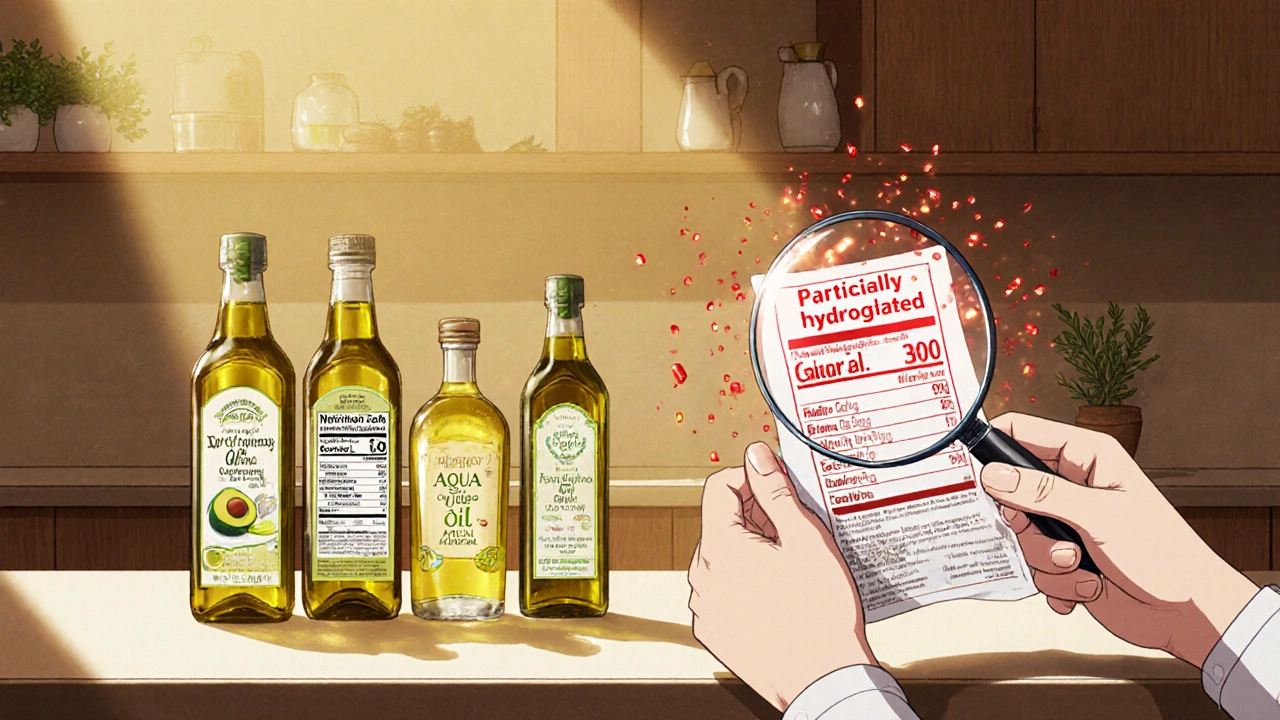
Heart-Healthy Cooking: Choose the Right Oils and Read Labels Like a Pro
Learn which oils and fats truly support heart health, how to read nutrition labels to avoid hidden saturated and trans fats, and which cooking methods keep your heart protected. Practical, science-backed tips for everyday cooking.
Continue Reading