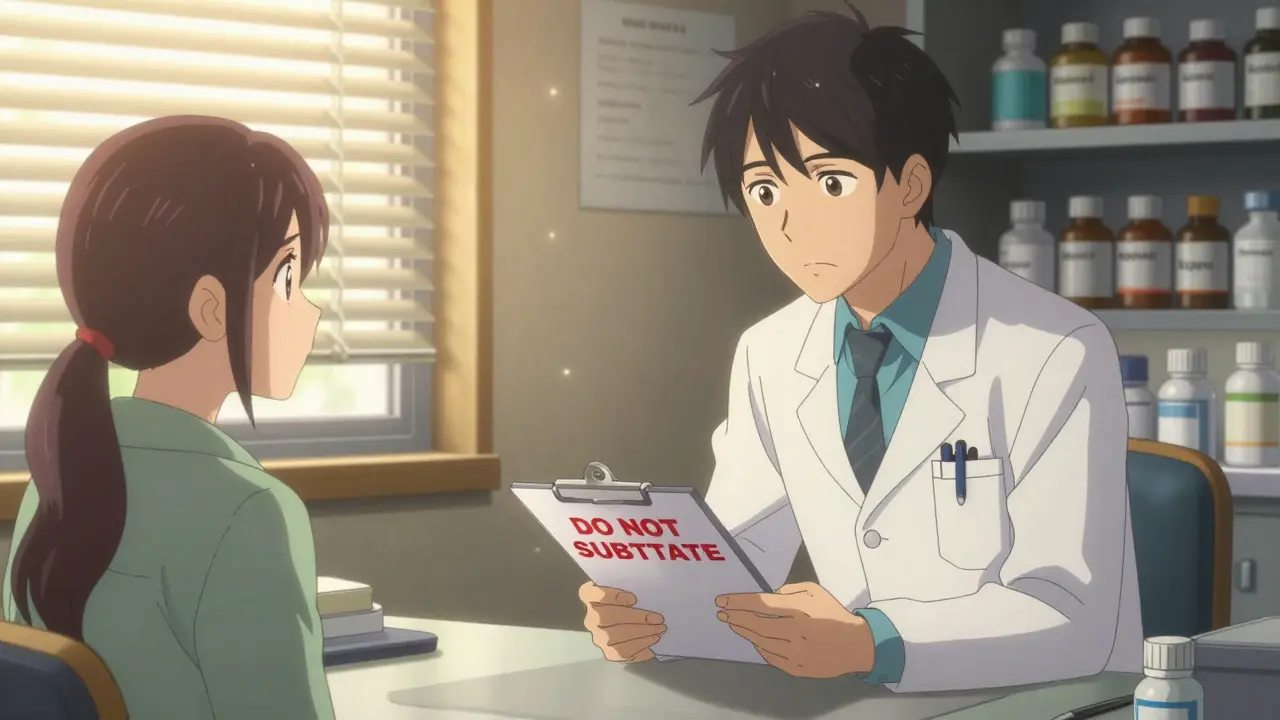
Most prescriptions today are filled with generic drugs. In fact, 90% of all prescriptions in the U.S. are for generics. They work just as well, cost far less, and are approved by the FDA to be identical in active ingredients to their brand-name counterparts. So why do some doctors still write prescriptions that say "do not substitute" or "brand medically necessary"? It’s not because they’re out of touch or biased - it’s because in specific, well-defined cases, switching to a generic can actually put your health at risk.
When Generic Isn’t the Same
The FDA requires generics to match the brand-name drug’s active ingredient, strength, dosage form, and route of administration. They must also prove they’re bioequivalent - meaning they deliver the same amount of medicine into your bloodstream within an acceptable range: 80% to 125% of the brand’s levels. That sounds precise, right? But for some drugs, even a 20% variation can be dangerous. That’s where narrow therapeutic index (NTI) drugs come in. These are medications where the difference between a dose that works and a dose that harms you is razor-thin. Think of it like walking a tightrope. Too little, and the condition flares up. Too much, and you overdose. For these drugs, consistency matters more than cost. Examples include:- Levothyroxine (Synthroid, Tirosint) - used for hypothyroidism. Even small changes in hormone levels can cause fatigue, weight gain, heart palpitations, or depression.
- Warfarin (Coumadin) - a blood thinner. A slight shift in how much enters your system can lead to dangerous clots or uncontrolled bleeding.
- Levetiracetam (Keppra) - an anti-seizure drug. A 2019 study of 1,200 patients found that 12.7% had breakthrough seizures after switching to a generic version, compared to just 4.3% who stayed on the brand.
The American Thyroid Association and the American Academy of Neurology both recommend sticking with the same brand for these drugs - not because generics are inferior, but because switching between different generic manufacturers can cause unpredictable changes in how your body responds.
Why Doctors Still Say "Brand Only"
Doctors don’t write brand-only prescriptions lightly. It’s not about profit. In fact, most don’t get paid more for prescribing brand-name drugs. Instead, it’s often based on direct patient experience. If you’ve tried switching from Synthroid to a generic and suddenly felt sluggish, gained weight, or developed anxiety, you’re not alone. On Reddit’s r/Pharmacy community, 68% of patients who switched levothyroxine generics reported negative side effects. One user wrote: "I switched twice. Both times, I slipped into severe depression. Went back to Synthroid - symptoms vanished in two weeks." It’s not just about the active ingredient. Inactive ingredients - like fillers, dyes, or coatings - can trigger reactions in sensitive people. A 37% complaint rate on Drugs.com points to gastrointestinal issues from different generic versions of ciprofloxacin. Some people are allergic to cornstarch, lactose, or artificial colors used in one manufacturer’s version but not another. There’s also the issue of delivery systems. Take Advair Diskus. The inhaler isn’t just a container - it’s engineered to deliver a precise puff of medicine. Generic versions may contain the same drugs, but if the device doesn’t release the dose the same way, you’re not getting the full benefit. That’s why some inhalers and nasal sprays are still prescribed by brand name.
The Cost Difference Is Staggering
Let’s be clear: most of the time, generics are the smarter choice. In 2022, the average retail price for a brand-name prescription was $471.67. The generic version? $13.76. That’s 97% cheaper. For common drugs like lisinopril (for high blood pressure), metformin (for diabetes), or atorvastatin (for cholesterol), studies involving over 112,000 patients found zero difference in outcomes between brand and generic. A 2020 JAMA meta-analysis confirmed it: for 90% of medications, generics perform identically. So why do some doctors still prescribe brand? Sometimes, it’s because patients ask for it. Or because the doctor doesn’t realize a generic is available. A 2021 study found primary care physicians correctly identified available generics only 63% of the time. Other times, it’s outdated habit - calling a drug by its brand name (like "Lipitor" instead of "atorvastatin") makes it more likely the doctor will prescribe the brand, even if it’s unnecessary.Insurance and Paperwork Hurdles
If your doctor writes "brand medically necessary," your pharmacy can’t just fill it. They have to send it to your insurer for approval. This process, called prior authorization, can take up to 72 hours. Approval rates vary wildly: 89% for anti-seizure drugs, but only 45% for acid reflux meds like omeprazole. And if the insurer denies it? You’ll pay full price - sometimes hundreds of dollars a month. A 2021 Kaiser Family Foundation analysis found 42% of patients who got brand-only prescriptions paid more out of pocket, even when generics were available. Some states have rules to make this clearer. California requires doctors to check a "Medical Necessity" box on electronic prescriptions. New York demands written clinical justification. But in most places, all it takes is a handwritten note: "Do not substitute."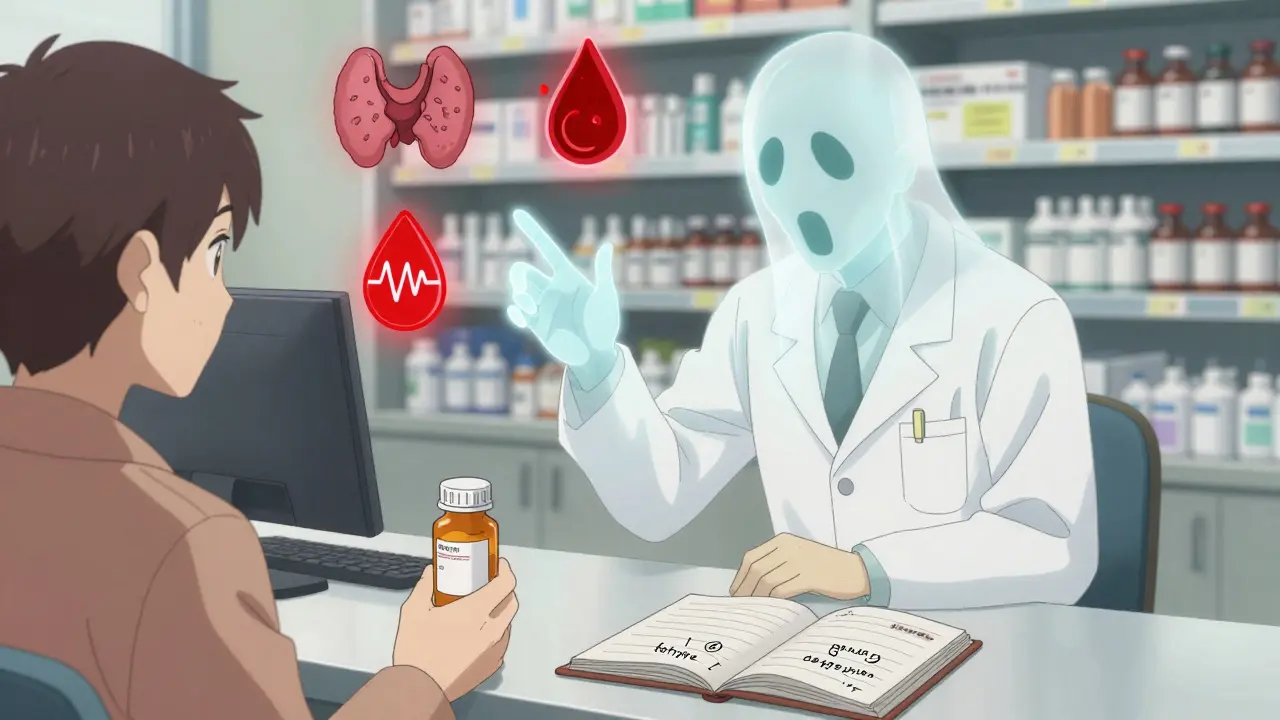
What You Can Do
If your doctor prescribes a brand-name drug, ask:- "Is this because of a medical reason, or just habit?"
- "Is there a generic available?"
- "Could switching hurt me?"
- "Can we try the generic and monitor how I respond?"
For drugs like statins, blood pressure meds, or antibiotics, the answer is usually "no risk." But for thyroid, seizure, or blood thinner medications, the answer might be "stick with what works." Check the FDA’s Orange Book - it lists which generics are rated as therapeutically equivalent to brand drugs. Pharmacists can access this too. If your pharmacist says a generic is interchangeable, they’re likely right - unless you’ve had a bad reaction before.
The Bigger Picture
The U.S. spends over $400 billion on prescription drugs each year. Generics make up only 23% of that spending, despite being 90% of prescriptions. That means billions are spent on brand-name drugs that offer no extra benefit. Experts like Dr. David Ouyang from Stanford say inappropriate brand prescribing is a "huge source of wasteful spending." Drug companies spend millions marketing brand names, training reps to push familiarity. Patients don’t always know they’re paying more for the same medicine. But here’s the truth: for most people, generics are safe, effective, and life-changing because they’re affordable. For a small group - those on NTI drugs or with known sensitivities - brand-name is the only safe option. The key is knowing which group you’re in. Don’t assume brand is better. Don’t assume generic is always fine. Ask questions. Track how you feel. And if you’ve had a bad experience switching - tell your doctor. Your body knows better than any guideline.Can pharmacists substitute a generic if the doctor didn’t say "do not substitute"?
Yes, in 49 U.S. states and Washington D.C., pharmacists are legally allowed to swap a brand-name drug for a generic unless the prescription says "dispense as written," "do not substitute," or "brand medically necessary." Texas is the only state with stricter rules for certain drug classes. Always check your state’s pharmacy laws if you’re unsure.
Are all generics made the same?
No. While all generics must contain the same active ingredient and meet FDA bioequivalence standards, they can be made by different manufacturers. Each may use different inactive ingredients - fillers, dyes, or coatings - which can affect how your body tolerates the drug. That’s why some people react to one generic but not another. For NTI drugs, sticking with the same manufacturer helps avoid this variability.
Why do some brand-name drugs still cost so much even after generics exist?
Brand-name companies often use tactics like formulary exclusivity, patient assistance programs, or contracts with insurers to keep their drugs on preferred lists - even when generics are available. For example, Humira (adalimumab) still generated $21.2 billion in U.S. sales in 2022 despite multiple biosimilars being on the market. Insurance plans may require you to try the brand first before approving a cheaper alternative.
What should I do if I think a generic isn’t working for me?
Don’t ignore it. Keep a symptom journal - note when you started the generic, what side effects you experienced, and when they improved or worsened. Bring this to your doctor. For drugs like levothyroxine or warfarin, your doctor may order a blood test to check levels. If there’s a pattern, they can write a "brand medically necessary" prescription. Your health is more important than cost savings in these cases.
Are there any new rules helping patients avoid unnecessary brand-name prescriptions?
Yes. In 2023, the FDA issued new guidance requiring generic manufacturers to match the shape, size, and color of brand-name drugs to reduce patient confusion - a major cause of medication errors. Some states now require EHR systems to alert doctors when a generic is available. The goal is to reduce inappropriate prescribing by 30-40% over the next decade. But the biggest change? Patients asking better questions. Knowledge is your best tool.

10 Comments
Namrata Goyal
March 24, 2026lol so generics are bad only when they dont work for YOU personally? i swear every time someone says "my body reacts differently" it's just because they're too lazy to try something cheaper. also why are we still using brand names like "synthroid"? it's levothyroxine. get with the times.
Jefferson Moratin
March 26, 2026The distinction between bioequivalence and therapeutic equivalence is not merely semantic; it is foundational to pharmacokinetic integrity. The FDA's 80-125% confidence interval for AUC and Cmax is statistically valid for population-level outcomes, yet ignores interindividual variability in absorption, metabolism, and protein binding. For drugs with narrow therapeutic indices, this margin is not a tolerance-it is a liability.
Caroline Dennis
March 27, 2026This is why we need patient-centered care. For thyroid, seizures, and anticoagulants, consistency > cost. If a patient has stability on a brand, don’t force a switch. Track symptoms. Monitor labs. Collaborate. It’s not about being anti-generic-it’s about being pro-safety.
Kenneth Jones
March 28, 2026You people act like doctors are just handing out free money. If a patient has a history of seizures or clots and switches generics and crashes? That's on the system. Not the doctor. Stop pretending cost savings outweigh patient outcomes.
Kevin Y.
March 30, 2026I really appreciate how thorough this post is. It's so easy to assume all generics are interchangeable, but the science shows otherwise. I’ve had patients on warfarin who had INR spikes after switching-no warning, no explanation. Thank you for highlighting the real-world impact. We need more awareness, not just policy.
Raphael Schwartz
March 31, 2026America is broke because we let big pharma trick people into paying for brand names. generics are fine. if your body cant handle it you're weak. also stop using brand names. its like calling kleenex tissues.
Grace Kusta Nasralla
March 31, 2026I switched my levothyroxine last year. I didn’t say anything. Just… stopped feeling like myself. I thought it was stress. Then I went back. The difference was… quiet. But real.
Korn Deno
April 1, 2026The real issue isn't generics vs brand-it's lack of transparency. Why can't pharmacists tell you which manufacturer made your pill? Why can't EHRs flag when you've switched? We're treating patients like data points, not humans. If consistency matters, then tracking manufacturer matters too.
Aaron Sims
April 2, 2026So... let me get this straight... the FDA says generics are "equivalent," but then doctors say "no substitution" because... magic? And we're supposed to trust the same system that gave us OxyContin? Yeah no. This is just Big Pharma’s way of keeping people hooked on $500 pills while pretending they're "medical necessity." Wake up.
Stephen Alabi
April 4, 2026It is imperative to recognize that the pharmacological equivalence paradigm, as currently operationalized by regulatory agencies, is fundamentally inadequate for medications with narrow therapeutic indices. The bioequivalence criteria, derived from healthy volunteer studies, do not account for comorbidities, polypharmacy, or genetic polymorphisms in CYP450 enzymes. Consequently, the clinical assumption of interchangeability constitutes a systemic risk, not a cost-saving measure.