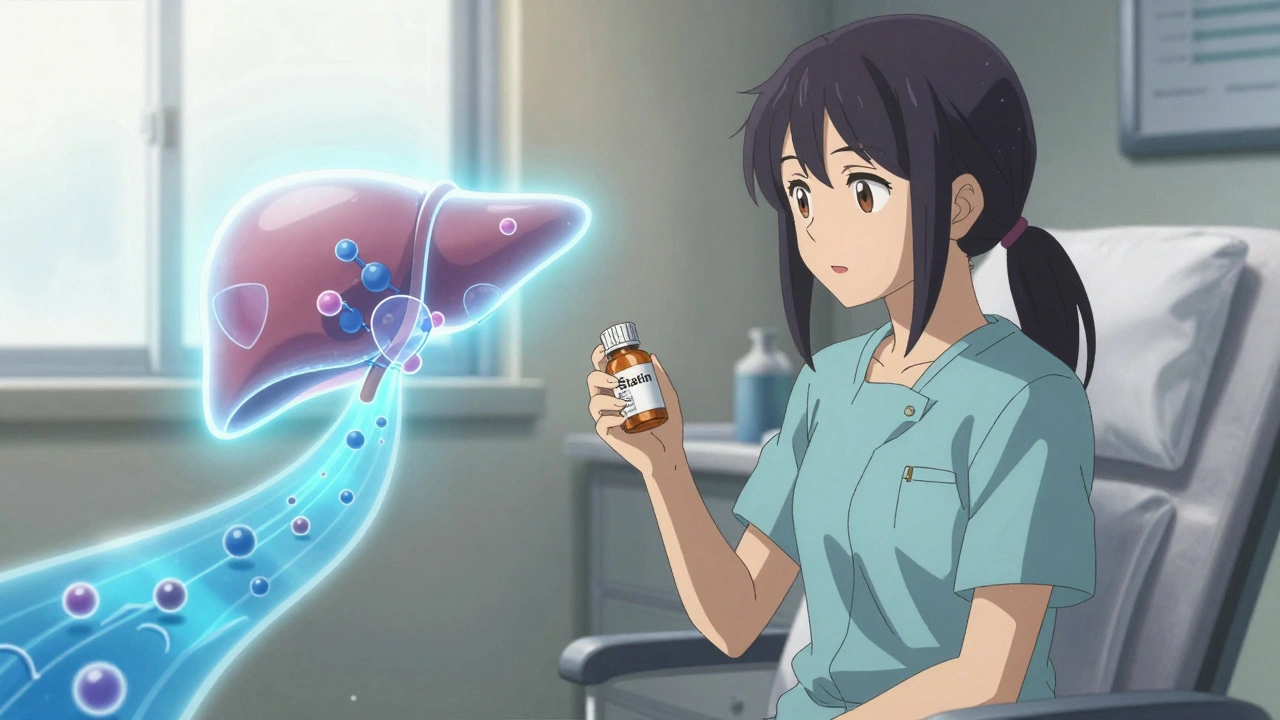
High cholesterol doesn’t always show symptoms, but it’s quietly increasing your risk of heart attack and stroke. For millions of people, the first line of defense is a statin. But what if statins don’t work for you-or cause side effects? You’re not alone. About 1 in 5 people stop taking statins within a year, often because of muscle pain or uncertainty about long-term use. The good news? There are other options, and they’re not just supplements or lifestyle changes. Some are powerful, science-backed medications that work differently-and sometimes better-than statins.
How Statins Actually Work (And Why They’re Still First Choice)
Statins are not magic pills. They work by blocking an enzyme in your liver called HMG-CoA reductase. That enzyme is responsible for making cholesterol. When it’s slowed down, your liver pulls more LDL (the "bad" cholesterol) out of your blood to use for its own needs. The result? Your LDL drops, often by 30% to 50%, depending on the drug and dose.
Atorvastatin (Lipitor) and rosuvastatin (Crestor) are the most commonly prescribed. They’re strong, well-studied, and cheap-generic versions cost as little as $4 a month. Studies tracking over 39,000 people found that every 20 mg/dL drop in LDL from statins meant a 15% lower risk of heart attack or stroke. That’s not small. It’s life-changing.
But here’s the catch: doubling the statin dose only lowers LDL by another 6%. That’s the law of diminishing returns. And for some people, even low doses cause muscle aches, fatigue, or liver enzyme changes. That’s where alternatives come in.
Ezetimibe: The Gentle Partner to Statins
Ezetimibe (brand name Zetia) doesn’t touch your liver. Instead, it blocks cholesterol absorption in your gut. Think of it as a bouncer at the door of your intestines-keeping dietary cholesterol from even getting into your bloodstream.
Alone, it lowers LDL by about 15% to 22%. That’s not as strong as a statin, but when paired with a low-dose statin, it can push LDL down another 20% or more. Many patients who can’t tolerate higher statin doses find relief here. One user on a heart health forum said, "Zetia alone got my LDL from 190 to 160. Added to my low-dose simvastatin? Down to 110. No muscle pain. I’ve been on it for three years."
It’s taken orally, once a day. No injections. No complex dosing. And because it doesn’t rely on liver metabolism, it has fewer drug interactions than statins like simvastatin or lovastatin. The British Heart Foundation recommends it for people who can’t take statins-or for those who need a little extra help after statins.
PCSK9 Inhibitors: The High-Tech Injection Option
PCSK9 inhibitors-alirocumab (Praluent) and evolocumab (Repatha)-are a breakthrough. They’re monoclonal antibodies injected under the skin every two to four weeks. They work by disabling a protein called PCSK9, which normally tells your liver to destroy LDL receptors. Block PCSK9, and your liver keeps more receptors alive to sweep LDL out of your blood.
The result? LDL drops by up to 60%. That’s more than most statins can do alone. In people with existing heart disease, these drugs cut the risk of heart attack, stroke, or death by 20%. A 2023 UCLA study found they don’t raise the risk of hemorrhagic stroke-a known, though rare, side effect of statins. That makes them especially valuable for people with a history of brain bleeds.
But there’s a downside: cost. At around $5,850 a year, they’re not affordable without insurance. Many patients report being denied coverage multiple times before approval. One Reddit user wrote, "Repatha lowered my LDL from 220 to 60 in three months. Insurance denied it three times."
They’re not for everyone. But for high-risk patients who still can’t reach their LDL goal-even on high-dose statins and ezetimibe-they’re a game-changer.
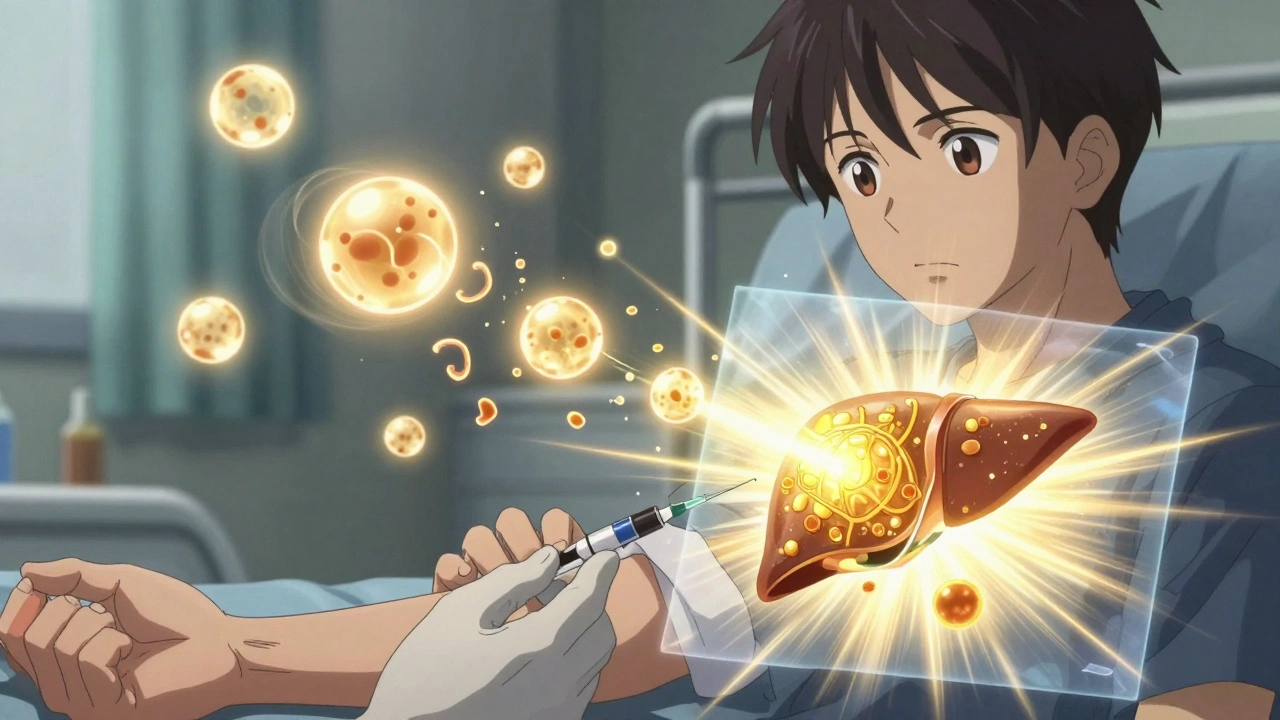
Bempedoic Acid: A New Oral Option for Statin-Intolerant Patients
Approved by the FDA in 2020, bempedoic acid (Nexletol) works upstream of statins in the cholesterol-making pathway. It inhibits ATP citrate lyase, an enzyme earlier in the process. This means it’s activated only in the liver-not in muscles-which may explain why muscle pain is far less common.
As a standalone treatment, it lowers LDL by about 17%. When combined with a low-dose statin, it can knock off another 20% or more. It’s taken as a daily pill, making it easier than injections. Clinical trials show it also reduces cardiovascular events by 13% over time.
It’s not a first-line drug. But for someone who tried three statins and kept getting muscle pain, bempedoic acid offers a real alternative without needles or sky-high costs.
Inclisiran: The Twice-a-Year Wonder
Inclisiran (Leqvio), approved in 2021, is the newest player. It’s not a pill or a traditional injection. It’s a small interfering RNA (siRNA) therapy that silences the PCSK9 gene at the genetic level. You get two shots a year-once in December, once in June-and your LDL stays down.
When paired with a statin, it lowers LDL by 40% to 50%. That’s powerful. And because it’s given so rarely, adherence is nearly perfect. No daily pills. No weekly injections. Just two visits a year.
It’s not cheap-similar to PCSK9 inhibitors-but for people who struggle with daily meds or monthly shots, it’s a lifeline. The European Society of Cardiology now includes it in guidelines for high-risk patients who need extra help.
What About Supplements and Natural Remedies?
You’ve probably heard about red yeast rice, plant sterols, or fish oil for lowering cholesterol. Red yeast rice contains a compound similar to statins, but it’s unregulated. One batch might have a safe dose. Another could be toxic or contaminated. The FDA has warned against it.
Plant sterols can lower LDL by 5% to 10%-but only if you take them with meals, every day, in large amounts. Fish oil helps triglycerides, not LDL. And supplements? A 2022 Harvard Health review found they simply don’t lower LDL the way statins do.
Don’t replace prescribed medication with supplements. They’re not substitutes. They’re extras-at best. And even then, only if your doctor approves them.

Choosing the Right Path: It’s Not One-Size-Fits-All
There’s no single "best" cholesterol drug. The right choice depends on your risk level, side effects, cost, and lifestyle.
- If you’re at high risk and can tolerate statins: Start with a moderate- or high-intensity statin. Monitor after 4-12 weeks.
- If you have muscle pain on statins: Try switching to pravastatin or rosuvastatin-they’re less likely to cause this. Or add ezetimibe.
- If you need a big LDL drop and can afford it: Consider PCSK9 inhibitors or inclisiran.
- If you can’t take statins at all: Bempedoic acid or ezetimibe are solid oral options.
The American College of Cardiology says most patients should try at least two different statins before giving up. Many people think they can’t take statins-but they just tried the wrong one. Dose adjustments, timing changes, or switching to a different statin can make all the difference.
What to Expect When Starting a New Medication
Statins take 4 to 12 weeks to reach full effect. So do ezetimibe and bempedoic acid. PCSK9 inhibitors and inclisiran work faster-often within weeks.
Before starting any new drug, your doctor should check your liver enzymes and kidney function. For statins, routine liver tests are no longer required unless you have symptoms. For PCSK9 inhibitors and inclisiran, no special monitoring is needed beyond checking cholesterol levels every few months.
Side effects vary. Statins: muscle pain, rare liver issues. Ezetimibe: mild stomach upset. PCSK9 inhibitors: injection site reactions, cold-like symptoms. Inclisiran: similar to PCSK9 drugs, but less frequent. Bempedoic acid: a slight risk of gout or tendon problems in some.
The key? Talk to your doctor. Don’t stop a medication because you’re worried. Ask about alternatives. Ask about cost. Ask about long-term benefits.
Final Thoughts: Statins Still Lead, But You Have Options
Statins are the foundation. They’ve saved millions of lives. But medicine doesn’t stand still. For people who can’t take them-or who need more help-there are now multiple, effective, science-backed alternatives. Ezetimibe for gentle support. Bempedoic acid for statin-intolerant patients. PCSK9 inhibitors for high-risk cases. Inclisiran for those who want minimal dosing.
The goal isn’t just to take a pill. It’s to lower your LDL enough to protect your heart-for decades. And now, you have more ways to get there than ever before.
Can I stop taking statins if I switch to another cholesterol drug?
It depends. Some people can switch completely, especially if they had side effects from statins. Others need to stay on a low-dose statin along with ezetimibe or bempedoic acid for better results. Never stop a statin without talking to your doctor. Stopping suddenly can raise your LDL quickly and increase your heart risk.
Do any of these alternatives cause muscle pain like statins?
Ezetimibe, bempedoic acid, and inclisiran rarely cause muscle pain. PCSK9 inhibitors may cause mild muscle discomfort in a small number of people, but it’s far less common than with statins. Bempedoic acid is designed to work only in the liver, avoiding muscle tissue entirely-which is why it’s often chosen for statin-intolerant patients.
How do I know if I need a stronger medication than a statin?
If your LDL is still above 70 mg/dL after 3-6 months on a moderate- or high-intensity statin, and you’re at high risk for heart disease, your doctor may add another drug. If you have familial hypercholesterolemia, heart disease, or diabetes, you may need a stronger approach from the start. Your doctor will look at your overall risk-not just your number.
Are PCSK9 inhibitors worth the cost?
For people with established heart disease or very high LDL, yes. They reduce heart attacks and deaths by 20%. If your insurance covers them, they’re a valuable tool. For others, ezetimibe or bempedoic acid may be more practical. Cost is a real barrier-but many manufacturers offer patient assistance programs to help with copays.
Can I take these medications with other heart drugs?
Most cholesterol drugs are safe with blood pressure meds, aspirin, or diabetes drugs. But statins like simvastatin and lovastatin can interact with certain antibiotics, antifungals, and grapefruit juice. Ezetimibe and bempedoic acid have fewer interactions. Always tell your doctor and pharmacist about every medication and supplement you take.
If you’ve been told you need to lower your cholesterol, don’t assume statins are your only option. Ask questions. Explore alternatives. And work with your doctor to find the plan that fits your body, your life, and your long-term health.
9 Comments
Jennifer Blandford
December 8, 2025Okay but like… I’ve been on ezetimibe for 2 years and my LDL is at 98. No muscle pain, no drama. Just a little pill I forget about until the bottle’s empty. 🙌
Rich Paul
December 8, 2025statins are so 2010 tbh. like why are we still talking about liver enzymes when we got siRNA now?? inclisiran is the future. 2 shots a year?? bro i can barely remember to take my vitamins daily. this is peak biohacking. 🤖💊
Katherine Rodgers
December 10, 2025lol the ‘natural remedies’ section is just a PSA for people who think turmeric is a statin replacement. also red yeast rice? that’s just a statin with no quality control. congrats, you’re a walking clinical trial.
Delaine Kiara
December 11, 2025so i went to my doc last week and said ‘i think i’m statin intolerant’ and she just handed me a script for bempedoic acid like it was a coupon for coffee. 17% drop in 6 weeks. no muscle cramps. no nightmares about liver tests. i’m officially converted. also, i’ve started calling it ‘the chill pill’ and it feels like a personality upgrade.
Ruth Witte
December 12, 2025IF YOU’RE STILL ON STATINS AND HAVEN’T TRIED INCLISIRAN YOU’RE LEAVING LIVES ON THE TABLE. TWO SHOTS A YEAR?? I’M GETTING MARRIED IN JUNE AND I CAN’T EVEN REMEMBER TO BUY CONDOMS, BUT I’LL REMEMBER TWO INJECTIONS. THIS IS THE FUTURE AND I’M HERE FOR IT. 💉✨
Raja Herbal
December 12, 2025you people talk like this is a tech conference. i live in a village where the nearest pharmacy is 40km away. my cholesterol is 210. i take one pill a day. it’s called ‘whatever’s cheapest’. if you’re lucky, it’s generic. if you’re not, you pray. PCSK9 inhibitors? i’d need a spaceship to afford that.
Lauren Dare
December 12, 2025let’s be real: the only reason inclisiran isn’t everywhere is because pharma doesn’t want you to get addicted to a 6-month treatment cycle. they make more money off daily pills. the science? flawless. the business model? predatory. the fact that we’re still debating cost over outcomes? that’s the real tragedy.
Gilbert Lacasandile
December 14, 2025i’ve been on a low-dose statin + ezetimibe for 18 months. LDL went from 185 to 102. no side effects. i used to hate pills, now i take them with my morning coffee like a ritual. it’s not glamorous, but it works. and honestly? i’m just glad there’s more than one option. thanks for writing this - it helped me ask the right questions.
Asset Finance Komrade
December 15, 2025the entire discourse around cholesterol management is a reflection of late-stage capitalism’s inability to prioritize health over profit. statins are cheap, accessible, and effective - yet we glorify billion-dollar injections as ‘innovation’ while ignoring systemic barriers to care. the real breakthrough isn’t siRNA - it’s universal healthcare. but who gets to write the headlines? 🤔